Think back to when your retail brand first got off the ground: It may not have felt like it then, but your retail operations were rather simple — especially compared to how they are now. In the present, you might be dealing with a number of frustrating, recurring problems and overly-complicated workflows that seem like they’ll only get worse over time.
What you may not know is that there’s another evolution your retail operations can undergo, which specifically helps deal with this complexity and recurring problems. That evolution is integrating headless software.
In this guide, you will learn:
-
Why your current retail operations may be limiting your growth
-
What your business could look like after a headless software shift
-
Why headless, composable ERP helps retail brands exponentially grow
-
Which five problems Tailor can solve for growing retailers
Retail Operations: Before & After the Headless Software Shift
Before we compare headless ops and the current status quo, let’s try to pinpoint the “why” behind the way your retail operations have developed to where they are today. As a growing retailer, you’re likely:
-
Working around silos inside your tech stack
-
Using hacked-together workflows to keep operations moving (despite red flags and existing problems)
-
Fighting against recurring data reconciliation headaches
While these issues aren’t usually going to cause catastrophic damage on their own, they can build up bad habits and system pressure that can sneak up on you later.
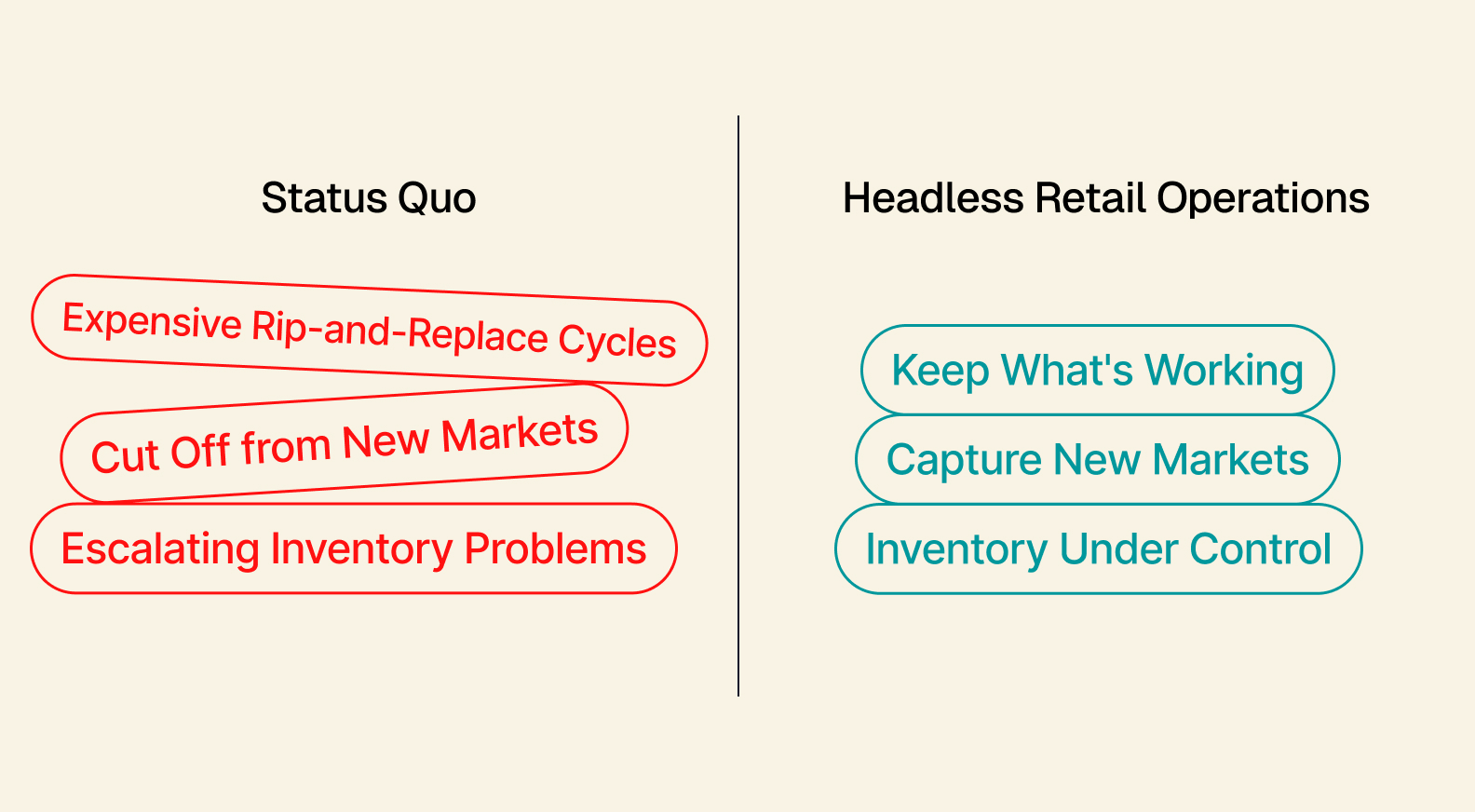
Headless Retail Operations vs. the Status Quo
What you have now might be the status quo of many other retail brands; growth is happening, but slowed by parts of your systems working against your desired trajectory. It’s natural to assume that this is just how it’s supposed to be. And, at some point, you should outgrow the tools causing your existing problems, right?
Unfortunately, the inadequate software integrations currently in your system can negatively impact it long after you've removed them. Here’s how the status quo might be setting you back:
-
Expensive rip-and-replace cycles that create new problems and leave old ones baked into your system architecture.
-
Cutting you off from new markets and well-timed moves. This is caused by overhead limitations or tied-up budgets.
-
Escalating inventory problems as supply chain complexity increases.
Now let’s take a look at what your retail operations could look like with headless software integrations:
-
Keep what’s working, and easily replace what isn’t.
-
Capture new markets because your operations are flexible and supported end-to-end.
-
Inventory is under control and accurately tracked.
Why Headless, Composable ERP Prepares Retail Brands for Exponential Growth
The difference that headless, composable software ERP can make in your business is significant, but it’s also important to understand why it works so well for growing retail brands:
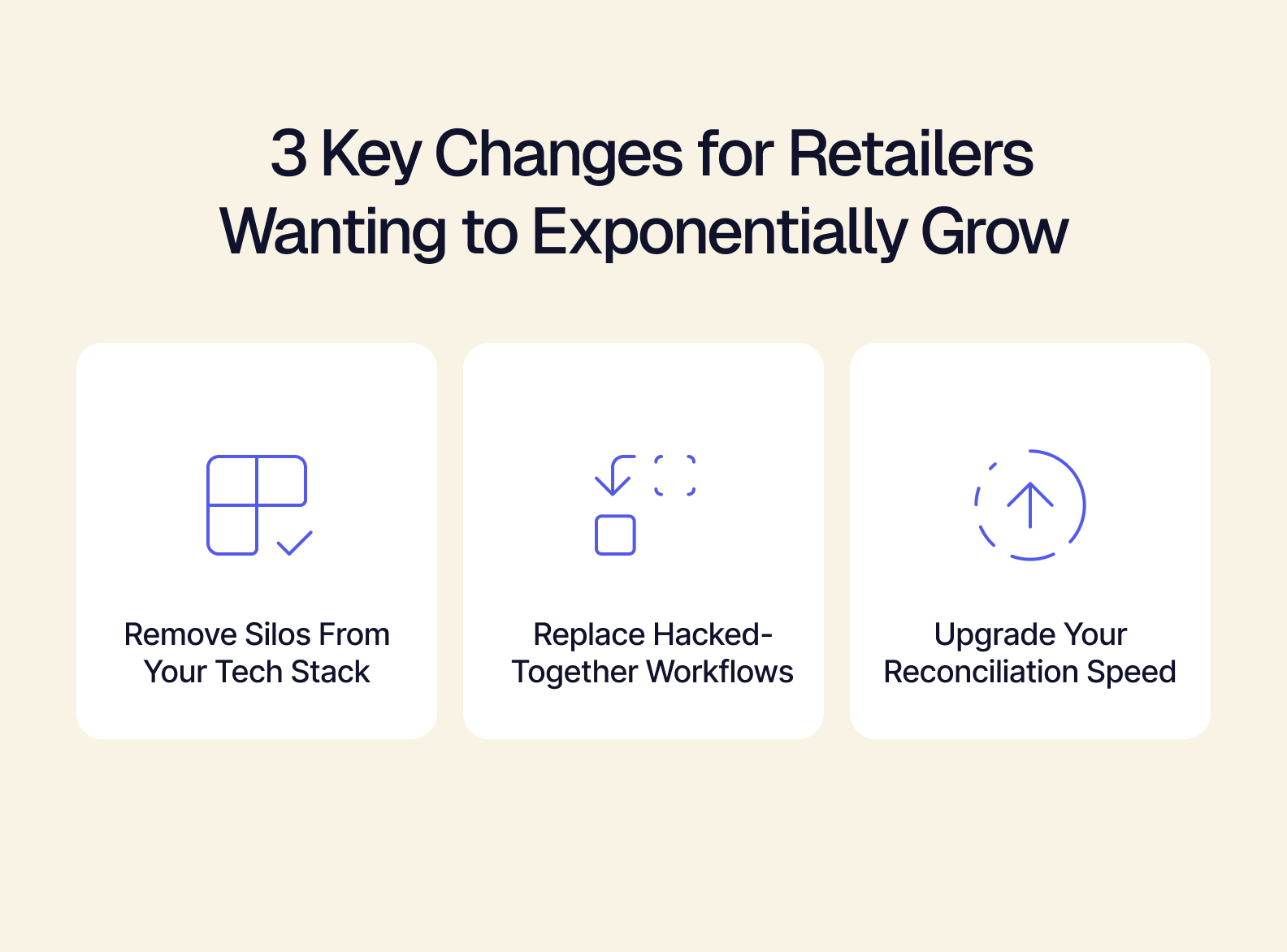
Remove Silos From Your Tech Stack
Silos and low-visibility systems go hand-in-hand. With silos, data has a difficult time flowing, which creates a fragmented bunch of different truths about what’s happening in your business — leading to frequent manual reconciliation and often finding inventory issues long after they’ve impacted your bottom line.
The Headless, Composable Solution
With a headless, composable ERP functioning as the foundation of your tech stack, the silos that existed before are gone. This is accomplished by providing your system with a single source of truth that all your connected tools, apps, and software report to. Because the ERP sits upstream of the rest of your tech, all your tools effectively “talk to each other,” helping you avoid building silos into your business.
Replace Hacked-Together Workflows with Simple, Curated Processes
Over time, your disconnected tools demand awkward or complex workflows that are hard to manage. This inevitably results in your teams building hacked-together workarounds that bridge disconnected tech together. It technically streamlines task completion, but comes at the cost of technical debt down the road — and often requires new workarounds to prop up the old ones when software is added to your tech stack.
The Headless, Composable Solution
Your retail ops greatly benefit from headless, composable software integration because these types of systems remove the need for hacked-together workarounds — and because headless systems are inherently flexible — you can design workflows that work as intended and flow between the tools you need to use.
Upgrade Your Reconciliation Speed
As you add more tools to your stack, the amount of time it takes to reconcile that data increases. It can cause slowdowns for other processes, induce inventory errors, and even inconvenience your customers. This all comes down to lagging reports that need to be manually reconciled in a spreadsheet or imported to other software.
The Headless, Composable Solution
With a headless, composable ERP at the center of your business, you can increase the speed at which your data is reconciled, because you won’t have to wait for reports to be generated and delivered. Data is entered into the software from your warehouse, POS, or a supplier, which is then automatically reconciled with existing data managed by your single source of truth and pushed to the rest of your stack.
5 Retail Operations Problems Tailor Solves
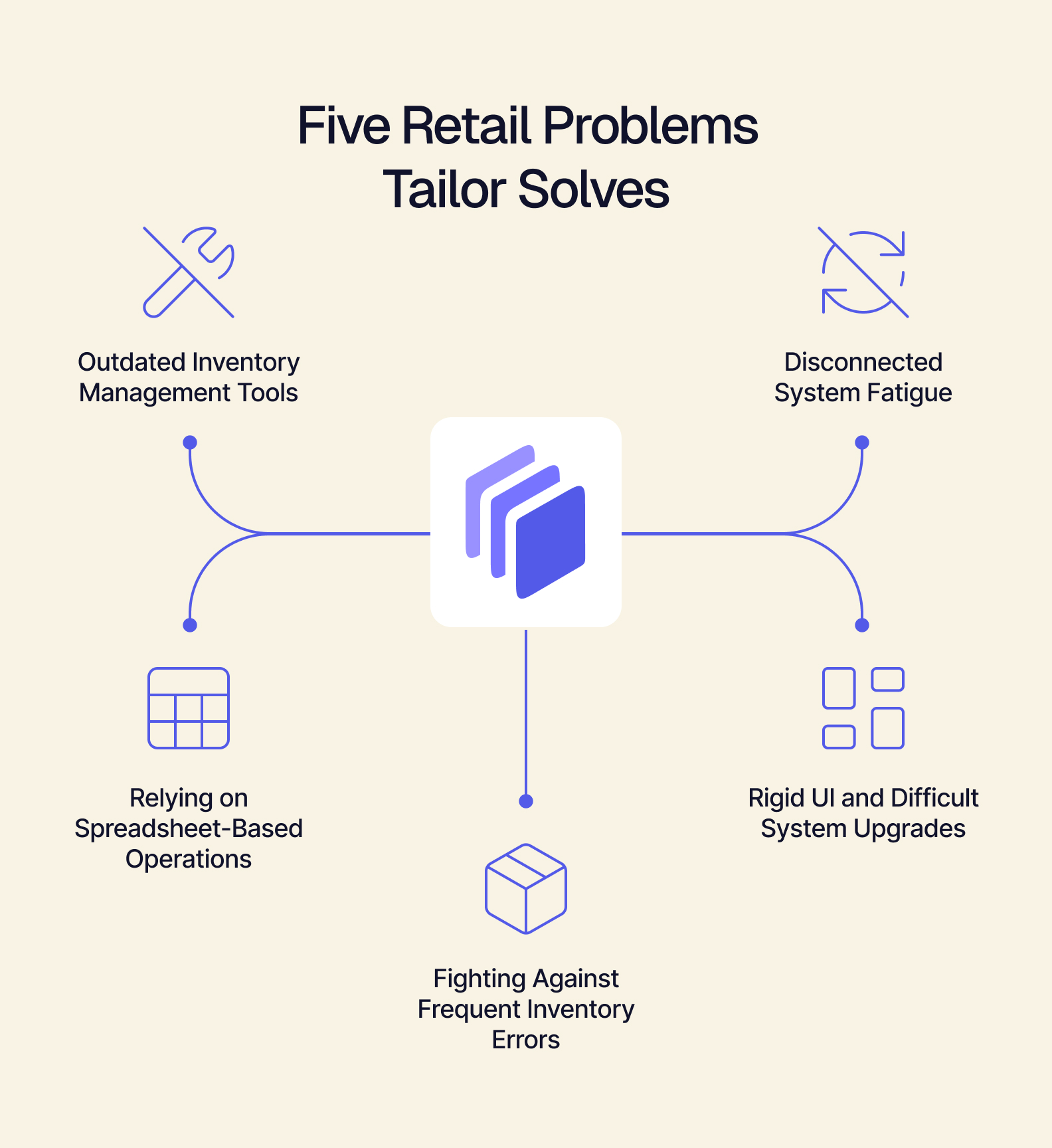
Problem One: Disconnected System Fatigue
When you scale your business in a rigid or disconnected environment, your system becomes increasingly fragmented — taxing your operations and slowing things down. If left unchecked, this fatigue can get worse and cause workflows to break or inject unnecessary stress into your day-to-day tasks.
With Tailor, you can leave disconnected system fatigue in the past. Because of its headless, composable design, you can keep the tools that work for your business, transition away from the ones that aren’t working, and create a unified system that’s designed from the ground up to support your retail operations. This is accomplished through feature modules, API connections, and providing a single source of truth that controls your system end-to-end.
Problem Two: Rigid UI and Difficult System Upgrades
Another pair of interconnected issues you might be suffering from is reaching the limits of rigid UI, which makes system upgrades more difficult than they need to be. When your frontend and backend systems aren’t decoupled, any change you make in the backend directly impacts your UI — which can disrupt workflows across your business.
Tailor addresses this by offering an out-of-the-box UI that can be easily adjusted and customized to fit your needs as your business grows. Combine that UI with Tailor’s modular approach to system design, and you can add new tools to your stack without worrying about your retail operations being disrupted.
Problem Three: Fighting Against Constant Recounts, Overstocks, and Unexpected Stockouts
Constantly recounting your warehouse is a waste of time, overstocks can tie up your operating budgets, and unexpected stockouts can frustrate customers, lead to overselling, and force you to miss easy wins. These particular examples have a few different root causes, but the one they all share stems from having the wrong software integrations for your existing retail operations.
Tailor puts these issues to rest by creating the environment necessary to catch inventory problems as they happen, so that recounts become increasingly infrequent, workflows that lead to overstocking are revised, and unexpected stockouts that are under your control become a rarity — or disappear entirely.
Problem Four: Using Spreadsheets to Run Your Retail Operations
At some point, if your tools aren’t working, you may have moved to utilizing spreadsheets to run your retail operations. While this move could solve the immediate problems that were caused by your software failing to meet the moment, spreadsheets invite their own growing list of problems that occur from being stretched to do more than they should.
Tailor helps you stop using spreadsheets by providing you with ready-to-use modules that are designed to support your needs. This means you don’t need to worry about spreadsheets corrupting, numbers getting transposed, or including spreadsheets in your workflows unless they’re being used as intended.
Problem Five: Inventory Management That Feels Like It’s From the 1990s.
You may be using outdated software or working with rigid tools created by a legacy ERP provider like NetSuite. In the modern day, some of these tools have had facelifts that make them easier to navigate — but they’re still built on legacy architectural philosophies and structured for enterprise-sized retail operations. These tools can be expensive, hard to work with, and force bundled workflows that you may not be able to take advantage of.
Tailor meets you where you’re at, with a system architecture designed for businesses that require modern sensibilities to thrive. Headless, composable ERP provides a decoupled, modular, and flexible foundation to build your business on top of.
Future Proof Your Retail Operations
Your retail operations don’t need to be bogged down by clunky systems, hacked-together workflows, and bad data caused by a siloed tech stack. Tailor helps you take charge of your retail operations and set your brand on a path of exponential growth.
Book a demo with Tailor today to see its impact on your business in action and start the process of future-proofing your retail operations.