When brands add an omnichannel order management system, they often expect it to solve split shipments, oversells, and wrong-location fulfillment. The system helps alleviate these issues, it doesn’t outright solve them — allowing the problems to recur.
But why is this? Routing logic can only be as good as the data that’s feeding it. If two systems disagree about what’s in stock, no rule set fixes that in the moment it matters.
This guide covers where routing breaks down, why more rules aren’t the answer, and what changes when routing sits on a real-time, composable foundation.
What You’ll Learn
-
What an omnichannel order management system is actually deciding
-
Why more routing rules don’t solve a fragmented data problem
-
What changes when routing sits on a composable, headless architecture
-
What to look for in an omnichannel OMS beyond the routing engine
What an Omnichannel Order Management System Is Actually Deciding
You might think of an omnichannel order management system as a tracking and visibility tool, keeping up with where an order is located. But really, your OMS is a decision engine. It’s responsible for making split-second decisions about which warehouse, store, or partner fulfills each order.
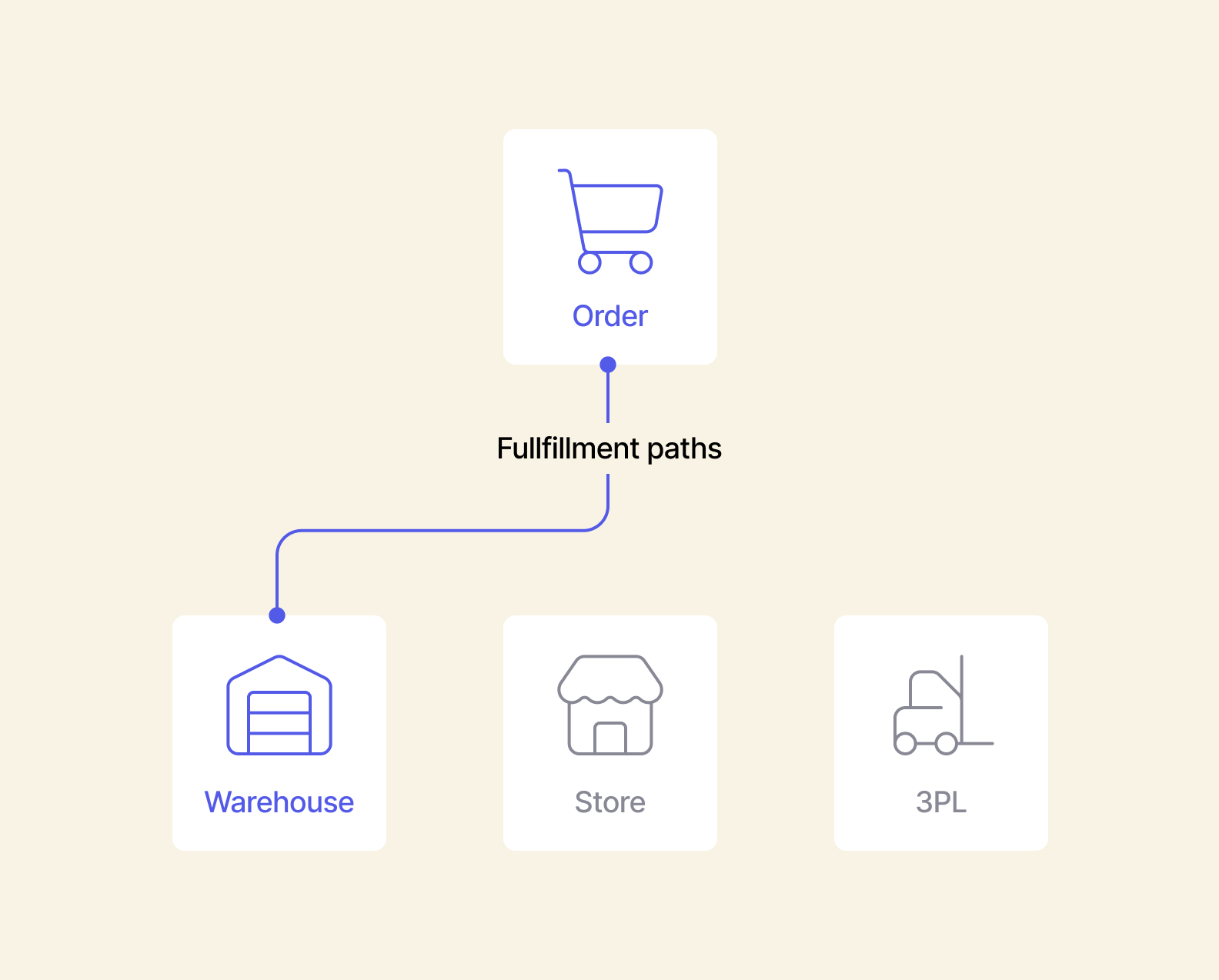
To make these decisions, the routing engine is weighing factors like stock levels — not just how much is in the warehouse, but how much is actually available right now — and location proximity (which warehouse, store, or partner is physically closest to the customer).
It also considers cost-to-ship, the cheapest fulfillment path, and the promised delivery window, when choosing which location(s) should fulfill the order.
When the Decision Is Wrong
These routing decisions, however, can only be as good as the data they’re based on. When the routing decision is wrong, you end up with consequences like:
-
Split shipments from a single order. No one location shows enough stock to fulfill the entire order. So the system ends up distributing the order across 2+ shipments.
-
Orders routed to a store that already sold the item in person. The item still shows as available because the in-store POS sale hasn’t synced back to the system yet.
-
Canceled orders after a promised BOPIS window. This happens when the store-level count the order was routed against didn’t match what was really on the shelf.
Fixing a bad routing decision is always more expensive than getting it right the first time. You’re looking at expedited shipping costs or manual customer service recovery.
Ultimately, all of these consequences occur for the same reason: The routing engine and the systems it’s routing between don’t agree on the same numbers at the same moment.
Why More Routing Rules Don’t Solve A Fragmented Data Problem
When routing breaks, it’s instinctive to add more logic to the OMS. This might look like more exceptions, overrides, or manual review queues, which only treats the symptom of the problem. The rules are still reading from inventory and order data across POS, ecommerce, wholesale, and 3PL systems; data that may not be verified as accurate or properly reconciled yet.
There are two ways brands typically respond to routing failures, but only one of them actually works.
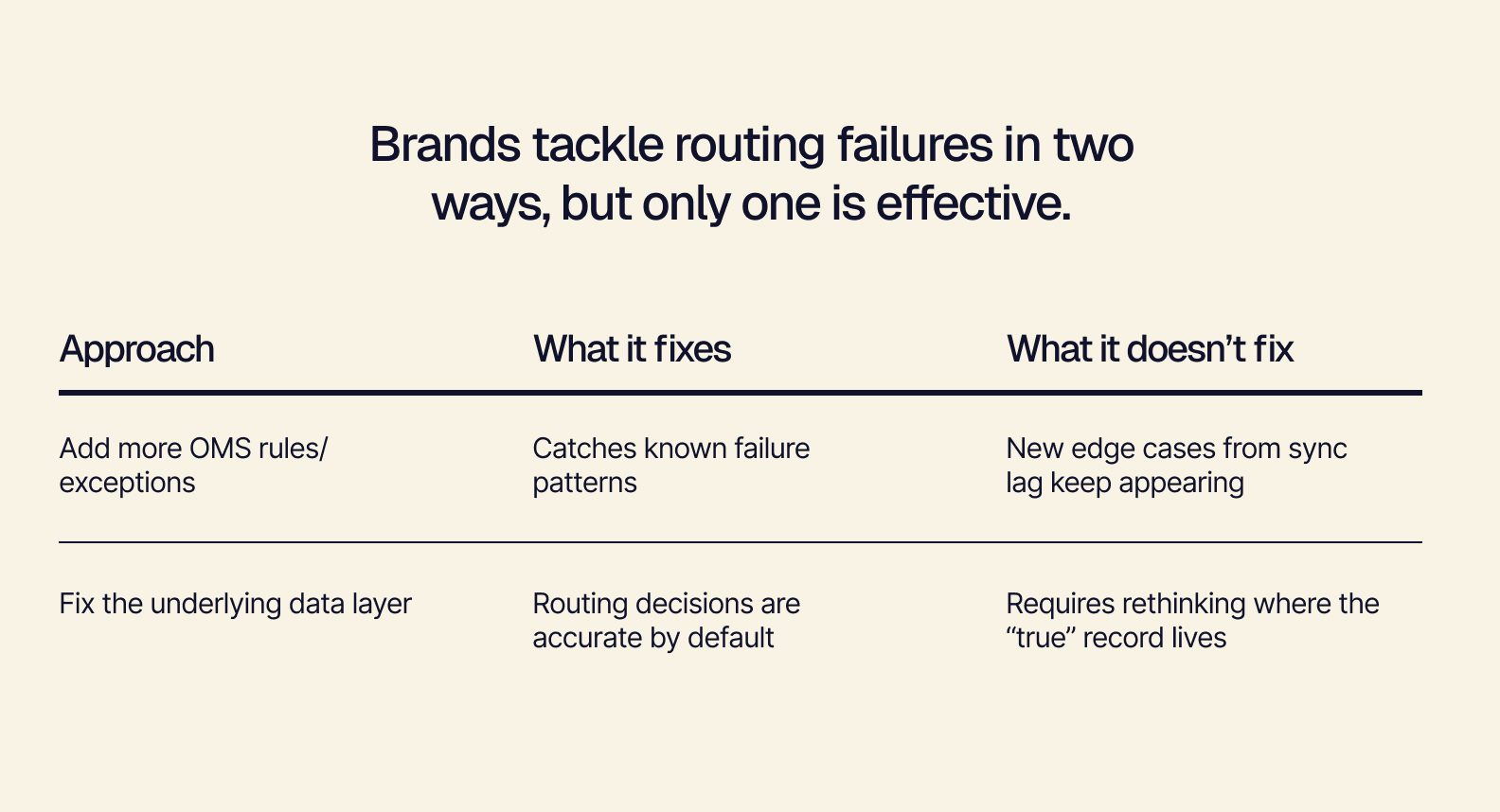
Any sync lag between systems, even if it’s just a few minutes, is long enough to cause a routing engine to make a wrong call (but to do it confidently enough that you don’t realize).
What Changes When Routing Sits on a Composable, Headless Architecture
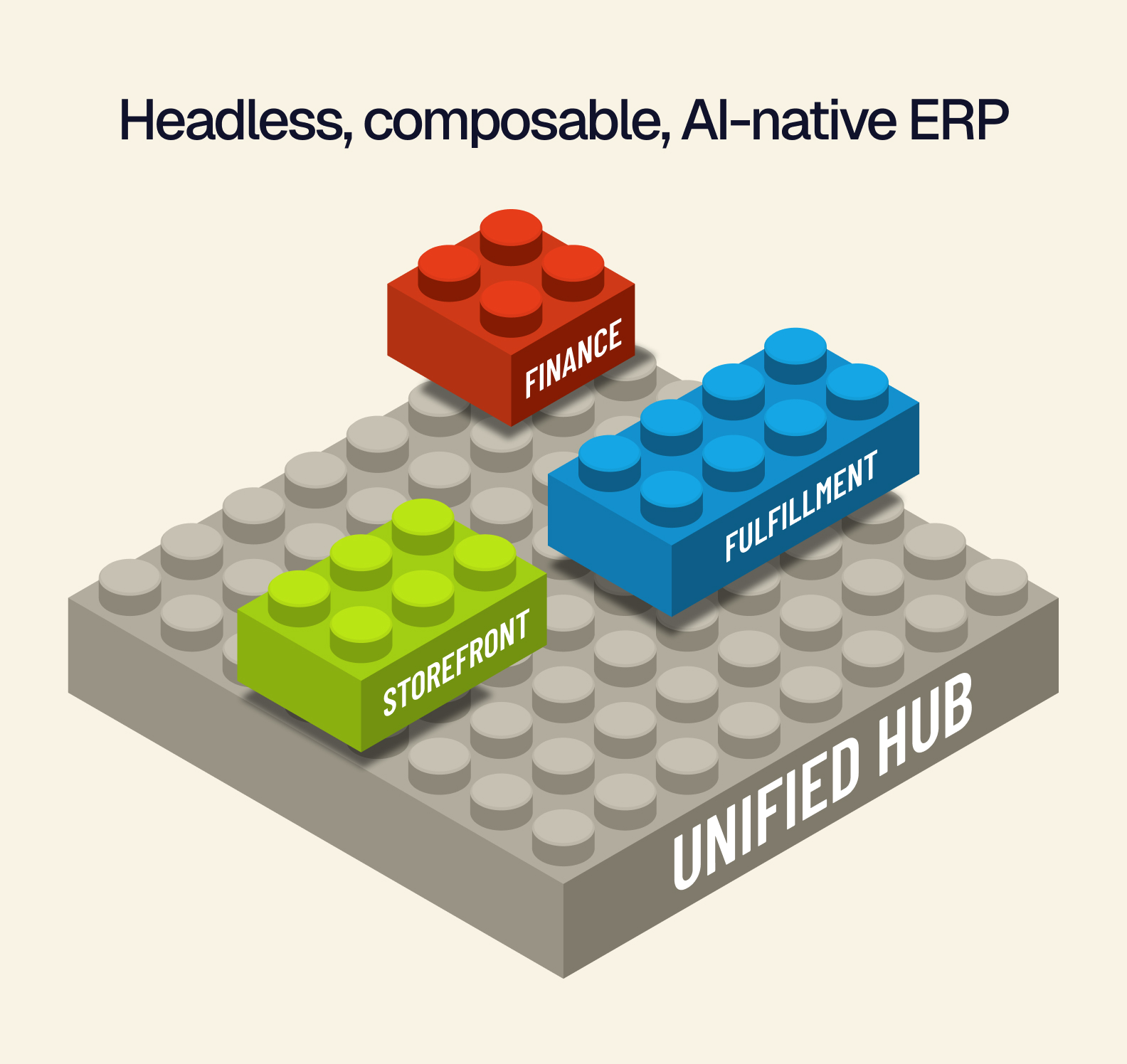
Your goal is for every channel and location to read from and write to the same operational record vs. syncing separately to each other. That way, the routing engine stops guessing.
To get there, you need a headless, composable, AI-native ERP — the architecture Tailor is built on.
One Record, Many Channels
With a headless ERP, you provide your tech stack with a single source of truth. Your storefront, POS, and 3PL no longer provide conflicting accounts of the same data. Instead, they all reference the same real-time data stream, which prevents post-reporting disagreements and manual reconciliation.
Example: A customer buys the final jacket in-store. When that sale is rung up on the POS, the record updates immediately. If someone else tries to add that jacket to their online cart five minutes later, the storefront shows it as sold out because it’s syncing against the same live record, not waiting on a batch job to catch up later.
Best-in-Breed
In a monolithic ERP, you’re forced to rip out the tools your team already knows, and replace them with bundled solutions they’ll have to learn from scratch. But with a composable ERP, you can keep what works, plugging your existing tools into a single operational core.
Example: If a brand is using Shopify for their storefront, ShipStation for fulfillment, and QuickBooks for accounting, it can keep all three of those tools. But instead of pushing data to each other on separate schedules, they each plug into the same operational core. Now, ShipStation is always routing against the same stock count that QuickBooks is booking revenue against — leading to a cohesive flow of data.
Human in the Loop
AI can help with high-volume routing decisions, but your ops team should stay in control of the judgment calls and exceptions that matter. Tailor’s AI-native ERP does just that.
Example: An order comes in that could ship from two different warehouses for approximately the same cost. AI recommends the quicker option and routes it automatically. But if a customer’s order matches an exception the ops team has defined, AI pushes the task to a designated decision-maker to approve.
What to Look For in an Omnichannel OMS Beyond the Routing Engine
Routing features aren’t the most important part of a routing engine. The data foundation underneath is what determines whether that routing will stay accurate six months from now.
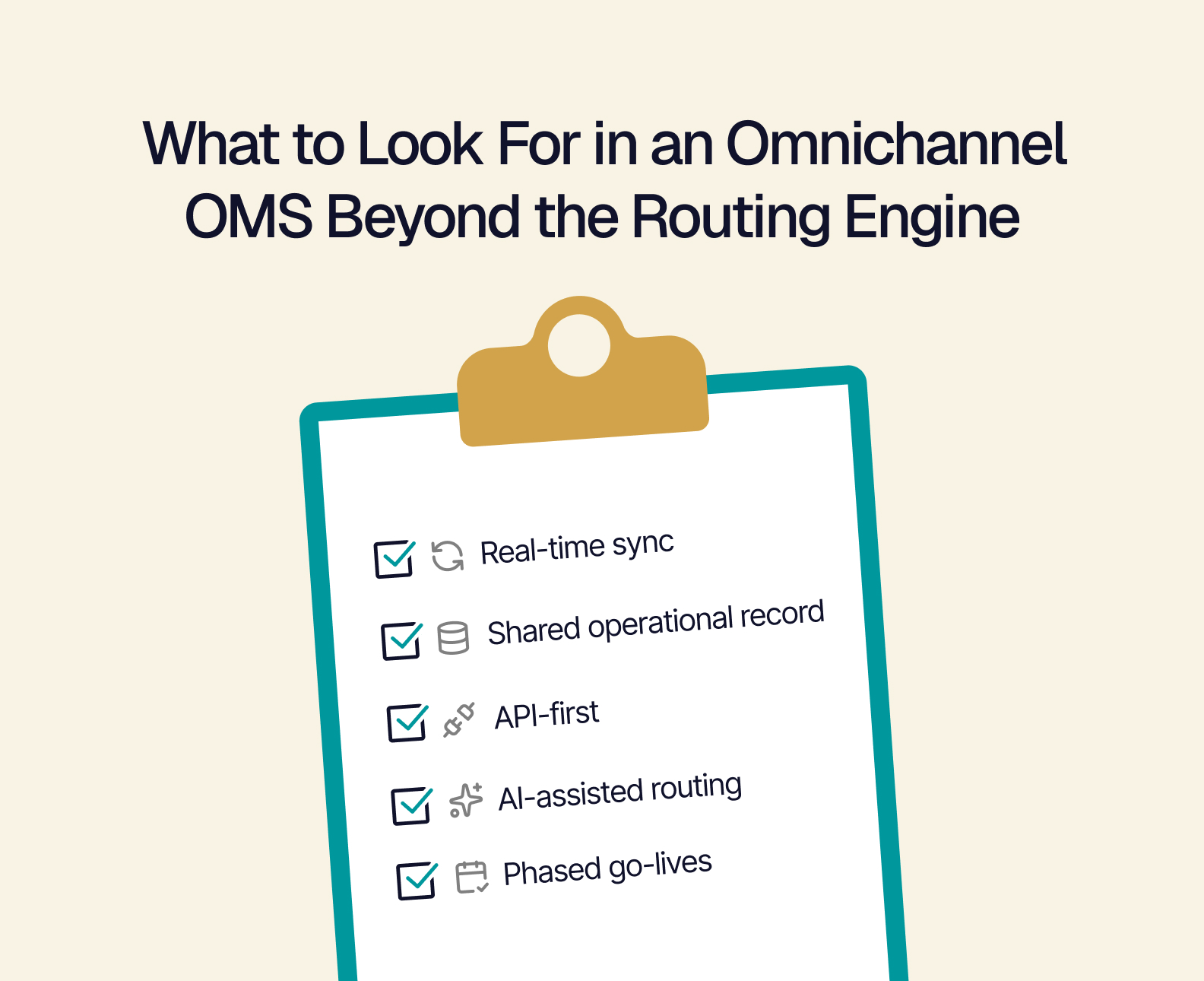
Here are the evaluation criteria to ask about before you commit to a system.
-
Real-time (not batch) sync. Clarify what “real-time” actually means. A system that syncs every 15 minutes is still leaving a gap for two systems to disagree about what’s in stock.
-
One shared operational record, not multiple synced copies. In a point-to-point setup, every tool syncs to every other tool on its own schedule, causing constant disagreement. But with system-of-record, every tool syncs to one central record instead of to each other, creating a single place where decisions are made. Ask whether your storefront, POS, and 3PL all sync to the same central system, or just sync to each other more quickly than before.
-
API-first, composable design. This is what protects the tools your team already knows how to use. A composable system plugs into your existing stack instead of asking you to replace it.
-
AI-assisted routing with visibility into every automated decision. With AI-assisted routing decisions, you want to be able to see why the system made a certain call. You also want to know that exceptions will be flagged for human judgment.
-
Phased go-lives. Typical software integration timelines are months long, frequently subject to delays, and are pushed out in a single go-live. A more ideal implementation timeline features phased go-lives in roughly six-week increments to curb delays and system shock that could disrupt operations.
Reliable Routing Is the Foundation
You don’t need a sophisticated set of rules. You just need a real-time record that every channel can reference, ensuring your systems no longer disagree about the numbers. Composable, real-time architecture is the path to make your routing accurate.
That’s the foundation Tailor is built on. Book a demo to see how Tailor gives every channel the same source of truth.