Most retailers integrate an ERP system to get organized and keep up with growth. For a while, it works. But fast-growing retail brands all tend to see the same pattern: Eventually, the system that helped you scale becomes the thing that slows you down. If your team is spending more time working around your system than inside it, that’s your main issue — and your process isn’t the problem.
If you suspect that your current system isn’t working for you, this guide will help you diagnose whether or not your retail ERP system is the problem and show you what you can do about it.
What You’ll Learn:
-
When retail ERP systems start working against you
-
How composable and headless ERPs can benefit your retail business
-
Why swapping one monolithic retail ERP system for another won’t solve your frustrations
-
How to be sure your ERP system won’t hold you back in the future
When Retail ERP Systems Start Working Against You
Most retailers know the exact moment when their ERP stops helping them grow and is slowing them down. Inefficiencies start to disrupt key workflows and processes seem to stumble over unavoidable roadblocks that weren’t there before. While each business’s specific ERP trouble will be unique to them, here are a few telltale signs to look out for:
-
You’re building workarounds for the system instead of using it in a way that feels natural to your workflows.
-
Adding a new tool, channel, or system features turns into a big, expensive project.
-
The system wasn’t built for how you actually operate, and forces you into rigid, inflexible processes.
-
By the time a change gets made, the business has already moved on.
The Cracks Usually Start in Inventory
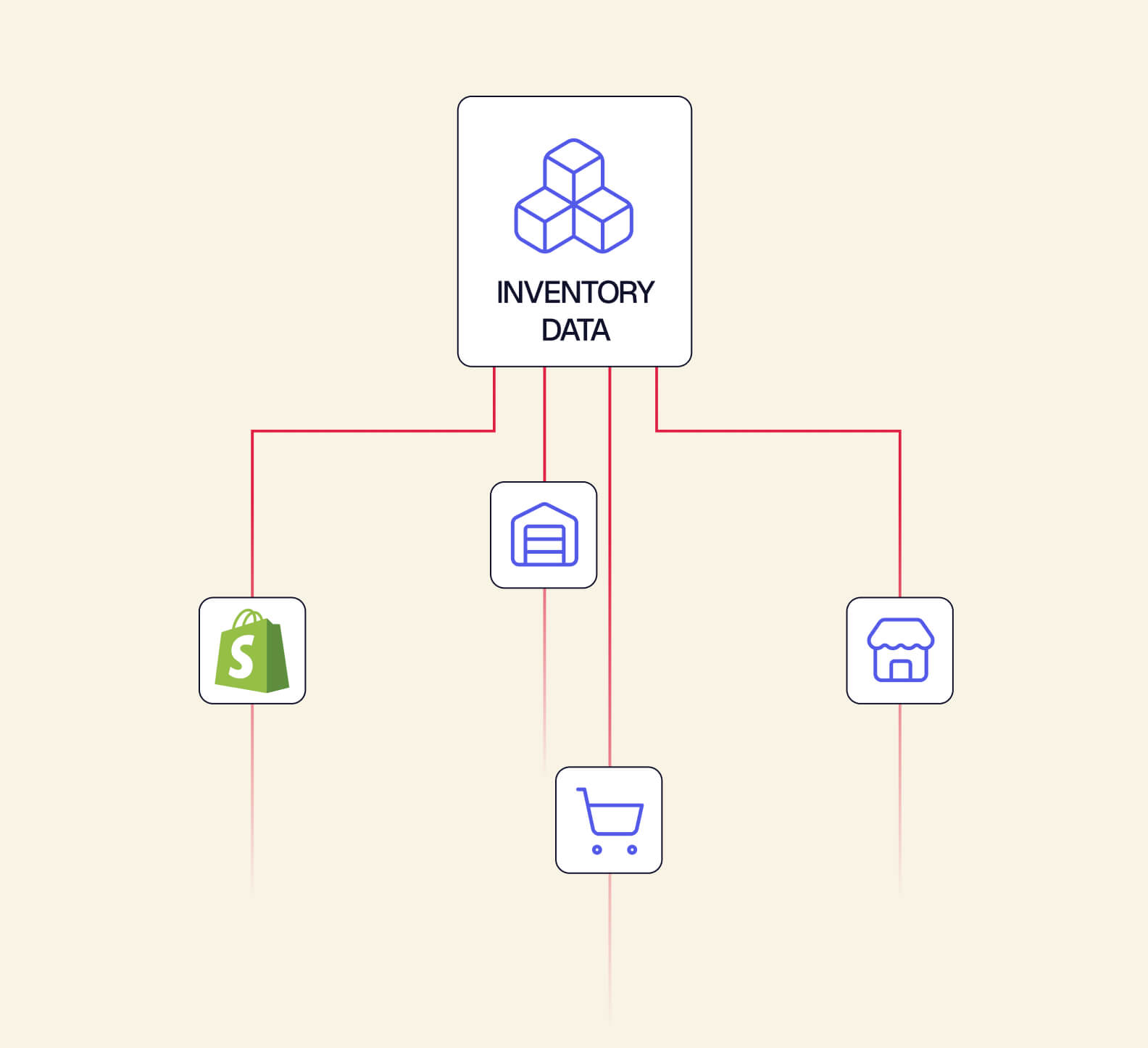
Inventory is where the limits of a rigid retail ERP system often show up first. That’s because inventory touches everything, from fulfillment to purchasing and financials. So when cracks start to show in your process, they’ll emerge everywhere, not just a single spot. Let’s look at a few common problems, and their consequences, that you should look out for:
Problem 1: Your system says you have stock, but it’s not on the shelf.
- The consequence: Manual inventory recounts and reconciliation becomes the norm.
Problem 2: Inventory isn’t syncing in real time between different channels.
The consequence: You’re overselling across channels, frustrating customers and complicating your ordering process.
Problem 3: If you add a new channel, data doesn’t flow automatically. You have to re-enter the same data in multiple places.
- The consequence: Every new channel is a manual project, not a connection — opening up new opportunities for data-entry errors.
Problem 4: Purchase orders are still being built by hand, with information collected from spreadsheets across multiple systems.
Problem 5: Any complexity beyond basic stock tracking either isn’t supported, or needs expensive customization.
- The consequence: Instead of the system fitting your operations, your operations have to fit the system, which limits your ability to scale the way you want.
Unfortunately, these scenarios are the typical operational reality for any retail brand that’s grown beyond its original setup. And they nearly always signal an ERP that doesn’t have flexibility built in.
Why Swapping One Monolithic Retail ERP System for Another Doesn’t Solve It
When an ERP stops working, the obvious next move is to find a better one. But if you just replace one rigid system with another rigid system, you’ll end up in the exact same place a few years from now. While monolithic ERPs are powerful tools for large enterprises, they’re built for a way of operating that doesn’t fit smaller, modern retail operations. If you were to add a rigid, monolithic ERP system, you’d face several complications during integration:
Complication 1: Monolithic retail ERP systems are built for legacy businesses and large enterprises, rather than lean and agile operations.
- Traditional retail ERPs are designed around predictable operational workflows. They support standard SKUs, fulfillment, and multiple sales channels. However, once you grow past that stage — to DTC, wholesale, light manufacturing, and more complex pricing rules — you’re going to be stuck either paying for major customizations, or placing limits on what you can do.
Complication 2: Monolithic ERPs take a long time to implement, raising your costs and all but ensuring your business falls behind.
- Enterprise ERP implementations usually take 12-18 months. You’re configuring the new system for a version of your business that doesn’t even exist yet. By the time go-live finally comes around, the channels and workflows you’re prepping now could easily be outdated — but you’ll still be locked in.
Complication 3: You’re still locked into a vendor’s roadmap for any future changes.
- Even with a different ERP, you’re still going to be waiting on the vendor to decide what gets built and when it ships. There’s no guarantee their roadmap will include your specific needs. And if your business is growing fast, you’ll still be stuck with a system that can’t catch up.
Complication 4: More features doesn’t mean a better fit.
Retail ERP systems with lots of bells and whistles may look impressive during the sales demo. But if the system is bogged down with a lot of features you don’t need, these only add complexity and serve as a waste of money. It’s better to have a platform that aligns with how you work than a bunch of features you might not ever use.
What Composable Retail ERPs Offer Your Scaling Retail Business
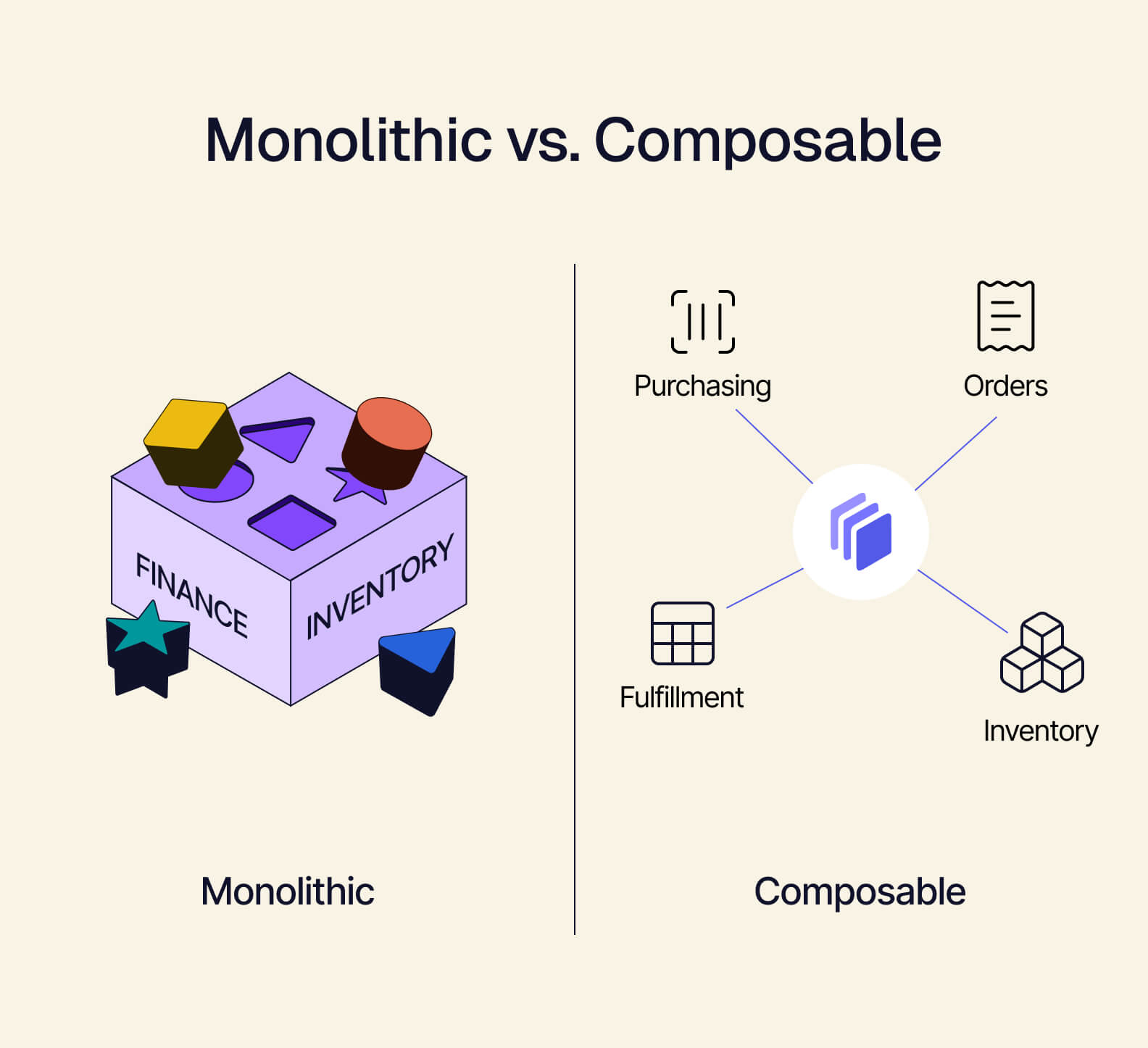
Modern retailers interested in rapid scaling are moving toward a different kind of system, one that’s built on flexible architecture designed to fit the way they work, rather than force them to conform to the system’s workflows. These software systems are designed with flexibility in mind, allowing you to adjust its user interface (UI) as needed, adapt workflows to new market conditions, and add new functionality without disrupting your day-to-day operations.
If you’re looking for a composable retail ERP to integrate into your business, Tailor’s flagship headless ERP might be the perfect solution. It offers:
-
Composable, modular design. A composable retail ERP is built with modules, or easily adjustable building blocks. Each module handles a specific individual function, so you can turn on what you need now, add more modules as you grow, or swap out what isn’t working later.
-
Headless architecture. A headless system separates the backend (inventory, orders, purchasing, fulfillment) from what your team sees and uses day-to-day. Thanks to this separation, you can build custom interfaces that actually make sense for your team (and that won’t break the other side).
-
API-native connectivity. An API-first retail ERP is built from the ground up to connect with other API-enabled software. New tools and channels plug in without having to rebuild everything around them, making your retail ops robust and flexible.
The end result is a retail ERP system that grows and changes with your business instead of putting a ceiling on it. This composable architecture is the model that Tailor uses to enable flexible growth.
Is Your ERP System for Retail Holding You Back? Here’s How to Tell
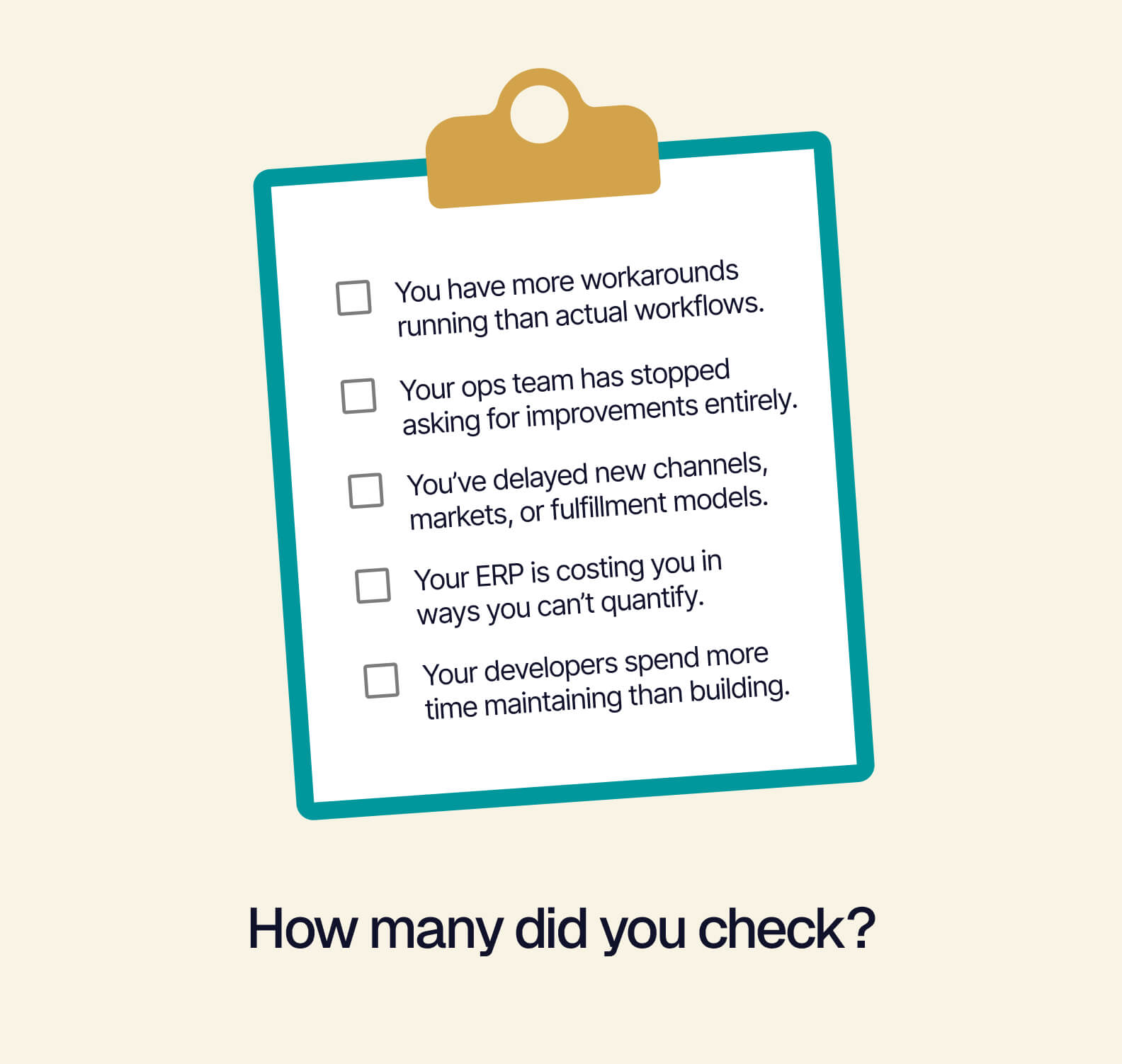
Staying on your current system might be costing you more than you realize. Some of these signs are easy to spot, but others may have become normal over time:
-
You have more workarounds running than actual workflows.
-
Your ops team has stopped asking for improvements because they expect to hear no.
-
You’ve delayed a new channel, market, or fulfillment model because your ERP couldn’t support it.
-
Your ERP is costing you in ways you can’t quantify, like dev hours, delayed launches, or missed revenue from those channels you haven’t added yet.
-
Your developers spend more time keeping the ERP running than building anything new.
If any of these sound familiar, it might be time to see what a flexible, composable system actually looks like in practice. Book a demo to see firsthand how composable retail ERP systems can radically transform your business.