With the recent explosion of AI-powered tools comes a lot of exciting AI-powered innovations for retail businesses to consider.
One such AI-powered solution is called autonomous pricing: a way for businesses to have a dedicated LLM agent, or machine-learning system, determine day-to-day pricing of products and negotiate with vendors. If you’re curious about how autonomous pricing could impact your business, use this guide to learn how to prepare your business.
Here’s a quick snapshot of what you’ll learn:
-
Three key business changes you should consider when preparing for autonomous pricing systems
-
Why headless architecture directly supports AI-powered automation
-
The difference between “lights out” automated workflows and human-in-the-loop automation
Assess System Flexibility
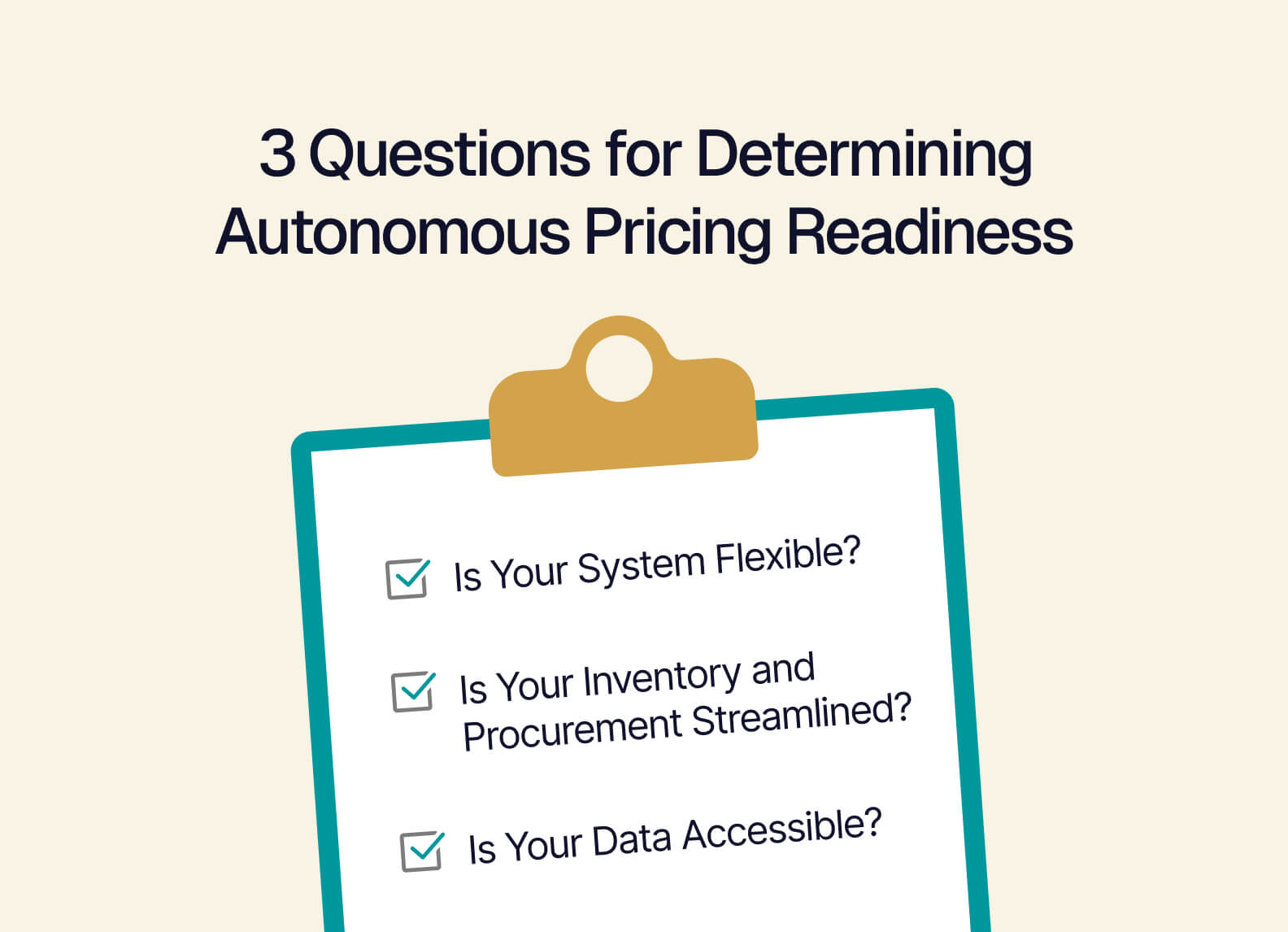
Say No to Workarounds and Messy Processes
Autonomous pricing needs replicable workflows that can be easily repeated. Both LLM tasking and machine-learning automation thrive on having clear steps to follow, and easy access to accurate data in order to perform successfully. If your workflows are full of workarounds, automation will struggle.
Here’s how you can clean them up to create a more friendly automation environment:
-
Simplify procedural tasking. Rather than setting workflows that jump around between software suites or disconnected programs, refactor your process to follow a natural (and logical) flow between connected programs. “A, B, C” and “1, 2, 3” stepping stone tasking logic helps AI-powered automation and your team’s efficiency.
-
Remove or replace problem software. In your preparation for autonomous pricing deployment, consider removing software you don’t need anymore or replacing software with an option that synergizes with your present (and future) workflows.
-
Implement native bridging tools. Having dedicated bridging tools that help disconnected parts of your tech stack talk to each other helps create a way for AI-powered workflows to “traverse” your business, without getting thwarted by siloed software.
Build Your Tech Stack with Flexibility in Mind
Some retail businesses end up in a situation where they have to say no to new tech integrations or software that would otherwise significantly streamline their processes. This results from having too much system rigidity — often caused by a rigid ERP or some other core software suite that dictates how your tech stack can expand.
Flexibility, on the other hand, comes from headless (more on that later) and composable software that offer:
-
Native API connectivity. Software that features native API connectivity is able to scale better with your business and afford you breathing room to say yes to new tech.
-
Customizable user interface. Being able to combat overwhelm and tasking fatigue with easy-to-use, team-based workflows creates a direct pathway for autonomous pricing systems — and your valued team members — to thrive.
-
Adaptable workflows. As you grow, you need to be able to change how your systems operate without your core business faltering. The adaptable workflows that come with flexible software help you expand your company, reach new markets, and retool your operational efficiency as needed.
Streamline Inventory and Procurement with Headless Architecture
How Headless Software Improves Inventory Workflows
Headless software features a decoupled frontend (the user interface, or UI) and backend (the code that allows the software to function). This allows businesses to integrate software and customize the front end to fit the needs of those using it. Having headless software as a core part of your tech stack directly enables the flexibility needed to lay the groundwork for autonomous pricing systems.
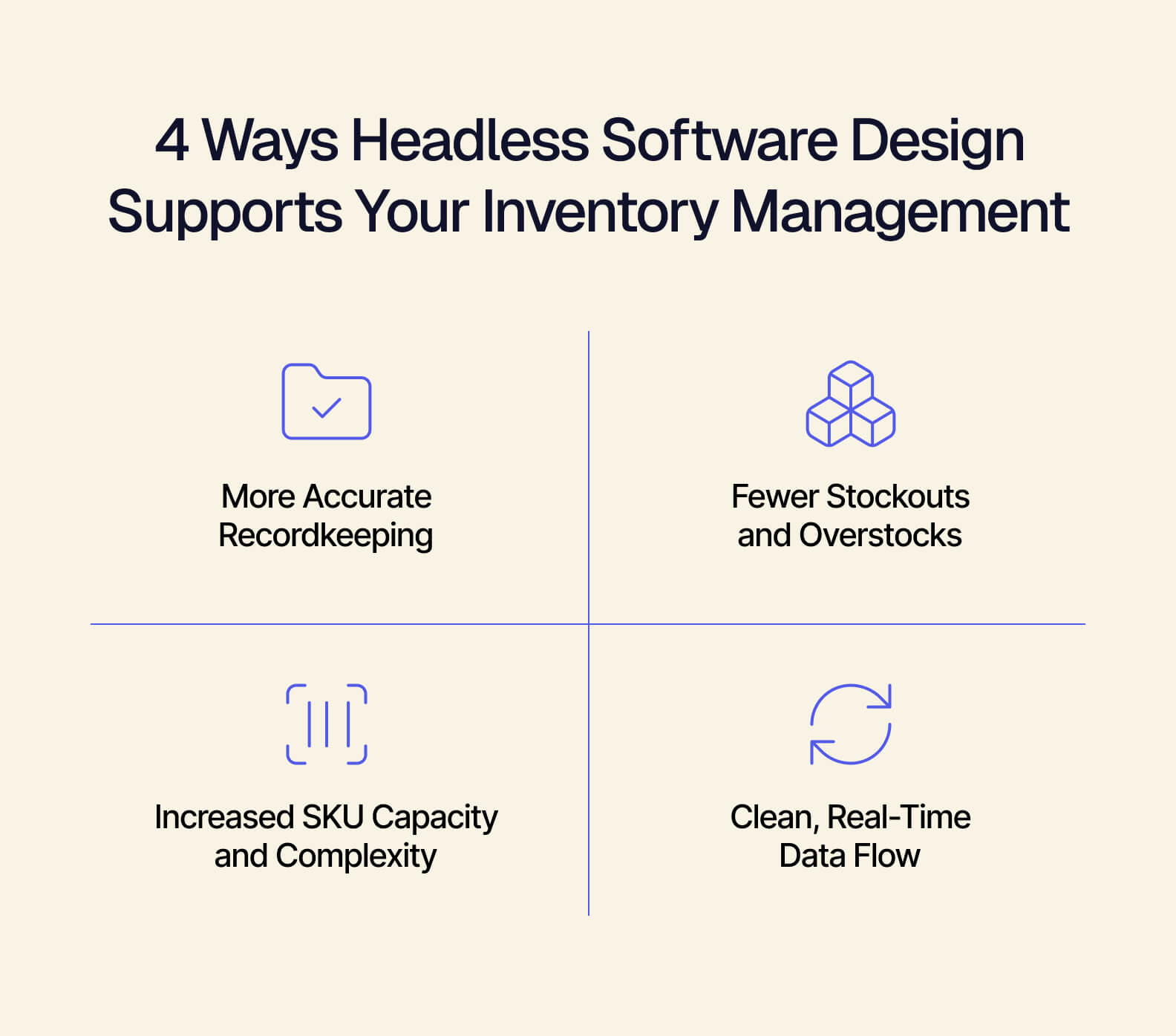
However, flexibility isn’t the only thing it enables. Headless software integrations can directly transform four key areas of your inventory process.
More Accurate Recordkeeping
Recordkeeping gets bogged down by spreadsheets, manual inventory counts, and lagging reports. A headless ERP solution, like Tailor, can give your retail business access to a single source of truth — a system that is able to reconcile data without allowing errors to create cascading problems and chaos for your ops team.
Why this matters for autonomous pricing: Your pricing automations need access to 100% accurate records in order to adjust prices in context of your current (and past) sales performance.
Fewer Stock Issues
Overstocks and stockouts can easily turn an otherwise strong quarter into a nightmare for your ops team to tackle. The culprit of these issues? Bad manual counts, late reports from your web portals, and subpar trend forecasting. Headless software helps your inventory workflows by catching mistakes sooner, speeding up reporting processes, and utilizing AI-powered forecasting for high-context projections.
Why this matters for autonomous pricing: Your inventory numbers supply autonomous pricing with valuable supply and demand information that it can use to dynamically price your products.
Increased SKU Capacity
In order to properly scale your business, you need access to two unlocks in your inventory management: multi-warehouse support and a higher ceiling for the number of SKUs your inventory management software can handle. Headless software gives you the ability to say yes to the tools necessary to get these expansions in place.
Why this matters for autonomous pricing: When you increase your inventory capacity and subsequently drive more customers to your stores, autonomous pricing is able to make better adjustments that drive your business forward.
Clean, Real-Time Data
Inaccurate (or “bad”) data is often caused by lagging reports that cause discrepancies within your broader inventory management system. It can also be caused by numbers getting siloed off software or spreadsheets, meaning their data doesn’t get added to data reconciliation workflows. Headless inventory management modules can help this by connecting disconnected tools and enabling real-time inventory sync across all aspects of your business.
Why this matters for autonomous pricing: Running your business off clean data enables autonomous pricing workflows to operate without roadblocks, meaning you can have automation processes that actually save your time.
Why Procurement Needs Headless Software Solutions
Procurement is another area where autonomous pricing can have a significant impact — especially in concert with autonomous procurement workflows. Autonomous pricing systems can deploy AI-powered agents to negotiate with vendors and suppliers on behalf of your business. But for these powerful tools to be successful, your procurement workflows need to be clear, replicable, and have a human-in-the-loop to manage bigger orders.
Preparing your procurement workflows for autonomous pricing deployments gets back to having headless architecture. Click here to learn more about how you can deploy autonomous procurement in your business.
Remove Blind Spots and Data Silos
Taking Back Your Data Integrity
Data integrity is an often overlooked facet of the conversation around software and autonomous tools — and it touches every part of your business (as you might have noticed through this guide). It’s worth reviewing some of the common ways that your data integrity can be threatened; preventing you from deploying autonomous pricing workflows.
Spreadsheets cause more harm than you think. Spreadsheets have their necessary uses, but many businesses stretch spreadsheet functionality too far and create negative feedback loops for their data integrity. This can create layers of inaccuracies that prevent autonomous pricing systems from being able to operate on contextually accurate data.
Data siloes put your clean data at risk. You may have excellent data hygiene in your business, but that doesn’t mean that all your data reports to a single place. When you have apps and software vendors that store your data on their own servers, you can run into bottlenecks that prevent you from properly reconciling day-to-day.
Lagging reports are the core of many data integrity problems. In this modern retail environment, it’s becoming increasingly important to prioritize real-time sync across your business. Global ecommerce means that a flurry of orders can happen at any time, and your POS needs to be able to report those sales immediately.
Keeping the Lights On: Why “Lights Out” Automation Shouldn’t Be Your Goal
“Lights out” is a term borrowed from manufacturing, which describes factories that run with minimal-to-no human input. Many business owners desire a similar result for AI-powered automation deployed into their operations.
Tailor strongly believes that human-in-the-loop automation is the path forward, rather than lights out. Factories are inherently rigid systems that are not supposed to change, whereas retail businesses need to remain flexible and agile — the exact opposite of what lights out automation wants.
Three Reasons Why Human-in-the-Loop Automation Is Right for Your Business
Human-in-the-loop automation keeps the people who know your business best dialed into the process. This provides a layer of protection for your operations, because no automation is truly perfect; accidents happen, roadblocks occur, and sometimes processes need to be paused for good reason.
Here are a few things to consider about the benefits of human-in-the-loop automation implementation:
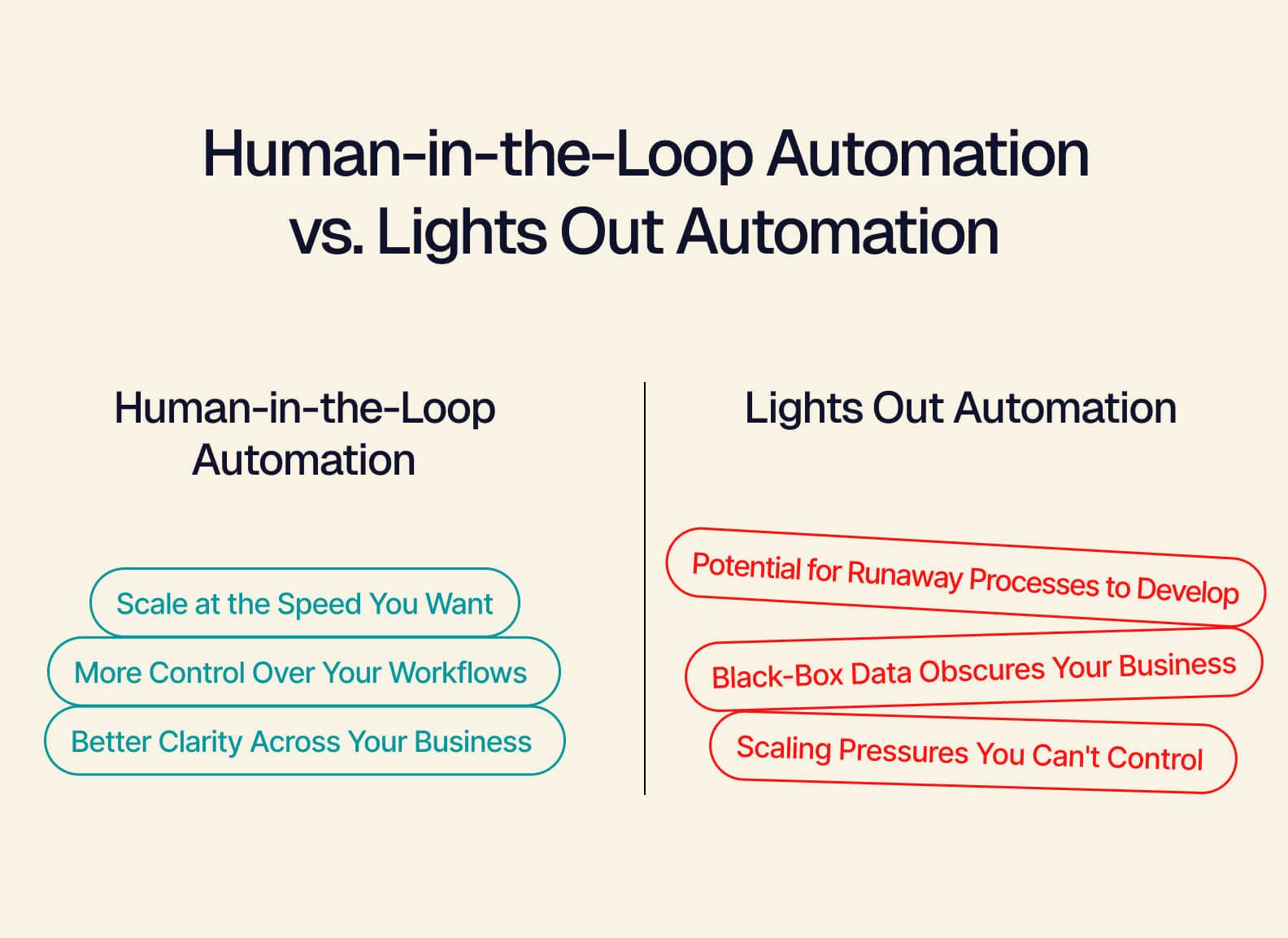
More control. Large purchase orders or pricing changes should always be reviewed to make sure they’re in line with your business’s interests. Additionally, you can easily adjust automated workflows as needed to ensure that your teams are getting the most out of them.
Better clarity. Lights out automation could lead to black-box situations where you have no idea why parts of the process are happening, or even why something went wrong. Human-in-the-loop automation preserves your visibility of the process and ensures that your ops team understands what’s happening from start to finish.
Manageable scaling. Lights out automation wants to function like an assembly line, which does not tolerate changes in speed, size, or complexity. This would cause rigidity for your business and force you to scale only in the ways your automation can handle. Human-in-the-loop automation removes this hurdle, enabling you to maintain scalability and productivity.
Are You Ready for Autonomous Pricing?
While retail-ready autonomous pricing tools are still being developed, part of scaling your business is being prepared to add new functionality to your tech stack in the future. That’s why it’s important to focus on headless and composable software integrations: the more flexible your business is, the quicker you can add AI-powered products that will put you ahead of your competitors.
If you’re serious about autonomous pricing readiness, then schedule a demo with us today. Our team of experts can help you identify which parts of your business need composable modules or whether a headless ERP integration would be the edge you need to radically scale.