Modern retail businesses can’t afford to get tripped up by the unpredictable chaos of the current economic environment. Regional weather instability, shipping disruptions, and rapid price fluctuations — all of this can impact your supply chain.
Historically, when supply chain chaos hits, business-as-usual turns into reactive firefighting. Thankfully, your business doesn’t have to conform to historical patterns.
With the increasing power of AI-powered automation, machine learning, and headless software, you can create a highly resilient, self-healing supply chain that insulates your retail ops from instability and market threats.
In this guide, you will learn:
-
What you need to support your self-healing supply chain
-
How headless ERPs improve AI-powered and machine learning automations in your business
-
Why self-healing supply chains help you stop being reactive
-
How you can sustainably scale your retail ops
What Headless ERPs Do to Prepare You for a Self-Healing Supply Chain
Headless ERPs lay the groundwork for the future of your business: easy integration of new tools, increased operational flexibility, more efficient workflows, and higher capacity for scaling. But when it comes to self-healing supply chains, the unique advantages of headless ERP integrations have a sizable role to play in making the “magic” happen.
Because headless ERPs are systems-driven — just like self-healing supply chains — they share an inherent compatibility that exponentially increases the positive impact on your retail ops. Let’s take a look at a few of them before we dig into why self-healing supply chains are so important for forward-thinking businesses.
Increased Visibility Across Your Business
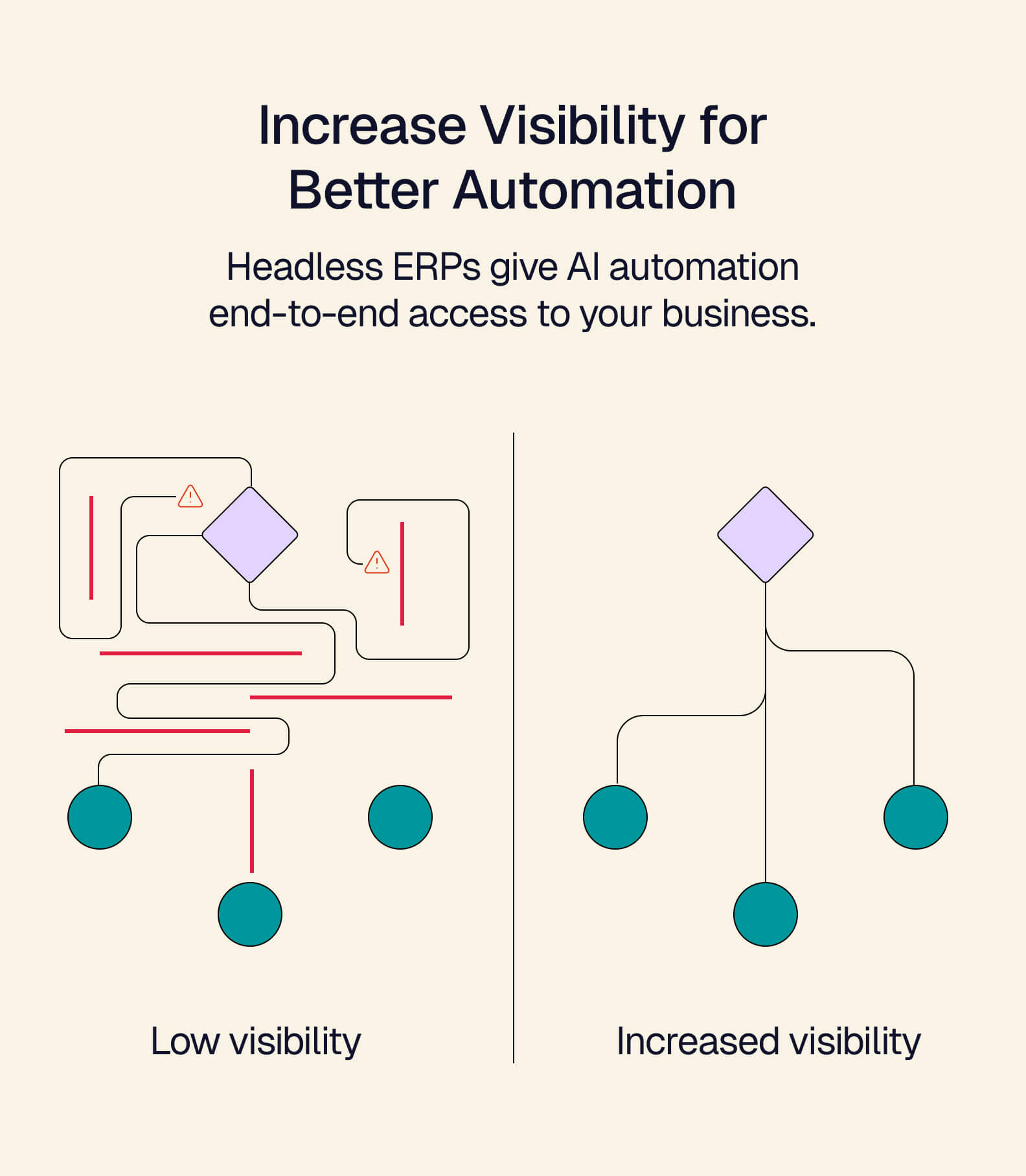
Headless ERP systems give you the means to connect every part of your business, from disconnected departments to siloed software systems. By bringing everything together into a single source of truth for your business, you create a system that gives you full, uninhibited visibility across every key process.
Why this matters for self-healing supply chains: Because self-healing supply chains fundamentally operate with AI agents and powerful machine-learning workflows, they need end-to-end access to every supply-side function they touch. Headless ERPs give them this and help you streamline your operations to remove friction for these automations.
Real-Time Data Sync
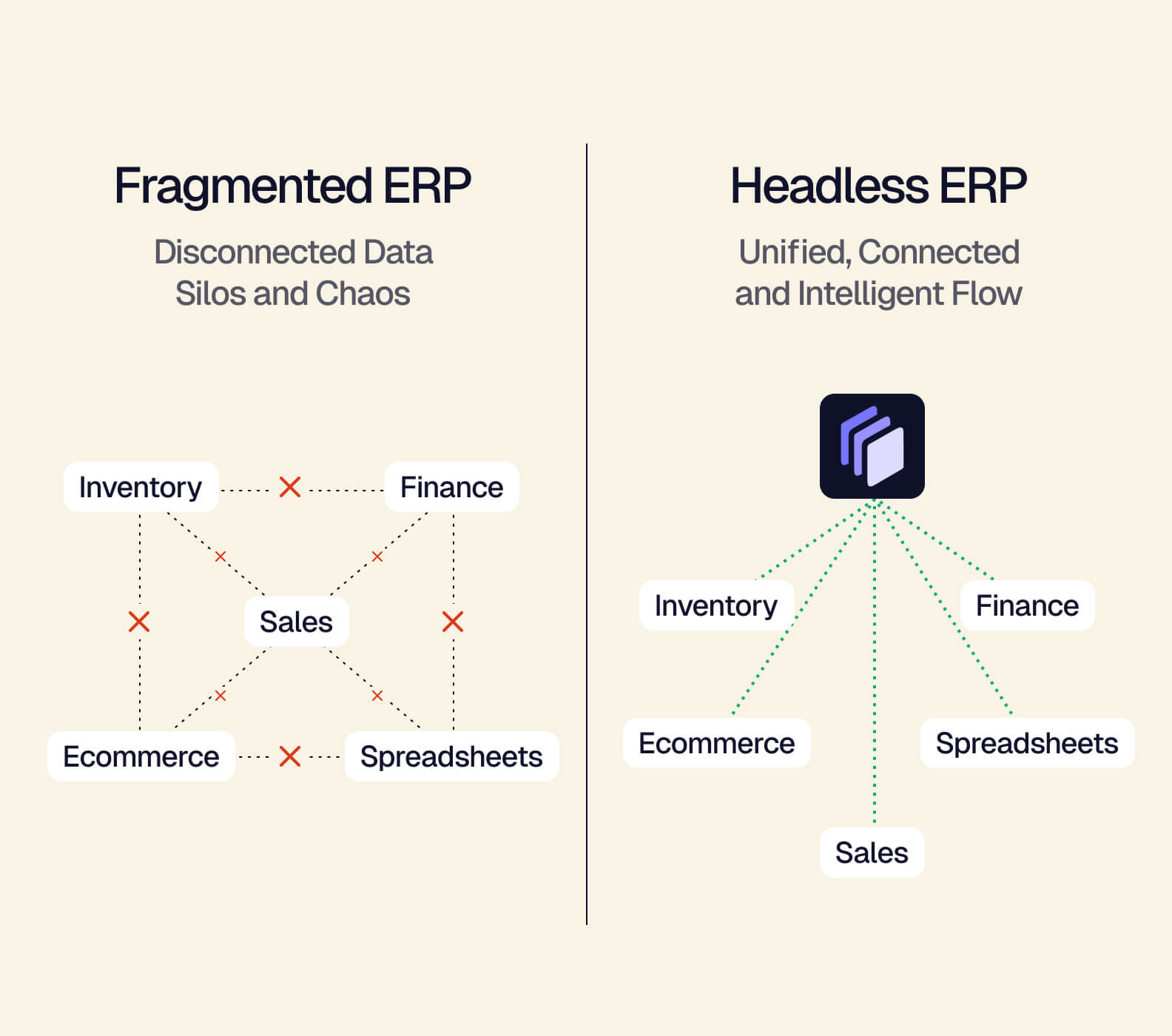
When siloed software systems get connected via a headless ERP, you’re able to cut out the go-between workflows — like spreadsheets — that were previously necessary to get data from one software to another.
With a headless ERP system like Tailor, you can push data from your software into a user-friendly dashboard. This makes it easier than ever to pull that data and make decisions based on what’s happening in your business right now, rather than wasting time exporting data to a spreadsheet that may get lost or recorded incorrectly.
Why this matters for self-healing supply chains: Because AI agents and machine learning systems can have access to every piece of data flowing in your business, they’re able to make better decisions and recommendations based on the present, rather than making recommendations based on lagging reports or late spreadsheet reconciliations.
The Key Impacts of Self-Healing Supply Chains on Your Retail Workflows
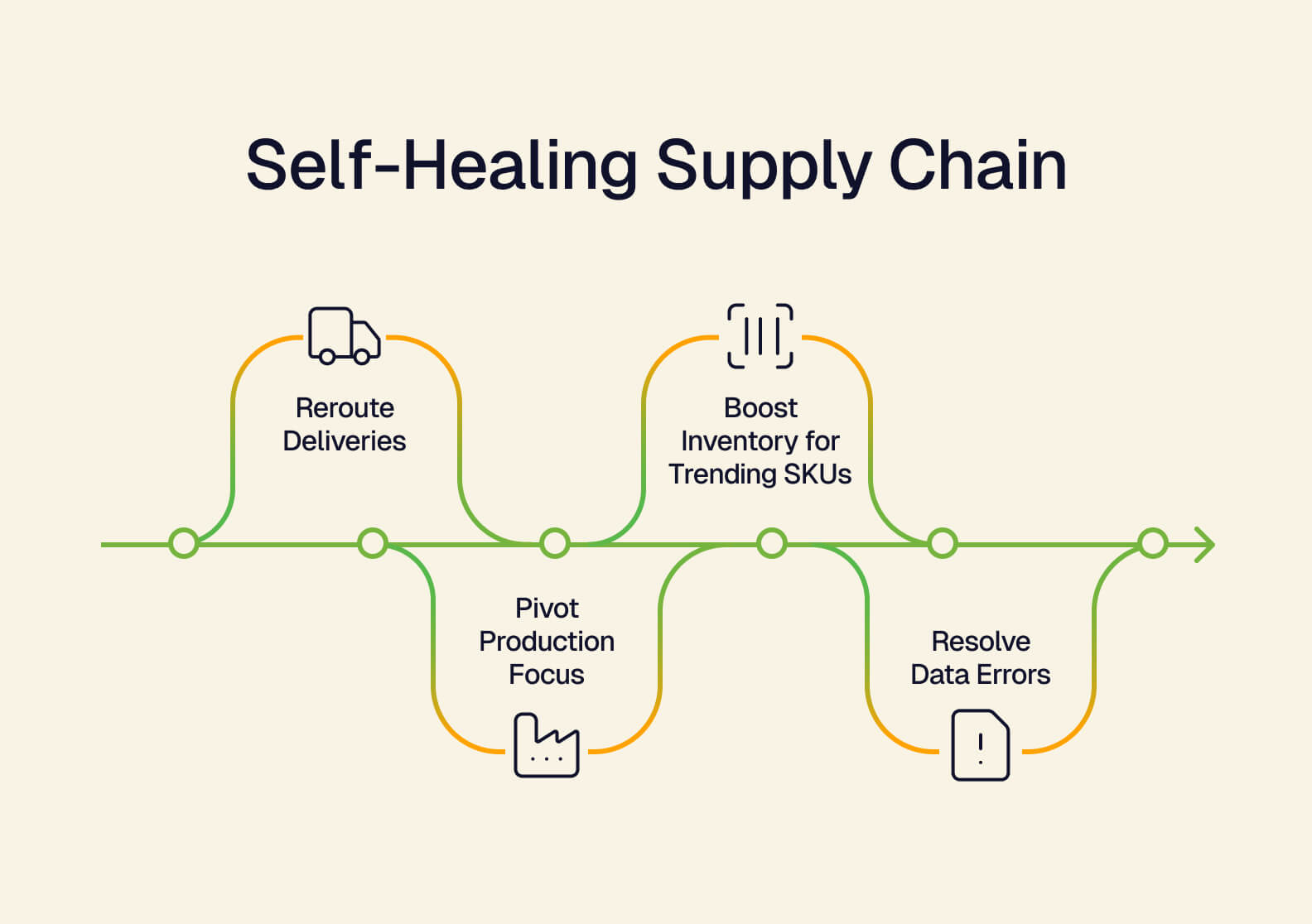
The systemic benefits that headless ERP has on your supply chain shouldn’t be ignored. In the same way they revolutionize how your system operates, so too does a self-healing supply chain radically transform how your teams work. Procurement, light-manufacturing, and inventory ops look completely different once you’ve upgraded your supply chain.
Rerouted deliveries no longer take you by surprise, rescheduled production no longer flusters your procurement team, and recounted inventory no longer serves as an endless hunt for missing SKUs. With self-healing supply chains, your business can move from last-minute, breakneck firefighting to cool, calculated playmaking.
Anticipating Problems Instead of Reacting
Lean retail businesses can often stumble into cycles of broken decision-making: a vendor put certain SKU materials on backorder last week, but your procurement point-person missed the email. This ends up causing your ops team to have to make a decision — do they source the materials for a new vendor, or wait until they’re available?
These types of last-minute deliberations can cripple productivity and supply chains every time they happen. Thankfully, you don’t have to commit your business to endless cycles of reactivity.
Human-in-the-Loop Automation
One of the forward-looking goals of AI-powered deployments in businesses is to achieve factory-like task automation — called “lights out” automation. While this level of automation seems amazing on paper, the assumption that a lights-out approach would work for a retail business is miscalculated.
The thing that gets missed in conversations around automation is that flexibility and agility need to be baked into day-to-day operations. Things can change at a moment’s notice, and lights out, factory-style automation breaks down at the first sign of change. However this doesn't mean your business has to forego automation altogether.
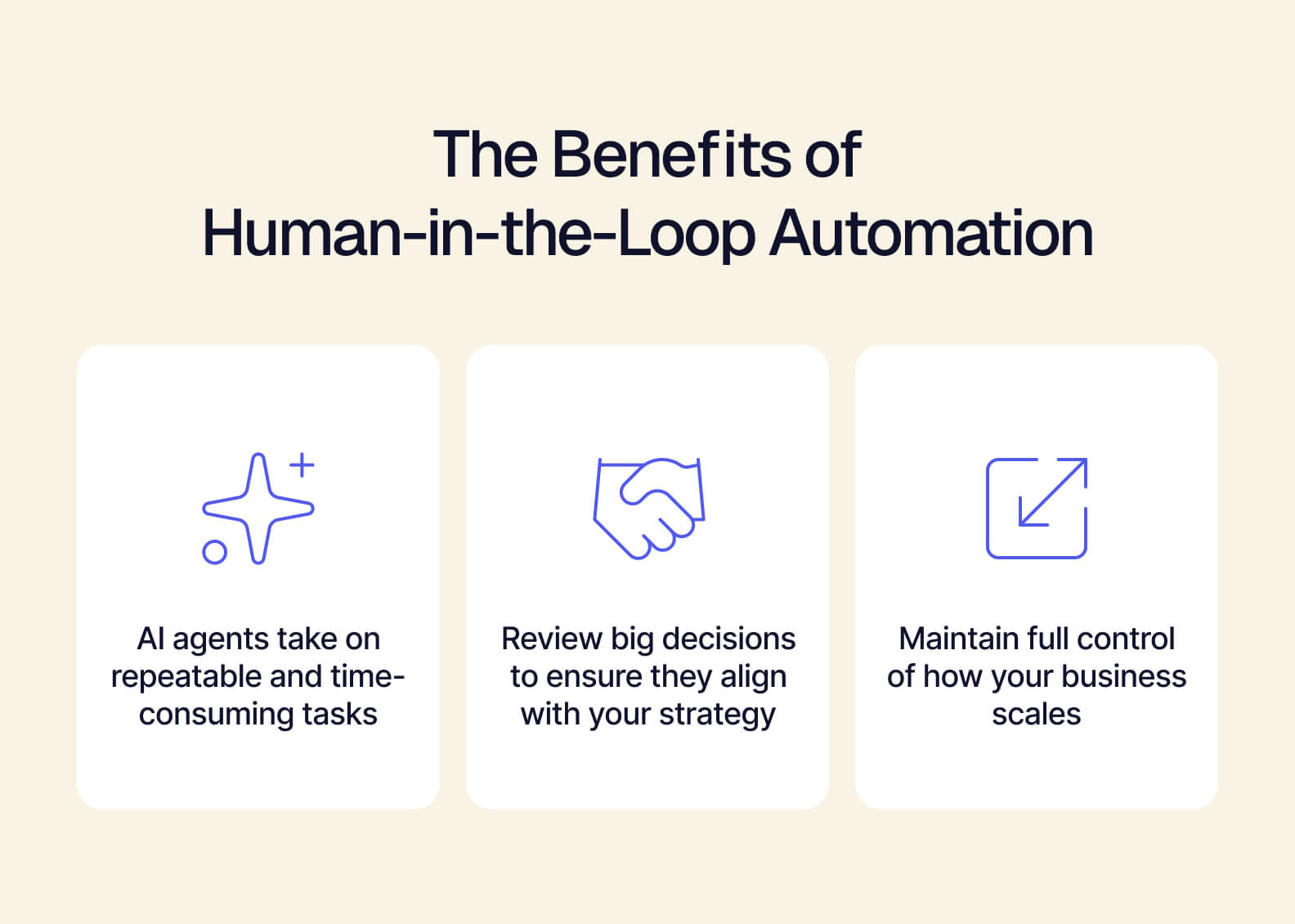
Instead, it can build toward human-in-the-loop automated workflows. This type of automation enables:
-
Repeatable and predictable tasking to be completed. Automation gets to pick up the tedious and time-consuming tasks to free up your people to perform high-value workflows instead.
-
Big decisions are left up to those who know their business best. For businesses that are more comfortable letting AI agents handle larger tasks, human-in-the-loop automation allows decision-makers to review riskier financial commitments like bulk purchase orders.
-
Full control over how you scale your business. Unmonitored automation can function like a runaway train for businesses that weren’t ready to accommodate the power it offers. Instead, human-in-the-loop automation allows you to throttle its impact on your business to match your pace.
AI-Powered Agents in Self-Healing Supply Chains
In self-healing supply chains, AI-powered agents — in conjunction with a powerful headless ERP — bring end-to-end cohesion to your business. A headless ERP exponentially increases visibility across your business and creates an environment to bring disconnected tools together. This creates the environment necessary for AI agents to thrive, operating with speed and accuracy.
Let’s look at some examples of how they can work in a self-healing supply chain:
-
Process key documentation as it’s received, such as purchase orders, vendor notices, and shipping details. With real-time data sync as a cornerstone of a self-healing supply chain, your AI agents can immediately get information where it needs to go. This keeps your ops team (and any other team that needs to know) in the loop, minimizing miscommunication or missed documentation.
-
Suggest inventory shifts and production adjustments. When AI agents have full visibility of your business, plus your historical and present data, they can suggest high-context changes to your inventory management and production pipelines to encourage efficiency. These optimizations can help your operations recover more quickly when market conditions impact your daily operations.
-
Detect potential delays, trend changes, and market conditions. Agents can also perform demand forecasting based on real-time market data and other external factors to warn your ops team about potential production hiccups that they may have missed. This could look like regional events (inclement weather, for example), global market conditions, or shifting customer interest.
Sustainable Scaling
One of the most significant impacts self-healing supply chains can have on your business is creating a sustainable scaling environment.
Self-healing supply chains, when backstopped by a headless ERP, enable your business to anticipate disruptions, pivot, and rebound much faster than if you were operating on a rigid ERP system and dated supply chain processes. Many retail businesses struggle to take disruptions in stride because their systems and supply chain are stuck in the past, which forces them to shrink their mindset, make smaller moves, and ultimately drives their scaling in a specific direction dictated by subpar software.
Instead, if they were to build on a headless ERP platform, they could gain access to the two core pieces of sustainable scaling: customization and control.
Custom Workflows Directly Boost Scalability
Headless ERPs allow for fully customizable user interfaces (UI), which enable you to create workflows that are built for the people actually using them. This has two immediate benefits:
-
Reduced task resistance. One of the leading causes of tasking inefficiency can be directly tracked back to high-resistance tasking — or difficulty caused by clunky user experience (UX). When workflows are built for the people using them, you can cut away resistance points, dramatically improving the UX, which ensures that tasks are completed quickly and accurately.
-
Minimized technical errors. Bad workflows often stem from having to create workarounds. And when teams aren’t engaging with workflows in intended ways, they create opportunities for technical debt to build up in your business. With custom workflows, you remove the need for workarounds, which dramatically reduces the likelihood of building technical debt from this angle.
Control Your Tech Stack Integrations
Another powerful point of leverage you gain — from blending headless ERPs and self-healing supply chains — is being able to integrate the software you want, when you want (this is called composability — you can learn more here). Rigid ERP systems often have limited software compatibility or only work within a suite of curated software. But with headless ERP, you’re able to integrate API-enabled software, without facing the same limits that rigid ERPs impose.
Being able to control the way your tech stack develops has a few direct impacts on how effective your self-healing supply chain can be:
-
You can rapidly integrate new technology. The utility of operating with a self-healing supply chain stems from knowing you can move fast, without threatening the viability of your retail brand. Being able to keep up with your competitors, or even outpace them, puts you in the pole position for your niche.
-
When things break down, you can pivot quickly. A self-healing supply chain needs to have options available. Because it thrives on flexibility — and headless ERPs enable maximum flexibility in your business — you can continually add new flex points in your supply chain. This boosts resilience, speed, and your ability to flow when chaos and complexity threaten to upend your operations.
Tailor Can Jumpstart Your Self-Healing Supply Chain
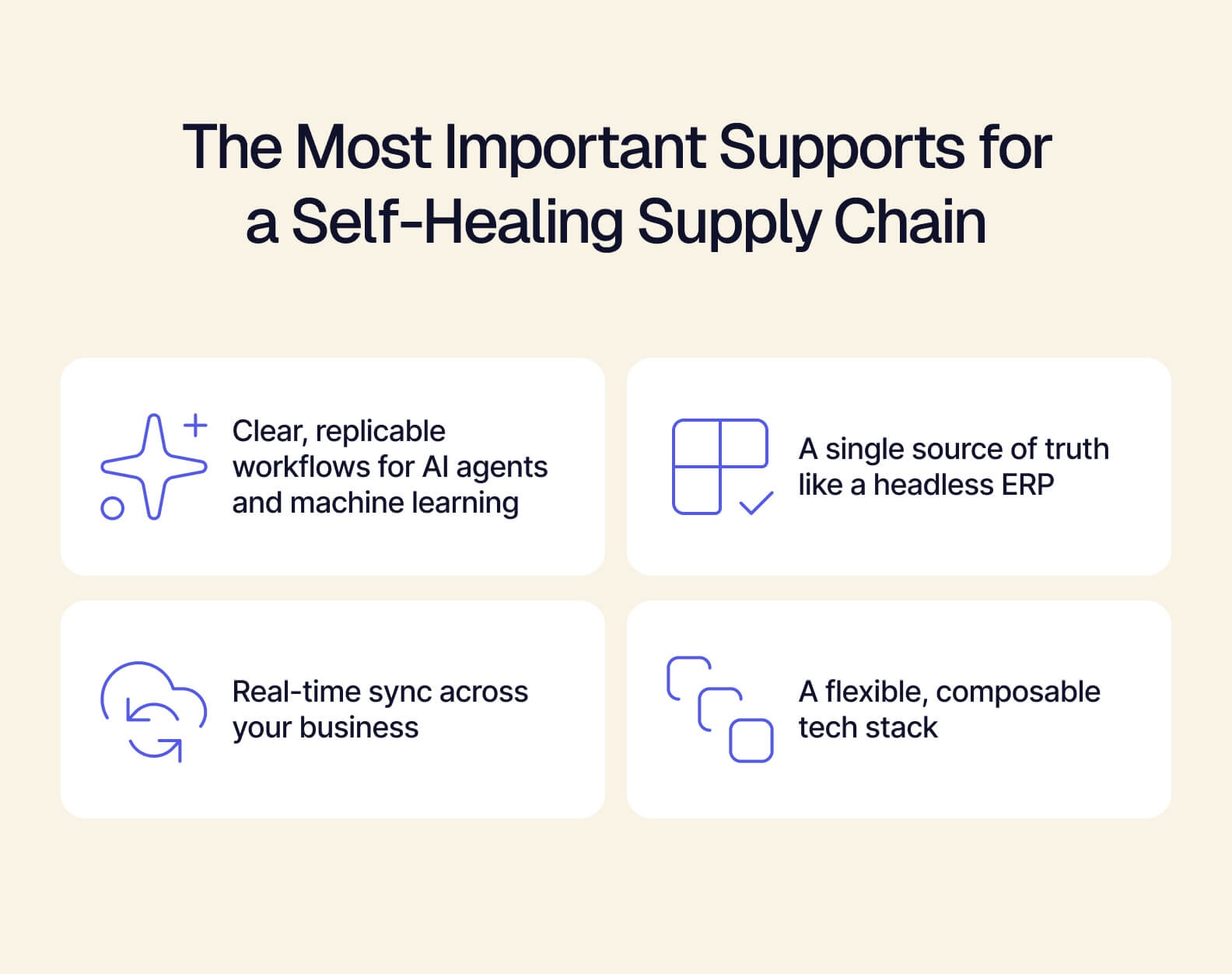
If you’re looking to create a business environment where you can deploy a self-healing supply chain, you’ll want to keep a few things in mind:
-
Self-healing supply chains need clear, replicable workflows for AI agents to follow.
-
You’ll want to ensure that your business is fully integrated into a single source of truth, like a headless ERP.
-
Aim to achieve real-time data sync across all parts of your business.
-
Commit to flexibility by building a composable tech stack.
Need a hand navigating the shifts your retail business needs to make to properly jumpstart a self-healing supply chain, in just a few weeks? Tailor can help. Our team of headless software experts can show you how our out-of-the-box ERP system can support your retail ops, or explore composable tools like the Shopify-Odoo connector.