Add a new marketplace listing, a 3PL ahead of peak season, or a POS rollout to more stores, and you’ll likely find that systems that used to agree with each other suddenly stop syncing. The usual solution is ERP integration software.
That works at first, but every new connection you add is something else you have to maintain. And before long, the cost is going to start outweighing the convenience.
This guide walks through what integration software is actually doing for you, where it starts costing you more than it saves, and what you can change by using a different starting architecture — one where the connection is built in from the beginning.
What you'll learn:
-
What problem ERP integration software fix
-
Where the cost starts showing up
-
When ERP integration software is the right call for your business
-
What changes when the architecture does the connecting
What Problem Does ERP Integration Software Fix?
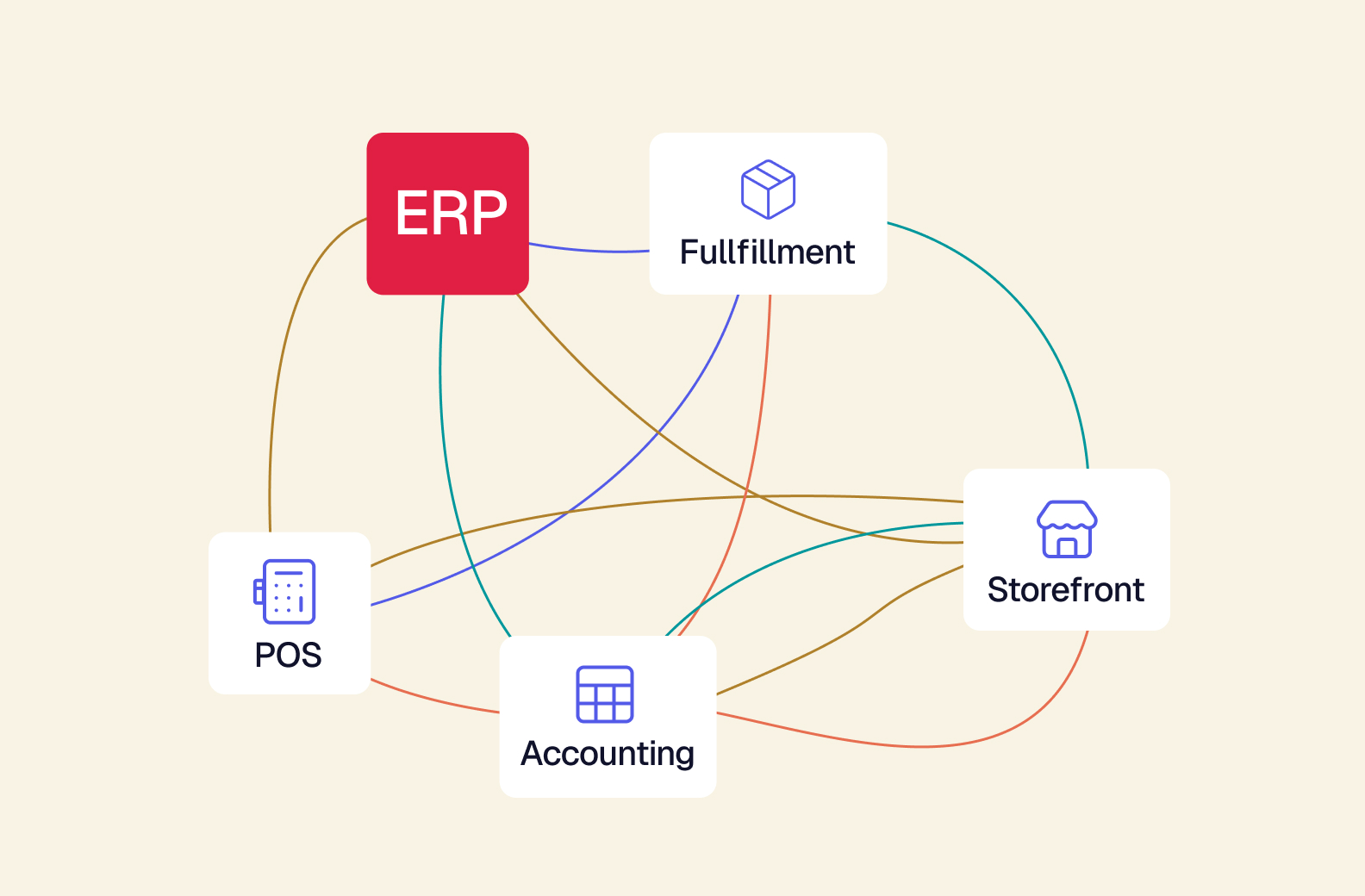
ERP integration software has a single job: to move data between systems that were previously siloed. It provides a single, accurate number so that orders, inventory, and financials all reflect the same reality. When these systems aren’t synced, you run into consequences like accounting never seeing a fulfillment update, or an order placed on one channel not showing as sold everywhere else.
ERP integration software connects:
There are three common approaches for this type of software.
-
Point-to-point connectors: a direct, purpose-built link between two systems
-
iPaaS platforms: general-purpose middleware that routes data across your systems rather than connecting a single pair
-
Native or pre-built integrations: connections that a vendor ships out of the box
Where the Cost Starts Showing Up
A single integration is convenient. But by the time you’ve added five or six, you’ve built a middleware layer to manage. That layer needs someone who can own it, watch it, and fix it when it breaks.
Here’s where that shows up in day-to-day retail operations:
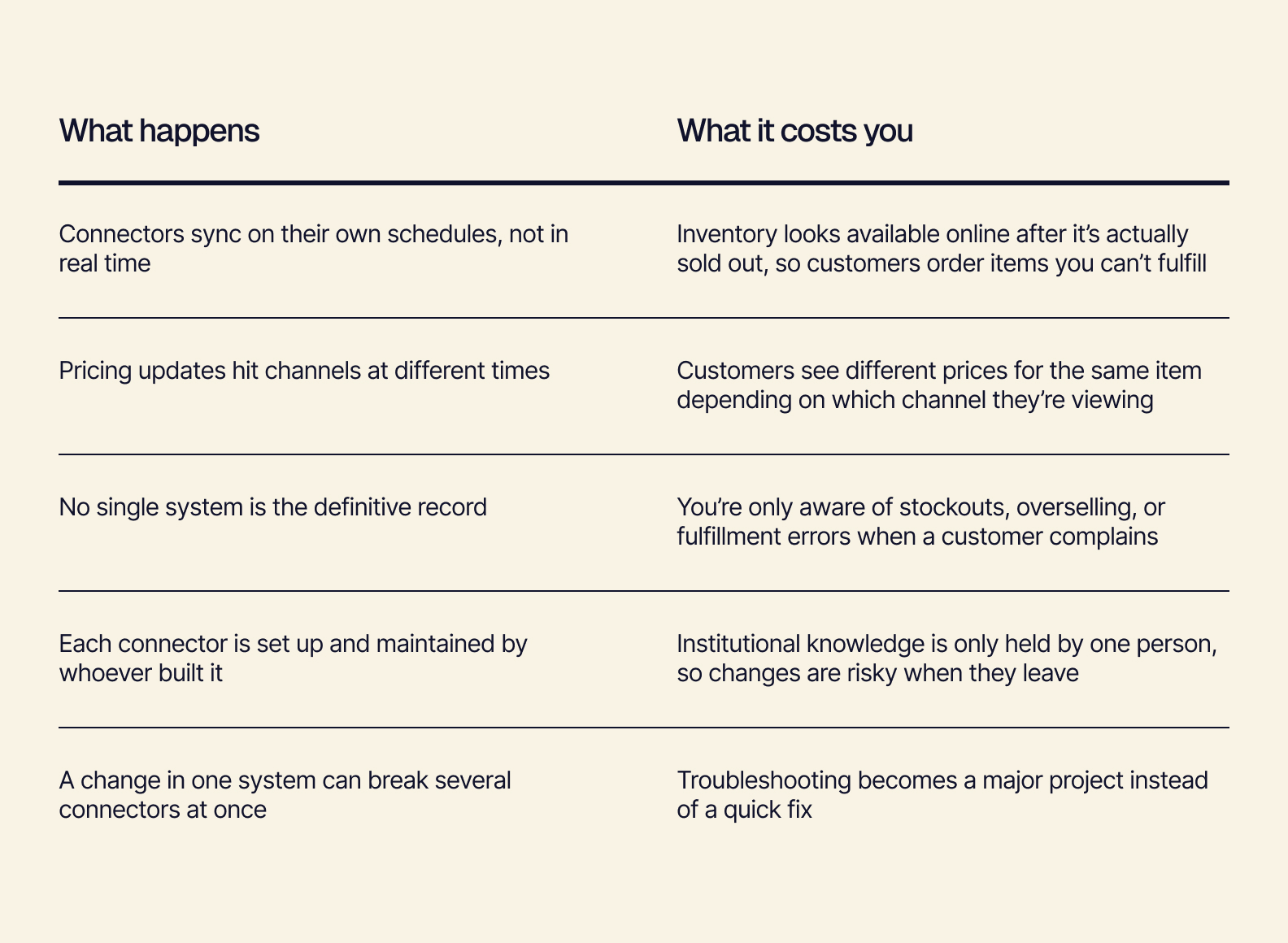
The cost of ERP integration software scales based on the number of systems you’re combining, not just the volume of business you’re conducting. This means you can be seeing growth but still feeling like your ops stack is getting harder to manage.
When Is ERP Integration Software the Right Call?
ERP integration software is the right tool when you’re connecting a small, stable set of systems. A lean, fixed stack with occasional, well-scoped new connections and a team with bandwidth to own it is a good fit for integration software.
The problem starts when it becomes the permanent answer to a core system that wasn’t built to flex with the business.
There are a few key patterns that suggest the software is compensating for something upstream, not just solving a one-off problem:
-
You’re building a new connector almost every time you add a channel, warehouse, or tool.
-
“Source of truth” depends on which system you check.
-
Growth plans are discussed in terms of what the integrations can handle.
-
A new fulfillment node or a channel launch ahead of peak season means another integration build before it can go live.
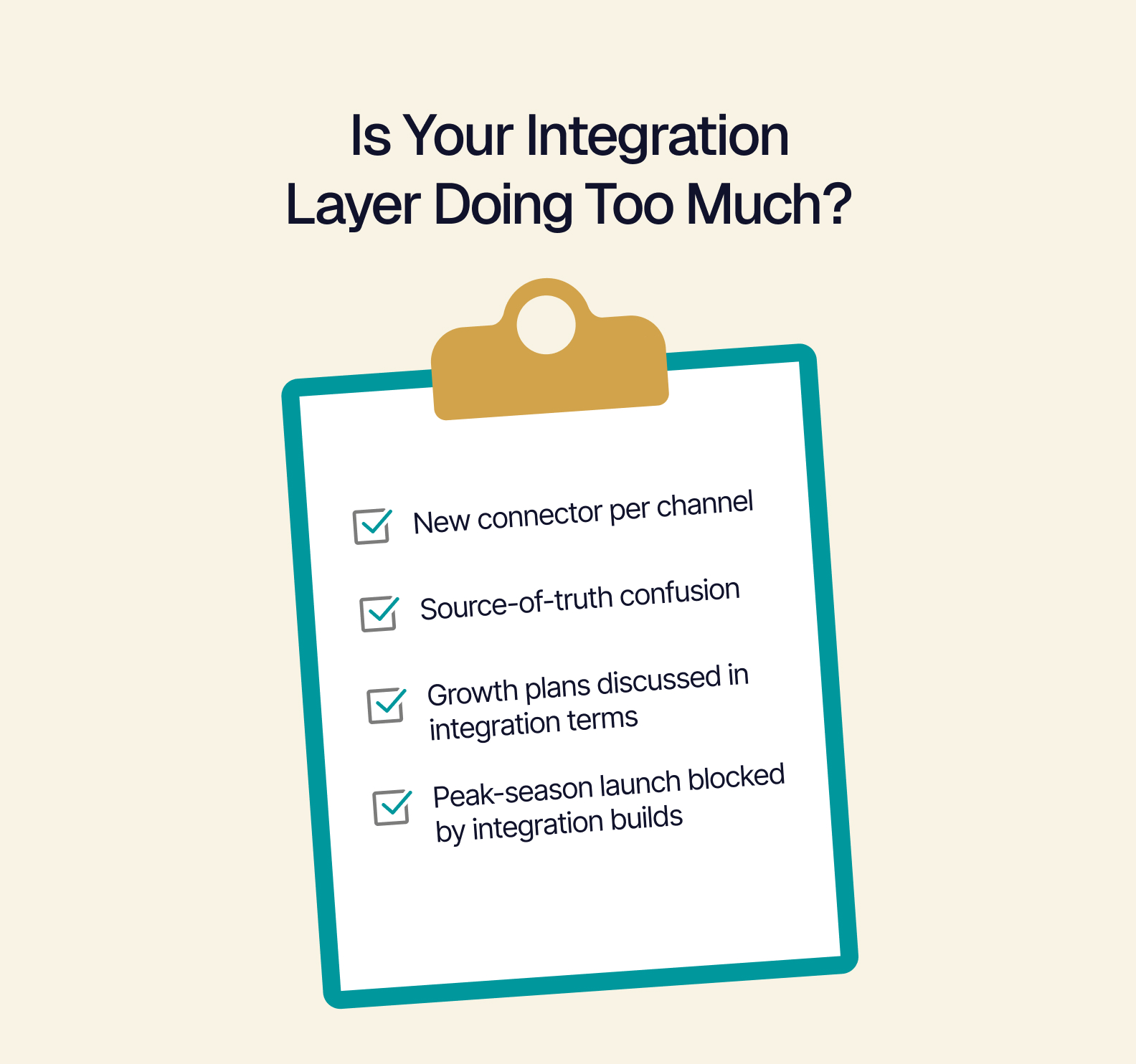
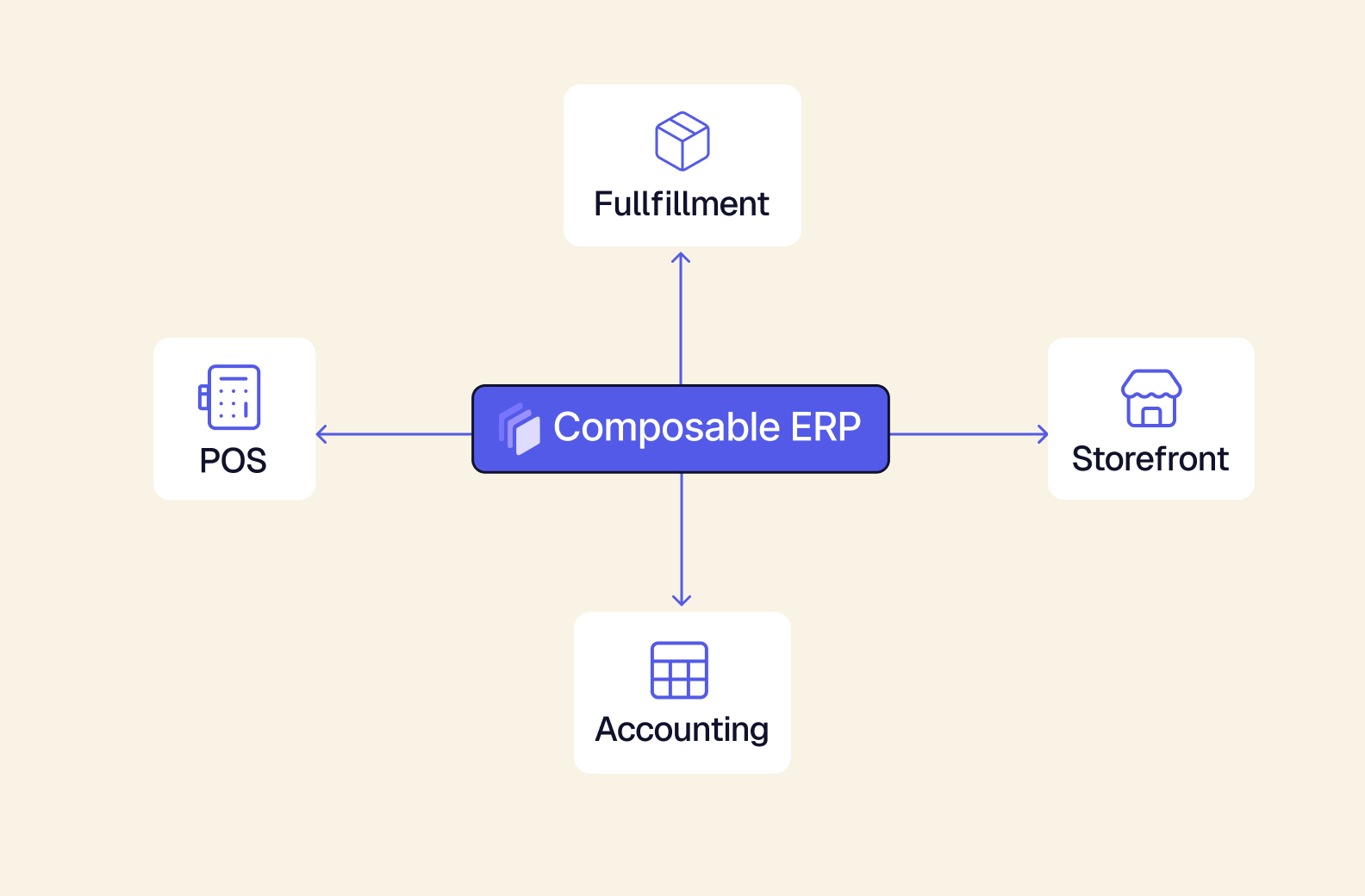
This isn’t about doing integration “better,” but about needing less of it. When your core system is a headless, composable, AI-native ERP, it’s decoupled from any single front end, with a source of truth upstream of everything. It’s not competing with your storefront or your fulfillment tool to be the record that’s right.
What Changes When the Architecture Does the Connecting
The changes that come when architecture does the connecting shift the way you interact with your retail operations, making your workflows more straightforward while enabling your system to be rapidly scaled and improved.
Configuration, Not a Build
Adding a new sales channel or fulfillment partner becomes a configuration step instead of a new integration project. That matters when you’re under time pressure. A new channel launch happening just before peak season, for example, doesn’t have to wait on an integration build to go live. The system is already built to handle new connections; you’re simply pointing it to the next one.
Keep the Tools You Already Like
There’s no need to rip out your stack and start over, because you’re using best-in-breed tools, rather than an all-in-one integration. Every tool that works for you, like Shopify, QuickBooks, ShipStation, stays in place. It no longer needs its own custom connector to keep working. The architecture helps the tools work well together, so the decision of which ones to use is ultimately still up to you.
No Single Point of Failure
You no longer have only one person who understands how a connector was wired, or what breaks if it goes untouched for too long. When the architecture handles the connecting, that crucial knowledge isn’t limited to whoever set up the integration. It’s just how the system works.
Adoption and implementation don’t have to happen all at once. Teams can move one operational area at a time, in phased, weeks-based rollouts that allow you to feel the difference quickly instead of waiting on a longer timeline.
You don’t have to rip out your entire stack. But you’ll be able to stop paying the integration tax on every new thing you add.
Fewer Connections, Not Better Ones
Integration software isn’t the main problem facing your retail brand. The problem is operating with a system that needs more integration layers every time you grow. What your business really needs is fewer connectors, with a foundation underneath that natively connects to your most powerful tools.
Tailor’s headless, composable ERP is designed to help you ditch ERP integration software by providing you with a modular, flexible system that’s designed to fit your business — without a never-ending list of connectors, translation layers, or custom integrations.
Book a demo with Tailor to see how headless, composable tools could transform your retail operations.