Growth usually comes with more tools: a new sales channel, marketplace, or software. While growth is a good sign, it also demands more from your systems and connected tools. How do all these systems stay in sync as the business gets more complex?
The answer is ERP integration, and there’s more to it than most people assume. There’s a large gulf in efficiency between systems that are simply connected and systems that are truly integrated. The difference matters because it determines whether you can trust the numbers you’re looking at.
This piece walks through what ERP integration actually means, why it matters for a fast-growing retail brand, and what it looks like when your systems are truly working together.
What You’ll Learn:
-
The definition of ERP integration
-
Why ERP integration matters
-
How ERP integration actually works
-
What great integration looks like in practice
-
How you can start building a more integrated operation
ERP Integration, Defined: Getting Every System on the Same Page
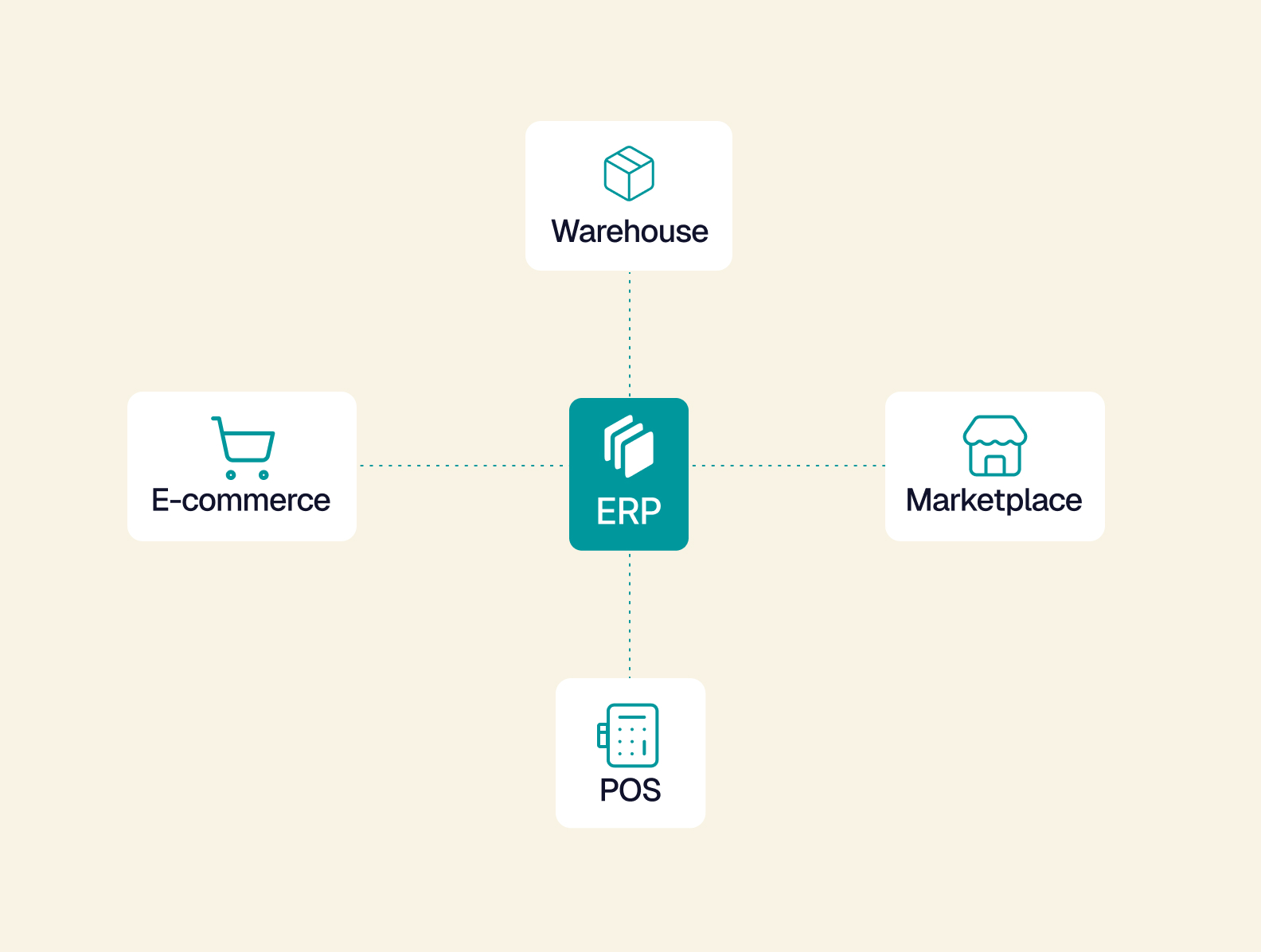
ERP integration is the practice of connecting your ERP to the other tools running your business — like your commerce platform, WMS, POS, and marketplaces — so information moves between them automatically instead of manually.
There’s a difference between two systems being connected and two systems being integrated.
Often, people think they have integration, but they’re really only operating with connections — which can easily get out of sync.
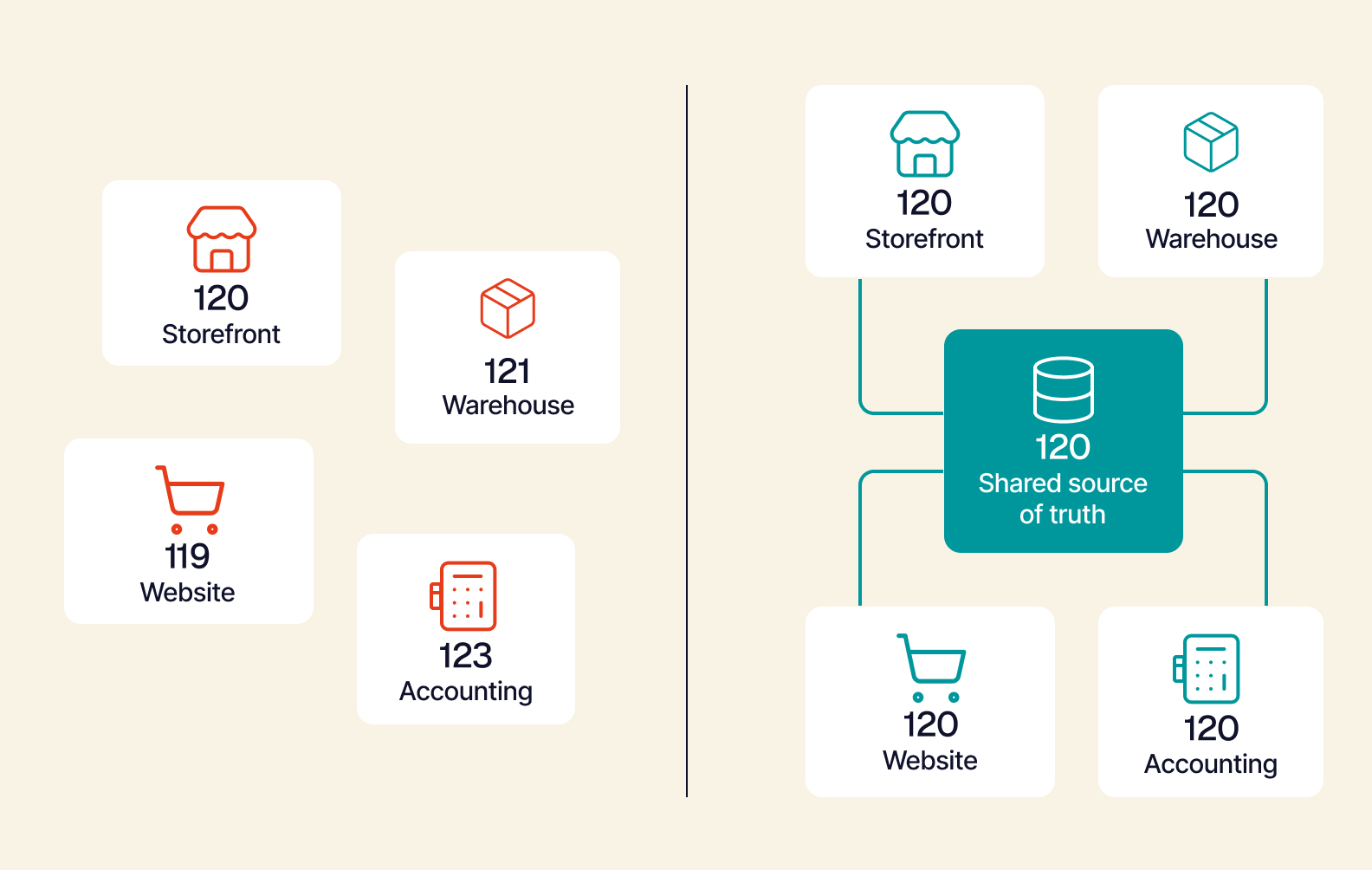
With a connected but not integrated system, inventory counts sync between the commerce platform and the ERP every night. But a return that’s processed later in the day might not reflect until the next — resulting in your warehouse working off incorrect inventory numbers.
On the other hand, an example of a truly integrated system would look like an online order showing up in inventory and accounting without anyone re-typing it.
ERP integration is important because brands run on more specialized best-in-breed tools than they used to. The ERP’s job is to be the coordination layer that ties everything together.
Why ERP Integration Matters
Integration matters because it’s what lets a growing business trust the numbers and move fast without adding headcount just to keep systems in sync. With good integration, you can unlock:
-
Faster decisions. Leadership and ops trust the dashboard in front of them instead of constantly feeling the need to double-check.
-
Accurate inventory in real-time. No guessing, overselling, or manual counts.
-
Less manual reconciliation. Time that used to get sucked up by matching spreadsheets can be funneled back into the business.
The same growth that adds complexity — more channels, SKUs, and marketplaces — is the growth that integration supports. The better your integration, the easier it will be to add the next channel or tool. If your system is well-integrated, it will become more capable as it grows.
This compounding effect is exactly what composable architecture is designed for.
How ERP Integration Actually Works
Integration works by establishing where information originates and making sure every other system defers to that source vs. keeping its own separate copy. How does this information get passed around? Via API connections.
An API is essentially how two systems ask each other questions and instantly get answers. Integrations can run on a schedule — an overnight batch that pushes yesterday’s numbers — or per event, firing the moment something changes. When API-connected software is properly set up, you can set up the scheduling and triggers necessary to move important data from one end of your system to the other.
In a system with strong, proper architecture, you have a source of truth upstream of everything: One place holds the “real” version of any given piece of information, and every other system references it rather than maintaining its own copy.
This is the architectural principle Tailor is built on.
What Great Integration Looks Like in Practice
You can tell integration is working when nobody on the team has to double-check numbers across systems. If your ERP integration is working well, you’ll also experience scenarios like:
-
Your ops team trusts their dashboard completely. They don’t have to cross-check a second system.
-
Support reps can instantly see order status. Customers get real answers the first time.
-
There’s no reconciliation scramble at the end of the month, because the numbers already agree.
When your information has a single source of truth, the systems around it don’t have to be permanent; you can swap out your tools without tearing everything apart. But how do you get that single source of truth? Through a headless, composable ERP.
Tailor is a headless, composable, and AI-native ERP: a flexible, customizable, intelligent retail operations system for fast-growing ecommerce and omnichannel brands.
With Tailor, you no longer have to run everything through one rigid system. Your source of truth is upstream, and every other tool plugs into it, syncing automatically. If you outgrow a tool, just replace that one piece — the rest of the system doesn’t need to know the difference.
For a fast-growing brand, this is extremely beneficial. Rolling out a new capability doesn’t mean a multi-month overhaul. With Tailor, that can happen in mere weeks, because you’re adding onto a foundation that was designed to flex, not replacing the foundation itself.
While composability handles the systems, comprehensive ERP integration also requires something to watch the data. This is an area where AI can help.
AI notices what a person would otherwise have to look for and flags those discrepancies for someone to confirm. Rather than offering fully autonomous workflows, AI-native systems provide human-in-the-loop automation: someone on your team still makes the decision, but AI agents provide the information and make decisions. Additionally, AI-native systems can enable autonomous workflows that will only be finalized once the work is approved by a human worker.
Getting Started: Moving Toward Integrated Operations
You don’t have to rip out everything at once. Most brands get there through a phased approach, by keeping what works and replacing the duct tape. This is the approach Tailor favors.
Instead of one disruptive cutover, implementation happens in phases:
-
Connect your core systems
-
Migrate one workflow at a time
-
Go live little by little as each piece is ready
It’s also important to clarify who’s in control. When you work with Tailor, your team leads the process with hands-on support from ours. You’re not just handing off your operations to an outside vendor and hoping everything comes back working. You know your business better than anyone, and our team is here to make sure the architecture underneath it actually holds up.
Your Next Step: See What Integrated Looks Like For You
ERP integration goes much deeper than connecting software. It’s about giving your business one set of numbers that everyone can trust — and creating a system that gets more capable, not more complicated, as you grow.
To see what that looks like for your business, book a demo with Tailor.