Your system architecture determines more than how efficiently your business runs; it informs every choice you make, such as which software you integrate, how quickly you scale, how many new SKUs you add, whether or not you sell bundles, allow partial returns, or start up a production wing for your brand.
Rigid systems make many of these decisions much harder than they need to be, but a system built on headless architecture enables retailers to make decisions without artificially limited choices.
What you’ll learn:
-
What headless architecture is
-
Why decoupled systems win, and rigid systems struggle
-
How headless, composable ERP and composable modules benefit growing retail brands
What Is Headless Architecture?
Headless architecture is a system that operates decoupled from its UI, encouraging growth without roadblocks and limitations. In application, this means that the UI for your most important operations can be customized to complement the workflows for each team. It also makes it easier to ensure that your teams only need to interact with the software that helps them do their jobs.
In a more technical sense, headless architecture is achieved through an API-first approach to building your system. Headless architecture separates the backend logic so you can develop features and functionality independent of how people interact with them. Because headless architecture is API-first, your system is easier to fix when something goes wrong — resulting in an operation that can respond faster and skip long integration cycles.
Here’s a deeper look at how headless architecture can impact your retail operations:
-
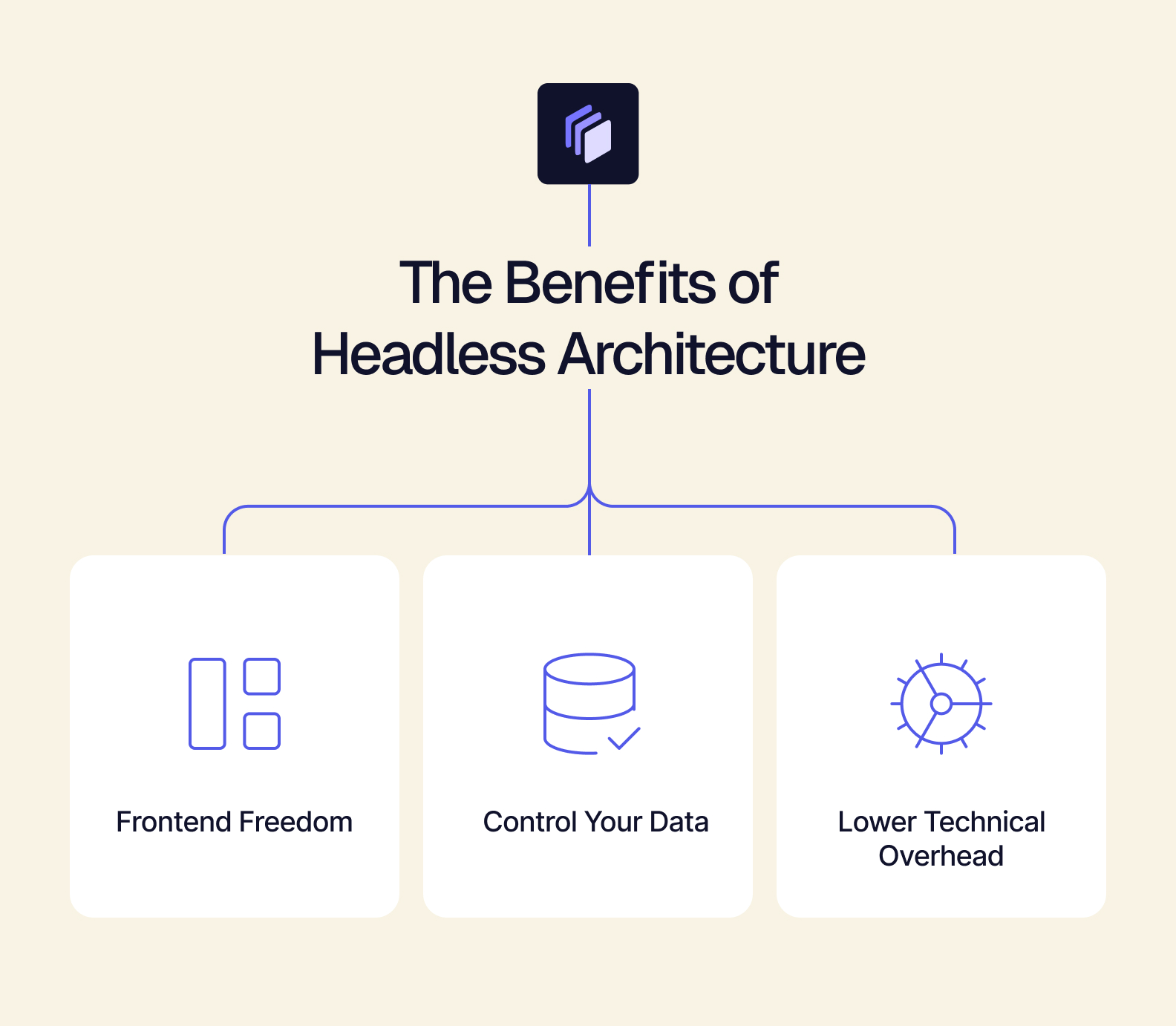
Achieve frontend freedom. Headless ERP is designed to help your teams interact with a UI that matches how they really work. Rather than fumbling through generic screens or puzzling through inefficient workflows, a headless system can provide each team with the data, layouts, and visualized process they need to succeed.
-
Control your data. Headless architecture helps you own and manage your data, especially when deployed in conjunction with a headless ERP system. Rigid system architecture (where the backend and UI directly impact each other) often creates a black box effect because system logic is buried deep in complex code, and ERP data might be managed by the vendor. With headless architecture, you can directly access your tools and backend logic while ensuring that you own your data.
-
Lower technical overhead. It’s common for monolithic ERP systems to require in-house IT staff to ensure things stay working at all times. Headless architecture is built so that both technical (and non-technical) people can interact with it. When your architecture is easier to work with, you can spend less of your operating budget on retaining an IT team.
Why Decoupled Systems Win
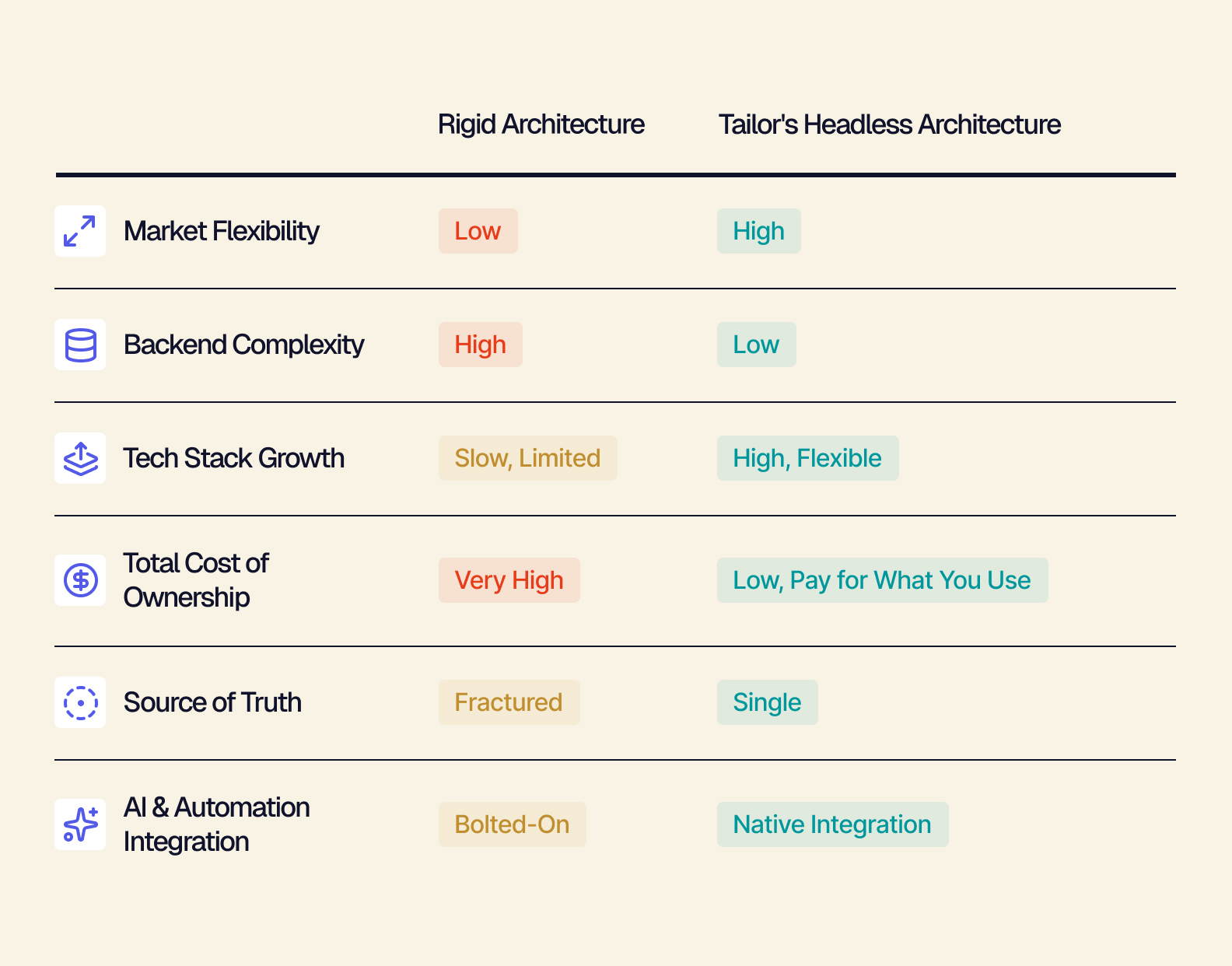
Imagine having a rigid system with a complex backend and important data managed by a third-party vendor you don’t have access to. Beyond this being a potential data security emergency building in the background, this tightly woven system is hard to work with. Especially in the world of retail, complexity directly translates to being slow to react — opening retailers up to unanticipated risk in the market.
However, complexity and data ownership are just a footnote in the much larger case against rigid systems. Let’s take a look at what helps decoupled systems win, and what sets up rigid systems to lose.
How Tailor Uses Headless, Composable System Design to Transform Productivity
Now that you understand why decoupled systems win, let’s look at how Tailor’s headless, composable ERP and composable modules can transform your business’s productivity.
Inventory Management
Tailor’s headless architecture supports your retail inventory management needs. This is accomplished with the Inventory Management module — designed to minimize stockouts, keep your SKU counts accurate, and help you keep stock moving. With the module, you can track your stock levels from multiple locations and points of sale. You’re also able to track your inventory in real-time, with omni-channel ready integrations and intelligent forecasting.
Production Management
With a Tailor Production Management module, you’re able to create unique workflows that adapt to your manufacturing needs. Whether your process is make-to-stock or make-to-order, you need a retail production system that keeps your costs under control and keeps your throughput flexible. This module is designed to help manage multi-tier assemblies, seamlessly modify workflows for complex production cycles, and generate manufacturing orders in sync with your sales. Its support capabilities extend to optimizing your shop floor and providing intelligent resource planning tools.
Purchase Management
Purchasing workflows and PO creation became near-effortless with a composable** Purchase Management module.** Tailor’s AI-native integrations enable human-in-the-loop AI automation that makes reorder suggestions and contributes to an intelligent purchase system. A system with this kind of module benefits from smart triggers informed by high-context forecasting, fine-tuned and flexible purchase workflow automation, and deep integration with QuickBooks, Xero, and other software you use every day.
Omnichannel Order Management
Any growing retail brand would benefit from having all its orders in a single, always updated view. Tailor’s Omnichannel Order Management module does this and more. Whether your orders are coming from Shopify, Amazon, in-store, or via wholesale, you can see it all as it happens. API-first design ensures that you can connect to every sales channel, while tracking fulfillment workflows and integrations, expanding return options, and precise delivery analytics. And for retail B2B needs, you have access to tiered pricing, card limit controls, bulk ordering, and important EDI or CRM integrations.
Cost Accounting
Syncing your data from QuickBooks, Xero, Sage, and other cost accounting platforms doesn’t need to be a headache. A Cost Accounting module gives you real-time visibility into your costs and margins, while providing seamless COGS tracking and efficient financial operations management. The module’s real-time, API-driven connections reduce or eliminate manual reconciliation, sync data sales and invoicing data, and allocate your landed costs based on custom rules.
Embrace the Future of Retail Software
Headless architecture enables stronger connections, better features, and greater flexibility as you grow your business. While rigid software works for exceptionally large retailers, headless architecture gives you room to grow, without slowing down.
Tailor’s headless, composable ERP and composable modules — built for ecommerce and growing retail brands — provide your business the runway it needs to rapidly scale and easily adapt to new market conditions. Because Tailor targets phased rollouts in 3-week increments, you can have a fully functional ERP live and tested in 3-6 months vs. the 12 to 18 months that a monolithic ERP system can take to fully integrate.
If you’re ready to embrace headless architecture, or if you’re curious to see it in action, book a demo with Tailor today.