Ending up with the wrong SaaS software can be a momentum-killer in this retail market. Imagine that you compared features, prices, and vendor reviews and moved forward with the “right choice” — but still ended up with long integration times, hidden costs, and a frustrated ops team dealing with rigid workflows that disrupt daily operations.
Conventional wisdom says a basic checklist evaluation should be enough, but with how unpredictable the world markets are, you need to go deeper to ensure you’re making the best software choice.
That’s why we’ve created this guide: it will teach you how to level-up your software purchasing evaluations and provide you with a Tailor SaaS Software Scorecard — a free and powerful tool to replace your traditional checklist.
What a Modern SaaS Software Checklist Should Do For You
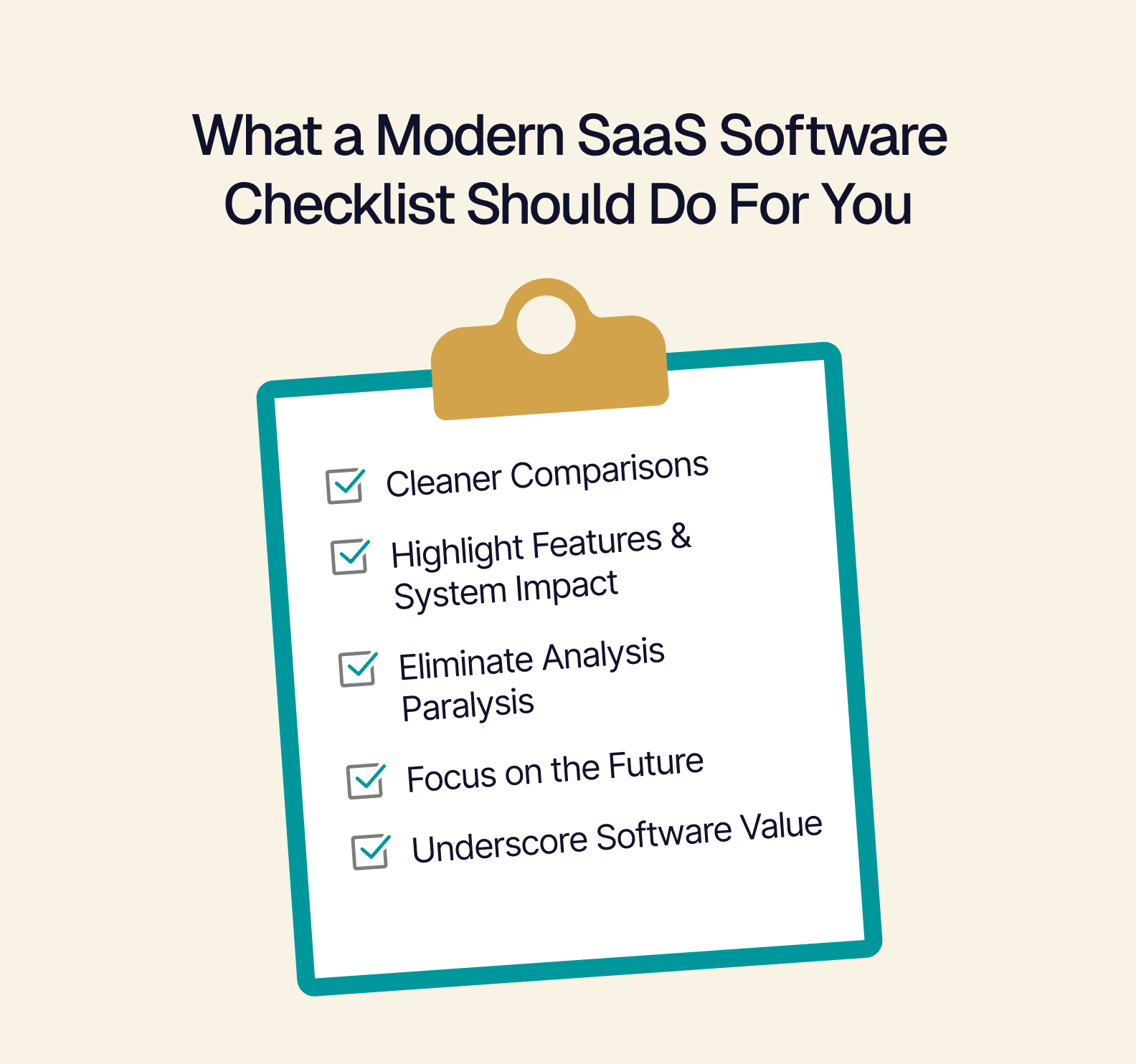
Clean Up the Comparison Process
You shouldn’t have to compare software solutions based solely on their available features and pricing. A modern SaaS software checklist, like a scorecard, goes beyond comparing features by highlighting criteria like flexibility, scalability, security & compliance, data integrity, and more.
-
How this gets you better results. By comparing software at a deeper level, you’re able to get a much clearer picture of the actual differences between the software you’re comparing, not just making a decision based on surface-level insights.
-
Why this benefits you long-term. When you decide on software with a scorecard, you’re making the choice as an informed buyer. Knowing your new software inside and out will reveal opportunities to leverage its features while enhancing your retail ops.
Highlight Features and Overall System Impact
Knowing what software can do is important. Knowing how software will impact your system is even more important. Your checklist should account for how well software integrates with your existing tech stack and how it helps (or harms) your day-to-day operations and workflows.
-
How this gets you better results. Focusing on system impact rather than just the features of a new software means you’re more likely to choose a SaaS product that synergizes with your existing tech stack, rather than something you’ve got to shoehorn in.
-
Why this benefits you long-term. By boosting the synergy your new software has with your existing tools and tech stack, you ensure that your workflows remain unhindered. This saves your business from having to deal with headaches caused by technical debt and workarounds.
Eliminate Analysis Paralysis
Because basic checklists only compare topline features and pricing, you might not have enough information to make the best decision for your business. By using a scorecard system, you’re able to clearly see the best choice for your business, based on your investigation of each product. No more dodging follow-up emails from potential vendors while hemming and hawing — that’s the old way of shopping for software.
-
How this gets you better results. Spending less time going back and forth about software means you start the integration process faster — keeping you on schedule and minimizing operational delays.
-
Why this benefits you long-term. Being able to start the process sooner and moving with confidence enables you to start planning for what comes next. Any software purchase you’re unsure about can lead to slowdowns and implementation delays, which can put your quarterly strategy on hold.
Focus on the Future of Your Business
Choosing software to meet the moment makes sense: it’s addressing a pain point or a problem. However, your modern checklist needs to also align your present with your future. By investigating how software meets the current need, while also understanding how you could utilize it in the future, you can make much better choices.
-
How this gets you better results. Software that supports your business now, and later, helps cut down on tech stack bloat (no more hacking together fixes with extra tools) and keeps your workflows simple — something scaling businesses can struggle with.
-
Why this benefits you long-term. Reducing software-caused instability in your business means you can take advantage of the headroom your competition may not have. It keeps you lean, fast, and supports the meta-goal of maintaining agility (even when you’ve doubled in size).
Underscore the Value Proposition of Software
When simply comparing features and pricing, it can be difficult to comprehensively understand the value proposition of integrating a new SaaS software. By using a scorecard method for your checklist, you can clearly identify the way software can cost you over time — or even how different software can justify their cost with better support, security, and scalability.
-
How this gets you better results. One of the most overlooked aspects of purchasing software is calculating its total cost of ownership, or TCO. A scorecard helps flag early some of the good (and bad) signs for its TCO, which can dramatically shift your first-choice software during your purchasing process.
-
Why this benefits you long-term. Having a strong idea of how much value you can get out of software makes it easier for you to plan how you approach your operations. Nothing is worse than making a big push into a new market, only to get tripped up by unexpected additional costs caused by the software you purchased 5 months ago.
How to Ask SaaS Vendors Better Questions
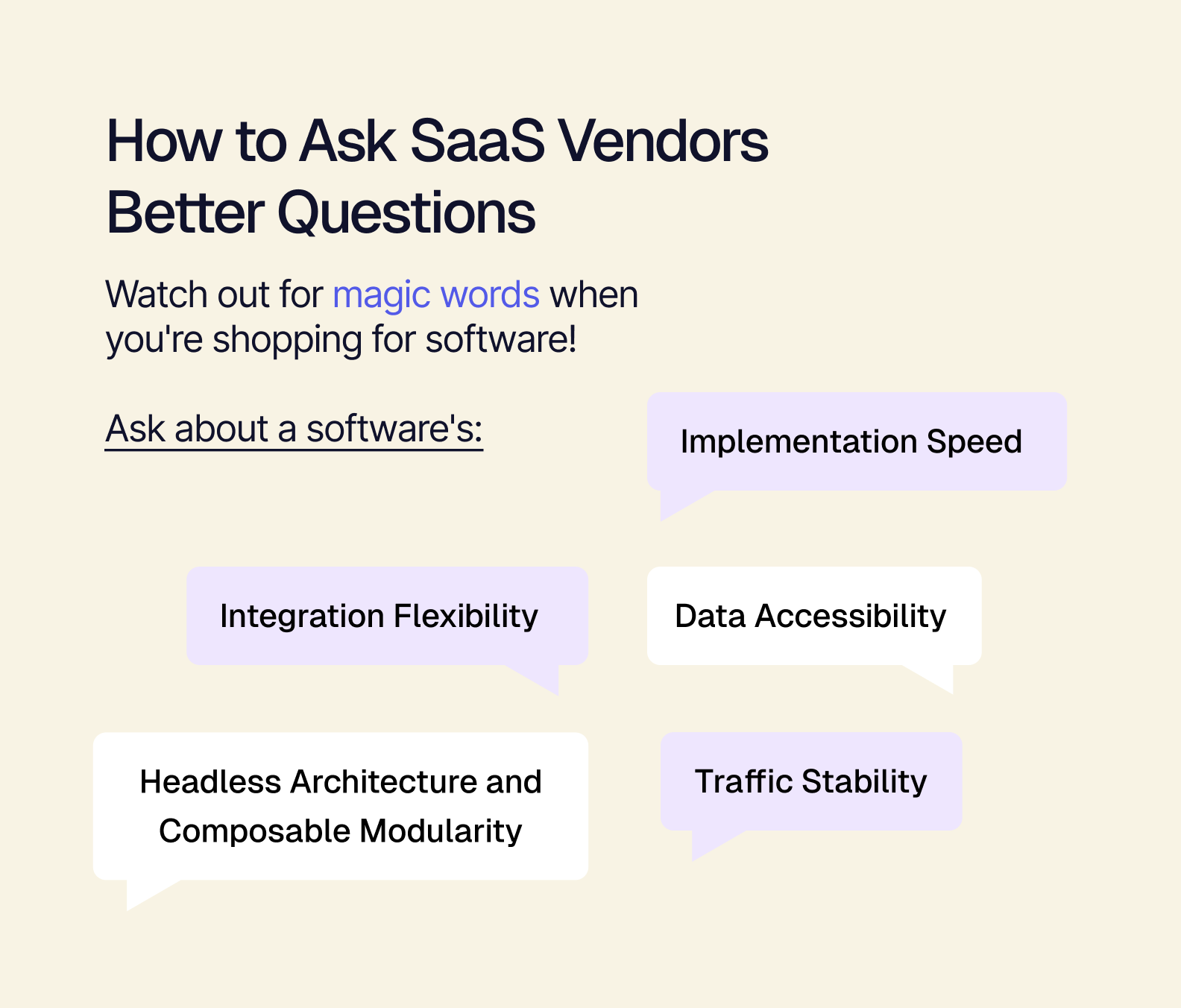
Beware SaaS Sales Wizards (5 Key Questions that Get You Answers, Not Buzzword Salad)
SaaS “Sales Wizards” make the industry go ‘round, but that doesn’t always mean they’ve got your interests at heart. It’s easy for retail business owners or senior leadership to get caught up in the hype, flashy user interfaces, and broader industry pressures. That’s why when you’re hunting for new software solutions, you should know how to counter the spells that the sales wizards weave.
Question 1: How quickly can this software integrate new industry-standard tools?
Why this question matters: Being able to rapidly adapt to market changes can often make or break modern retail businesses. Any software integrations that would prevent you from integrating new tools should be heavily reconsidered when making your purchasing decisions. Any software you purchase should keep your options open, not shut them off.
Question 2: How long does it take to get the initial software implementation live and working?
Why this question matters: In a sales environment, the conversation is all about the “Three Ps”: power, potential, and progress. While these are important aspects to any sort of technology integration, they completely overlook the speed and efficiency of getting a new software integration up and running. If it takes 3-6 months to get online, those “Three Ps” aren’t doing a whole lot to support your daily operations.
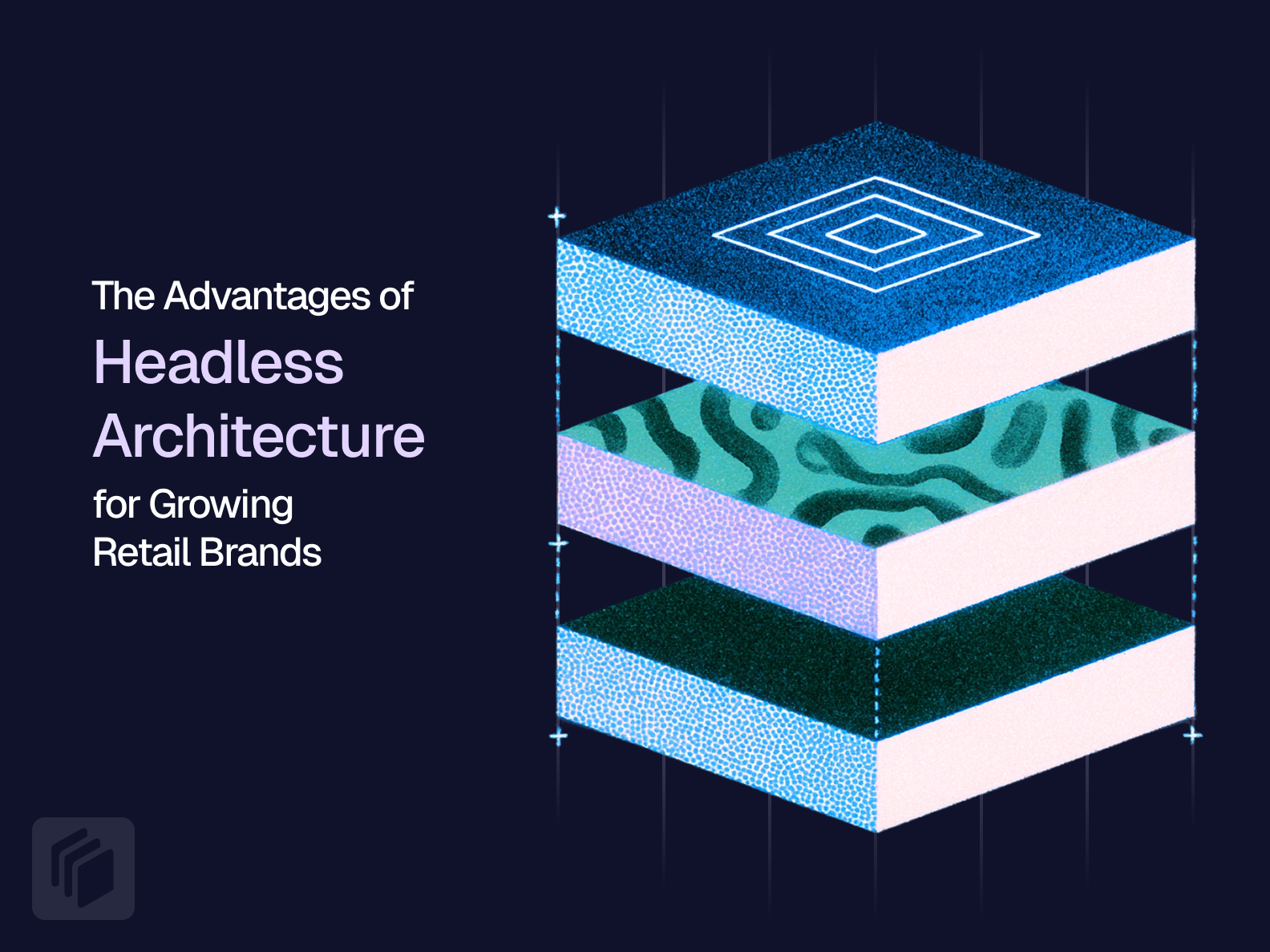
Question 3: Does this software support headless architecture and modular integration?
Why this question matters: Headless architecture and modular integration are two of the most important aspects of modern SaaS software to ask vendors about. Headless architecture enables your ops team to customize software’s UI to better fit your workflows, and modular integration allows you to manage your tech stack with easier plugging and unplugging of software. Knowing what you’re getting on an architectural level informs the future decisions you’ll make about your tech stack.
Question 4: Can this software maintain stability during predictable (and unpredictable) rushes?
Why this question matters: When you’re in sales discussions, you have to get to the heart of scalability: stability during rushes. If your production pipeline fails from traffic volume or your system starts to lag, you open yourself up to expensive mistakes and frustrated customers. As you grow, today’s rushes become tomorrow’s standard — you can’t have your system faltering every time your sales volume increases.
Question 5: Does this software allow me to freely access, quickly modify, and own the data my business creates?
Why this question matters: Not all vendors want you to access the data you create. For both security and operational factors, it’s important to understand if a potential SaaS vendor partnership is going to be built around open or closed data. Open data means that you can freely access the data the software manages, while closed data leads to vendor-controlled black boxes that can make catching (and fixing) errors more difficult than it needs to be.
Knowing When to Walk Away: How to Identify SaaS Software Opportunity Costs
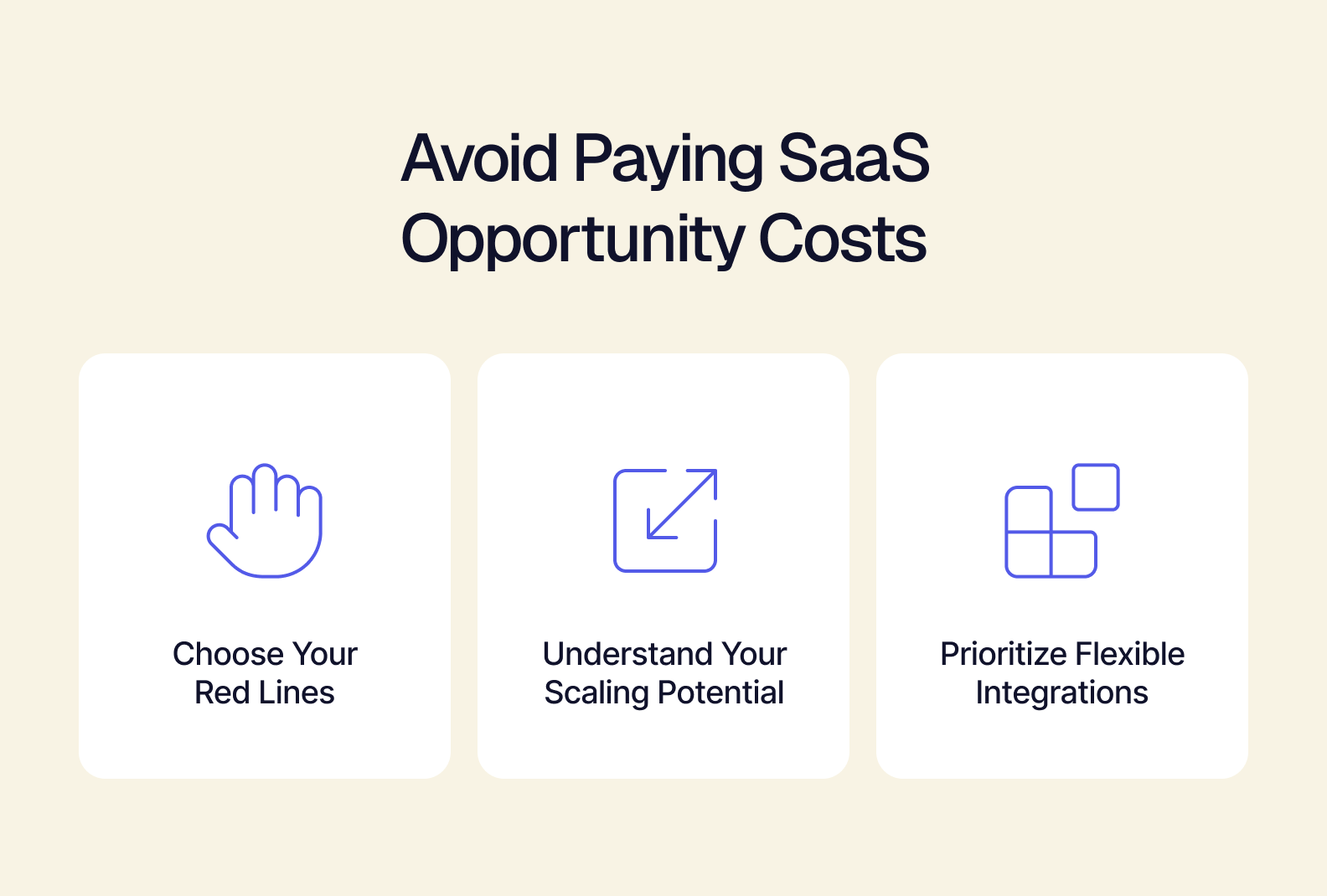
Choose Your Red Lines
Security concerns, per-call cost potential, black-box data management, poor customer support, and ecosystem lock-in are just a few of the deal breakers that might push you away from software. You need to know what you’re willing to compromise on and what you aren’t — and stick to it. Even if your scorecard results push you in a specific direction, it’s okay to offramp at the first sight of one of your red lines.
Understand Your Scaling Potential
Not every retail business is going to be ready for large-scale software solutions or tech suites. Likewise, your business might be scaling rapidly and can’t afford to outgrow tools too quickly. If software is going to stop you from reacting to market conditions or seizing new opportunities, look elsewhere. Don’t open yourself to operational risk by settling for the wrong SaaS software.
Prioritize Flexible Integrations
SaaS software that restricts your flexibility should be immediately scrutinized. With the broader eCommerce market being global, you have to be ready to shift, change, and react at a moment’s notice. Inflexible (or rigid) software can set you up for disaster under certain conditions. Worse, it could force you to purchase more software to solve problems it causes.
Make Tailor’s SaaS Software Scorecard Your Own
You can click the link below to download our SaaS Software Scorecard — a custom tool built to help you numerically compare different software solutions. We designed it to support retail businesses, but we understand that every business is different. The scorecard is fully editable, allowing your ops team to change questions, remove sections, or add categories as needed to get the most out of comparing different SaaS software.
Our goal is to empower you to have unparalleled clarity in your SaaS software search. The best part is: you get to have this for free.
Take our scorecard for a spin by clicking the button below.