In this modern ecommerce environment, stability and consistency can be a pipedream for many retail businesses. Market chaos is a constant, and if you’re going to succeed where others fail, you need a system that helps defend you — while also giving you the tools you need to keep driving forward.
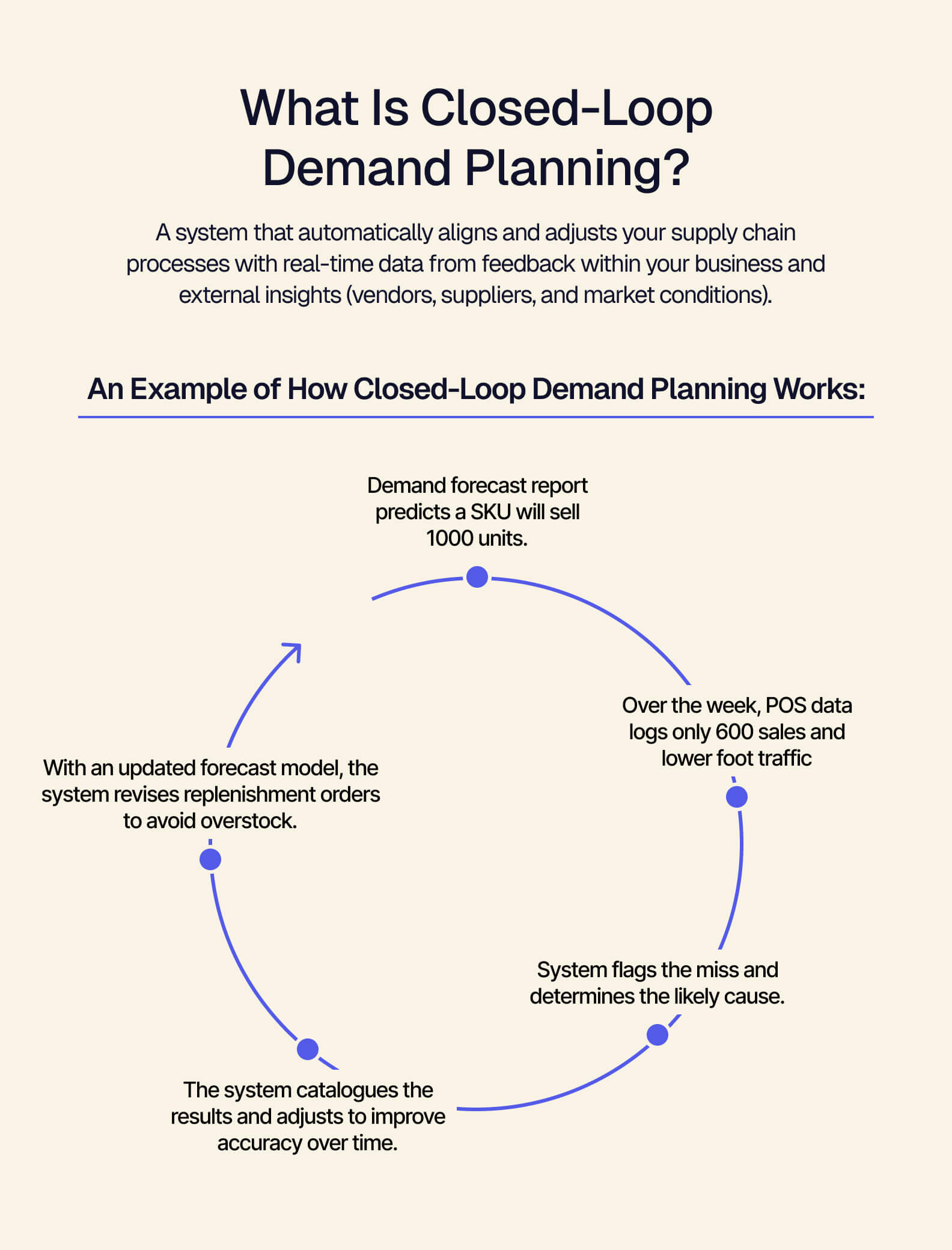
This is where closed-loop demand planning comes in. By creating a real-time feedback system that helps you forecast demand and adjust quickly, you can insulate yourself from costly errors in an era where customer demand can shift at any moment.
In this guide, you will learn:
-
What you need to support a closed-loop demand planning system
-
How this system provides your business with distinct market advantages
-
Why you need a headless ERP to make the most of an AI-powered demand planning system
The Architectural Needs of Closed-Loop Demand Planning
A system designed to constantly reference data and adjust itself needs powerful architecture underpinning it. The nature of a closed-loop demand planning system requires a predictable structure to traverse, but it also needs to be able to branch out, then circle back. Traditionally, this structure would be created by your retail business’s ERP system.
However, a traditional ERP system lacks flexibility and struggles to dynamically branch out and redirect when complexity gets in the way. This is where a flexible ERP truly shines. Flexible ERPs have two key features:
Headless design and composable structure. This means that you can design the system in a way that works for your workflows both visually and functionally (headless), while also adding onto it or removing from it as needed (composable).
Let’s dig into the three ways that a flexible, headless, and composable ERP supplies the architecture necessary to support your closed-loop demand planning system.
A Single Source of Truth
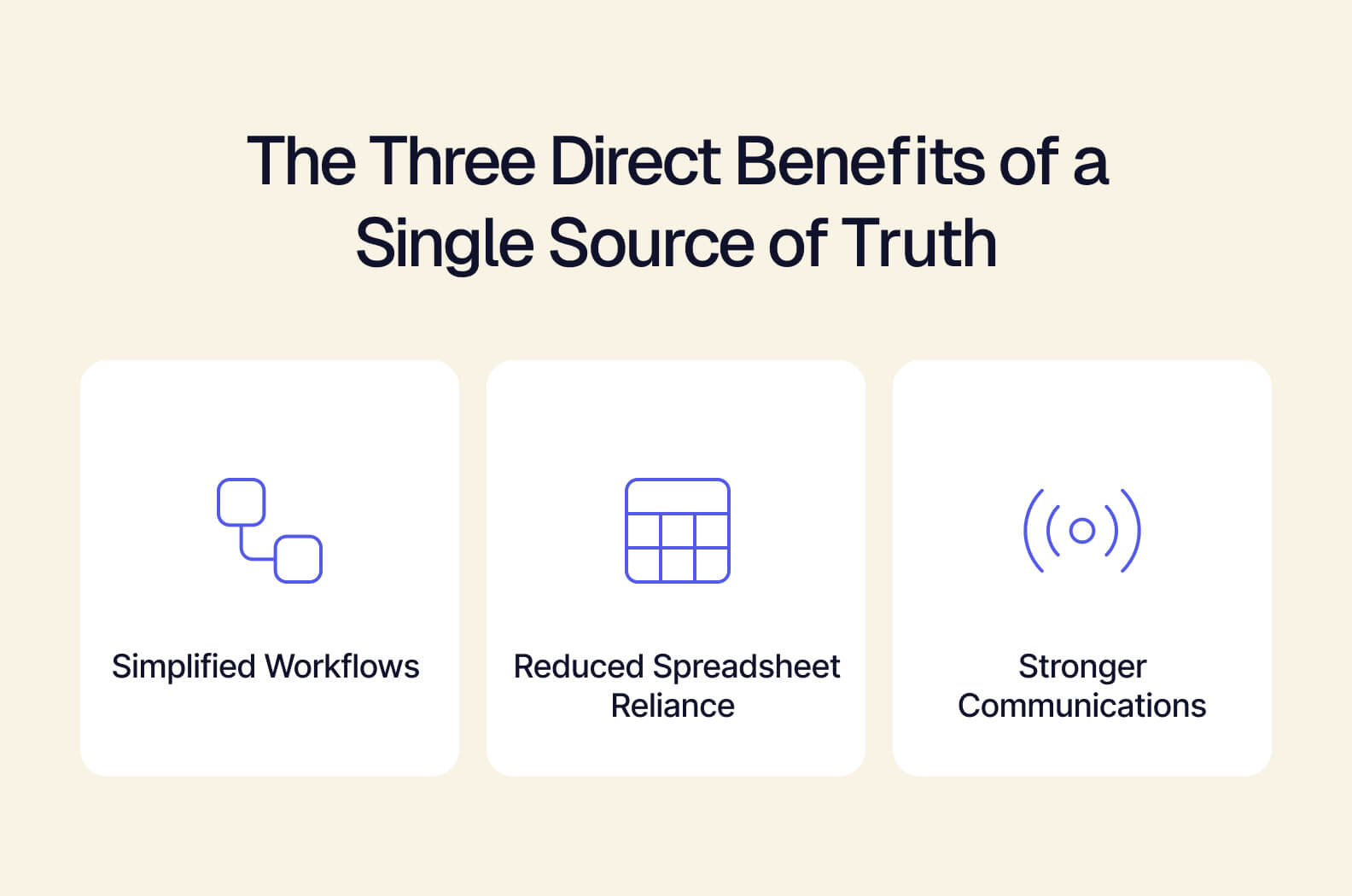
One of the core capabilities that a headless ERP offers your retail ops is a single source of truth, which governs every piece of information that flows through your system. It connects the software utilized by different teams, making their data accessible to others as needed. This results in:
Simplified Workflows
When your system functions off hacked-together workarounds, AI agents and machine learning processes can’t replicate the tasks they’re supposed to automate. However, a flexible ERP system enables you to simplify your workflows and ditch workarounds that were likely far from ideal.
Why this is important for headless ERPs: As your retail business’s single source of truth, information needs to be available for the ERP to aggregate. Often, workarounds circumvent the intended functionality of software, creating visibility gaps that need to be closed.
Why this matters for closed-loop demand planning: Because these systems rely on machine learning and AI agents to perform, they need clear steps to follow and a logic that helps them move between tasks without issue. And by having access to accurate and reconciled information via a headless ERP, the demand forecasting part of the planning process becomes that much more accurate.
Reduced Spreadsheet Reliance
Spreadsheets function as a no-man’s-land for accurate data tracking. They often get used to help software “talk to each other” or get around file output difficulties. While powerful when used correctly, they often are used beyond their scope, becoming bloated, difficult to parse, and ripe for entry errors.
Why this is important for headless ERPs: Spreadsheets often limit the visibility a headless ERP can have in your business. When data is siloed off into files, the system can only reconcile the numbers it has access to. By reducing the need for spreadsheets, you can ensure that your system has all the data it needs available to teams at all times.
Why this matters for closed-loop demand planning: If your ERP can’t see into your spreadsheets, then your AI agents and machine learning automations can’t either. Aggregating data into one place removes these visibility barriers.
Stronger Communications
Clear comms matter for your teams. In a retail business that doesn’t have a headless ERP, comms can become siloed — caused by operating information being difficult to parse. With a single source of truth, all teams have access to the information they need to collaborate and work together, leading to much better communications.
Why this is important for headless ERPs: Headless ERPs promote flexible operations, which in turn encourages strong communication across your business. This creates a positive feedback loop that opens up new opportunities to explore and draws out the power of your ERP’s system.
Why this matters for closed-loop demand planning: Strong communications are necessary for these systems to work. When a forecast is updated and production is revised, every team member involved in these processes needs to know.
Real-Time Data Sync
Real-time data sync is what enables the rapid-delivery information network your closed-loop demand planning system relies on. Data created by your POS moves into the ERP, which then makes it available for every other part of the business to utilize. When inventory levels change, purchase orders get pushed, or production delays happen, every part of the business knows.
But isn’t a demand planning system performing forecasts? Why would you need real-time data for that? Real-time data sync helps you avoid some very hard-to-clear hurdles with forecasting:
-
No more last-minute reconciliation to cause forecasting crunch. Rushing to account for new forecasts can be a thing of the past — leading to your ops team having more time to plan around your demand planning system’s suggestions.
-
Lagging reports won’t throw off existing estimates. In businesses that do not have real-time data sync, they can end up with important data being added into the mix late because a report wasn’t generated on time, or a vendor’s website was unavailable. With real-time sync and a headless ERP, you can have access to your data at all times.
-
Near-zero data entry errors lead to better forecasting. Because your teams won’t have to perform as many data-entry tasks (which are a common point of friction in day-to-day operations), your business can operate knowing that the numbers are correct at all times.
System-Wide Visibility
Besides having access to real-time data and a single source of truth to organize your operations around, system-wide visibility is the most important element to supporting your closed-loop demand planning system. Imagine a version of your business where every team is cut off from one another, and you can’t even see what’s happening from the top.
Your production team is pushing products that your inventory team has no idea what to do with, sales have no idea what their expected targets should be, and your ops team is scrambling to put out every fire that crops up. In this state, very few businesses could succeed in the current market.
But this doesn’t have to be the way your business goes. Instead, you can use a headless ERP to gain maximum visibility in your business. This directly supports closed-loop demand planning systems by:
-
Giving AI agents and machine learning algorithms access to every part of your tech stack.
-
Clearing up confusion about your processes and how data flows.
-
Helping your ops teams catch onto problems before they spread and disrupt your usual workflows.
Why Closed-Loop Demand Planning Helps You Compete in Your Retail Niche
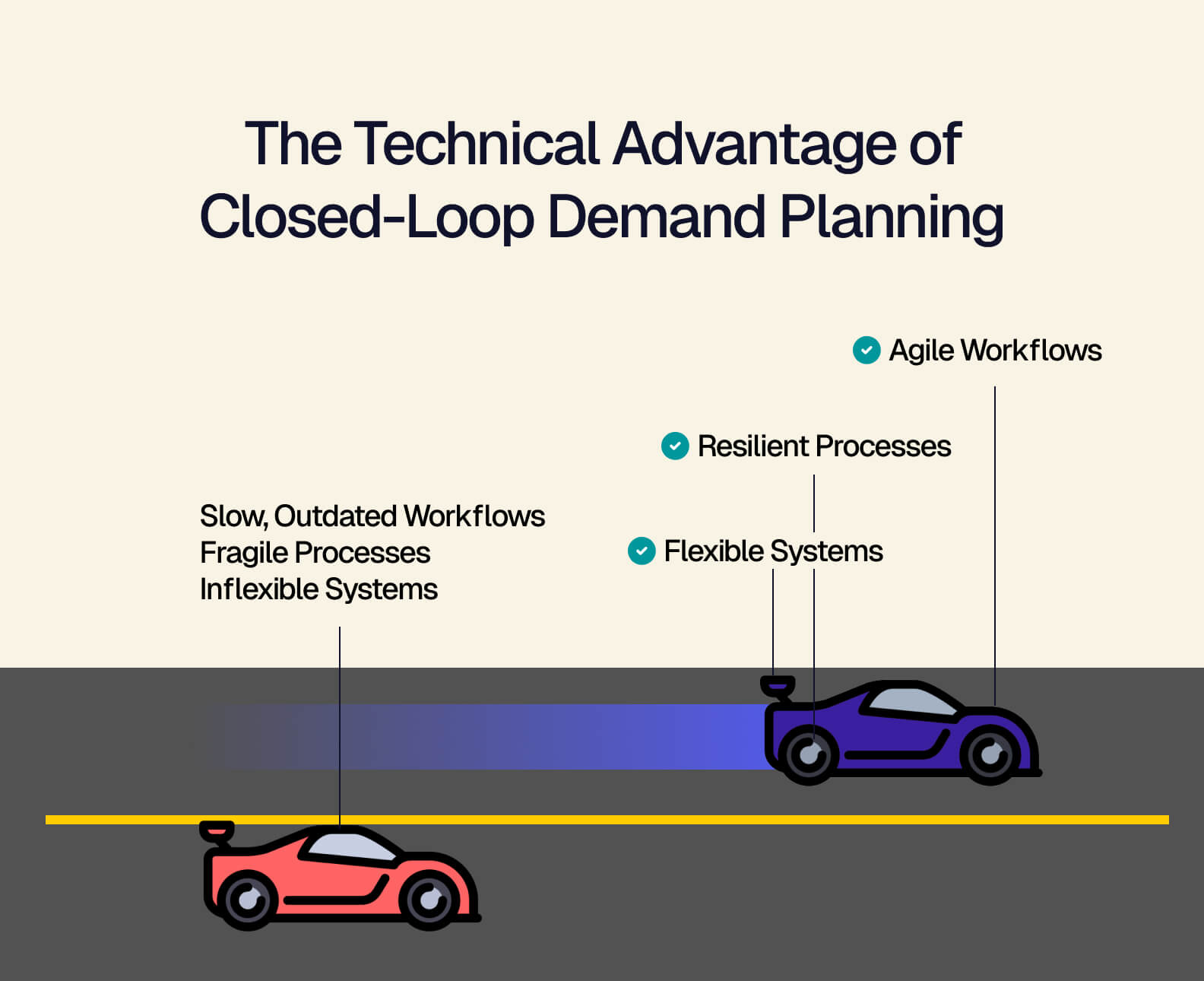
When you’re searching for ways to develop your business further, it’s easy to fall into approaching its success in a bubble: are processes working, teams happy, and SKUs selling? Being able to answer yes to these questions is important, but there’s also the other side of the equation — is your business keeping up with the competition? Winning isn't everything, but staying ahead of the curve is paramount for your long-term success.
So with this in mind, it’s worth considering not only the internal benefits of a closed-loop demand planning system, but also the external advantages it can provide.
The Agility Advantage
Speed is key when you’re racing against your competitors, sure. But even more important is your ability to “precision drive.” This means being able to react quickly to the market environment, rapidly change things that aren’t working, and push into new markets without months of lead-up.
Resilience is Your Superpower
While your agility is important, so is your ability to get back on track when you can’t dodge a sticky situation. Even with a powerful, headless ERP system, things will eventually go wrong — and that’s where closed-loop demand planning comes in to help get you back on track. Where your competitors are forced to slog through getting back on track, you’ll have a detailed map to work off.
Flexibility Keeps Chaos at Bay
Finally, your flexibility is a major factor in your ability to handle market chaos. When your system is flexible, you can adapt to both short and long-term market changes, while also easily pursuing new paths that open up for your business. This can help you gain massive scaling advantages over your niche competitors, and even enable you to shift into a new niche if it suits your scaling trajectory.
Answering Your Questions About Closed-Loop Demand Planning
Q: Do I need to have an expensive ERP or MRP system to support closed-loop demand planning?
A: While you need a powerful system like an ERP or MRP to give your business the ability to use closed-loop demand planning, immediately jumping for the most expensive solution is more likely to do harm than good. What you need is an AI-native (or machine-learning friendly) system that will connect your entire business. This opens you up to many cloud-based ERP solutions, which don’t require expensive integrations or hardware purchases to operate.
Q: What makes a headless ERP so important for closed-loop demand planning?
A: A headless ERP is the brain of your business, and it needs to be elastic to support the dynamic infrastructure adjustments that a closed-loop demand planning system utilizes. Rigid ERPs limit the options you have to scale your business, which makes a closed-loop demand planning system the longer you operate your business.
Q: Why is closed-loop demand planning good for smaller operations?
A: Having the infrastructure to support a closed-loop demand planning system is a significant agility boost for your operations. Where your competitors may struggle with inaccurate, low-context demand forecasting and end up stocking the wrong SKUs during a peak buying season, your business can rapidly adapt to demand and pull ahead by serving your customers exactly what they want.
Q: Will closed-loop demand planning help my business scale?
A: Yes, besides giving you peace of mind in the way you manage your operating budgets and production, closed-loop demand planning directly impacts your business’s scalability by keeping things running smoothly. When you can trust your processes — and you’re not drawing in inventory mistakes — scaling becomes a breeze.
Wrapping Up
Achieving a closed-loop demand planning system doesn’t have to be rocket science. All you need is the right ERP (or MRP) system for your business, and a system capable of supporting AI integrations and machine learning tools.
And to make that integration easier, Tailor is here to help. Our headless ERP system is API-native, AI-powered, and flexible enough to deliver a customized experience for most retail business needs. Book a demo with us to see our headless ERP in action, or explore how our composable modules, connectors, and flexible, out-of-the-box UI could make a difference in just a few days.