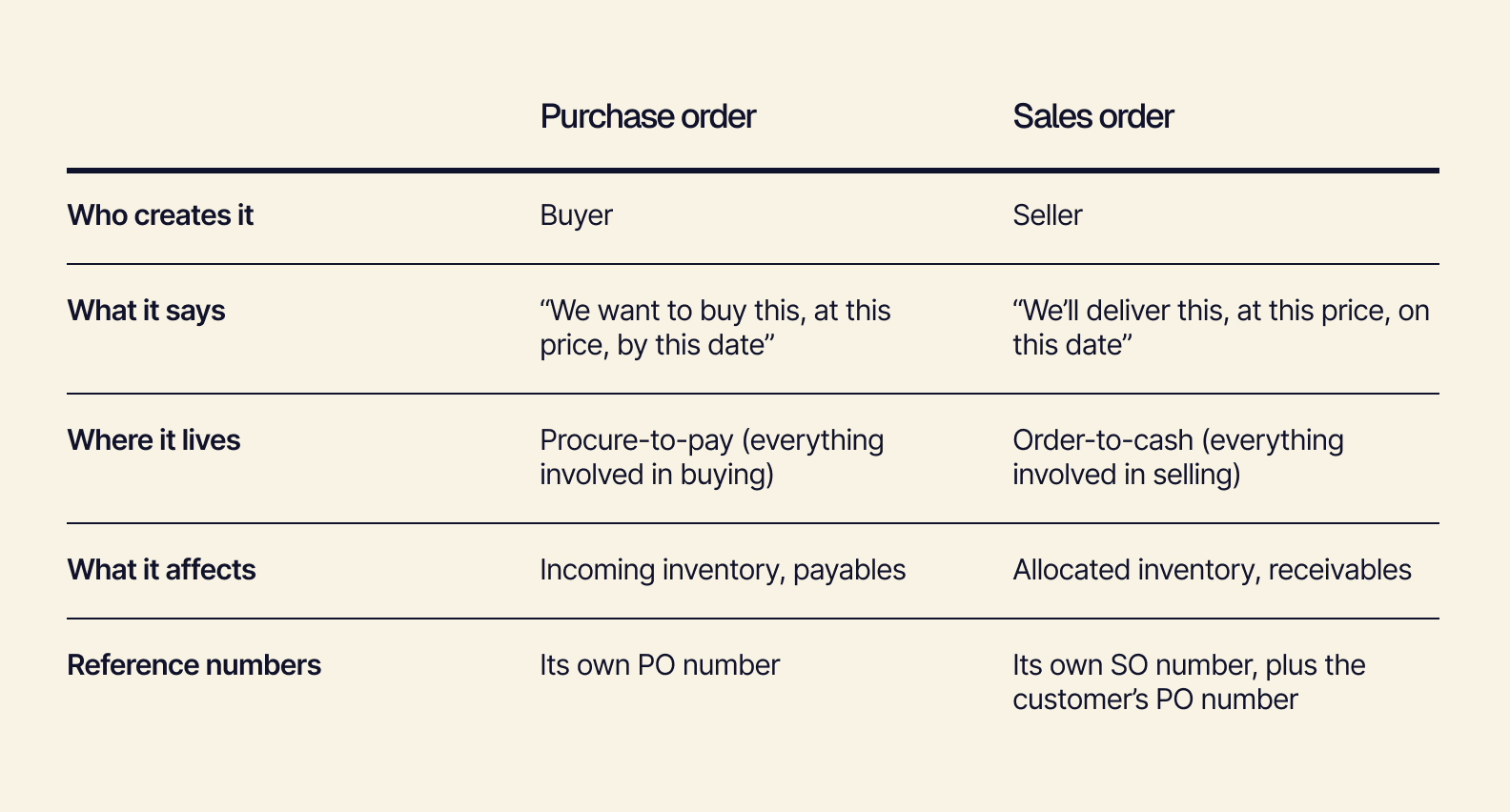
A sales order and a purchase order describe the same kind of transaction from opposite sides. The buyer commits to buy, and the seller commits to deliver.
Most explanations of sales orders vs. purchase orders stop there. But for brands that sell wholesale and direct-to-consumer — while also buying from their own suppliers — it’s important to understand how the two documents connect inside their systems.
Seeing SOs and POs as two halves of one inventory story helps a whole lot of things get easier, like promising delivery dates with confidence, sizing reorders around accurate demand, and keeping customers happy.
What you’ll learn:
-
The difference between sales orders and purchase orders
-
How purchase orders and sales orders connect inside a growing brand
-
The way you can use open purchase orders as sellable inventory
-
What happens when you connect sales orders and purchase orders with headless, composable ERP
Sales Order vs. Purchase Order: The Quick Difference
A purchase order comes first. It’s a buyer’s commitment to buy, detailing exactly what they want. A sales order is a seller’s commitment to deliver, putting fulfillment in motion.
Brands that sell to retailers and buy from suppliers write both. In fact, you might write both a sales order and a purchase order for the same product in the same week.
Here’s what this might look like in practice for a growing brand:
A boutique’s purchase order arrives and becomes your sales order (the same transaction seen from two sides). Direct-to-consumer (DTC) orders from Shopify, Amazon, and TikTok Shop skip over the PO step and turn into sales orders as soon as checkout goes through. Finally, you issue purchase orders to your manufacturers and suppliers, and their systems turn those POs into their sales orders.
If you’re on both sides of the table every day, the important thing to know is how your SOs and POs connect.
How Purchase Orders and Sales Orders Connect Inside a Growing Brand
Sales orders capture demand, purchase orders bring in supply, and inventory is where they meet. A high-quality meeting point lets you sell with confidence and purchase with precision.
Imagine a skincare brand sells its cleanser and serum on Shopify and Amazon, wholesales to ~40 boutiques, and buys from one contract manufacturer and one packaging supplier. Its holiday gift set (comprised of the cleanser, serum, a branded box, and an insert card) uses one sales order line to draw on four components — each bought using its own PO.
Demand: Sales Orders From Every Channel
Sales orders come from more places than you might realize. Yet each one takes a share of the same inventory. The skincare brand from our example is managing demand via both wholesale commitments and DTC orders (which move more quickly than steady wholesale orders).
-
Wholesale: A boutique’s PO becomes a sales order. Larger accounts might send POs by Electronic Data Interchange (EDI) to automatically create the SO.
-
DTC: As soon as checkout clears, Shopify and Amazon orders turn into sales orders. If you’re running a promo, you might see hundreds of sales orders per day.
-
Allocation: Each SO reserves inventory when it’s created, changing what’s available for every other channel.
Supply: Purchase Orders to Your Suppliers
Your brand answers demand with purchase orders — the skincare brand would send POs to the manufacturer and packaging supplier. Think of purchase orders as future inventory that you can plan around. Each PO comes with a timeline that affects what you can realistically promise.
-
Lead times: Different POs are going to have different lead times. Finished goods from the contract manufacturer might take eight weeks; the branded boxes and insert cards from the packaging supplier could take just three. But the timeline of the full gift set must be planned around its slowest component.
-
Future inventory: Open POs represent future inventory. Stock that’s been ordered, but hasn’t arrived, is still useful information.
-
Receiving and matching: After a shipment arrives, the PO, receipt, and supplier invoice are matched before the record goes to accounting.
Where They Meet: One Inventory Picture
When SOs and POs share data, allocations and incoming stock appear side-by-side. Your team has visibility into exactly what’s sellable now, what’s arriving, and what needs to be reordered.
But when these two documents live in separate places, gaps show up right when your business is growing the fastest.
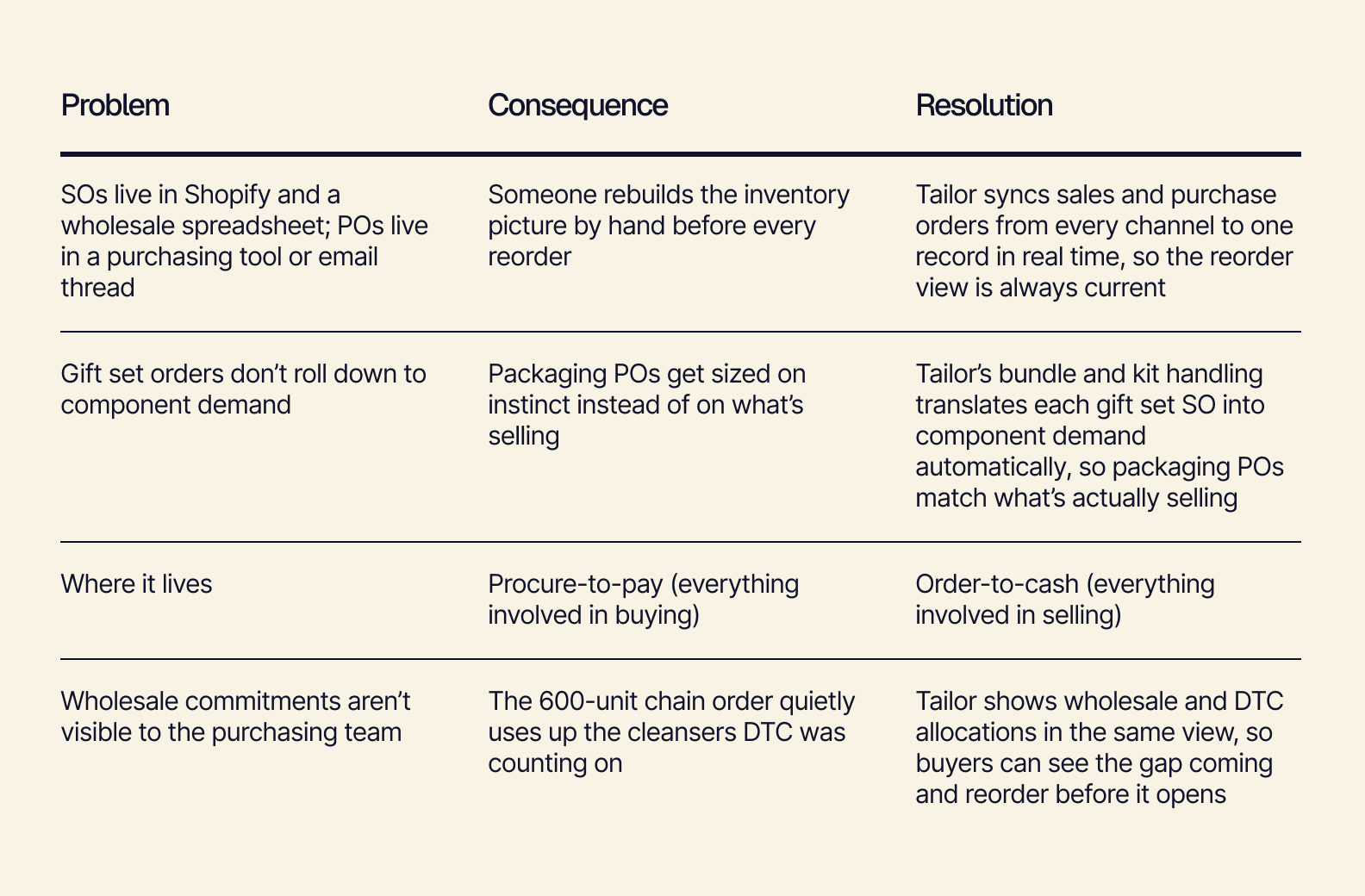
When both documents read from the same record, these gaps close. That shared record opens up useful possibilities.
Open Purchase Orders as Sellable Inventory
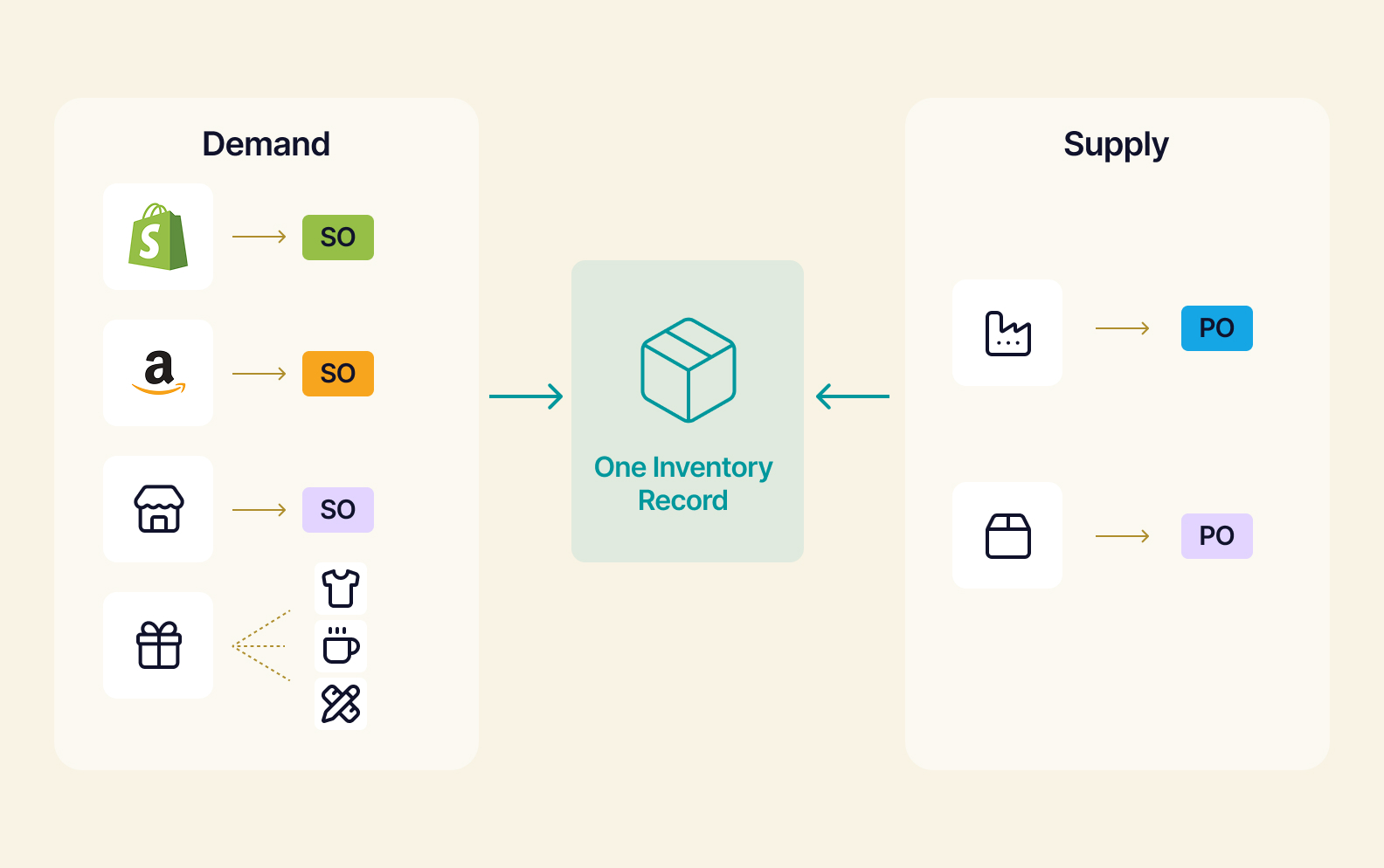
Connected SOs and POs allow you to sell confidently against stock that’s still on the way and to buy with real demand in view, turning two documents into a growth lever.
Selling Against Incoming Supply
When your sales system can see open purchase orders, you can promise against stock that’s still on the way:
-
Firm delivery dates for preorders and wholesale orders, backed by confirmed PO arrivals.
-
Planned backorders, matched to the open PO that will fill it.
-
Clear allocation calls when incoming stock can’t cover every channel.
Buying From Actual Demand
When your purchase orders follow your sales orders, every reorder improves:
-
PO quantities based on current sales trends, not last quarter’s spreadsheet
-
Component orders timed to each supplier’s lead time
-
AI-suggested reorders that a person reviews and approves
What Connected SO and PO Data Unlocks
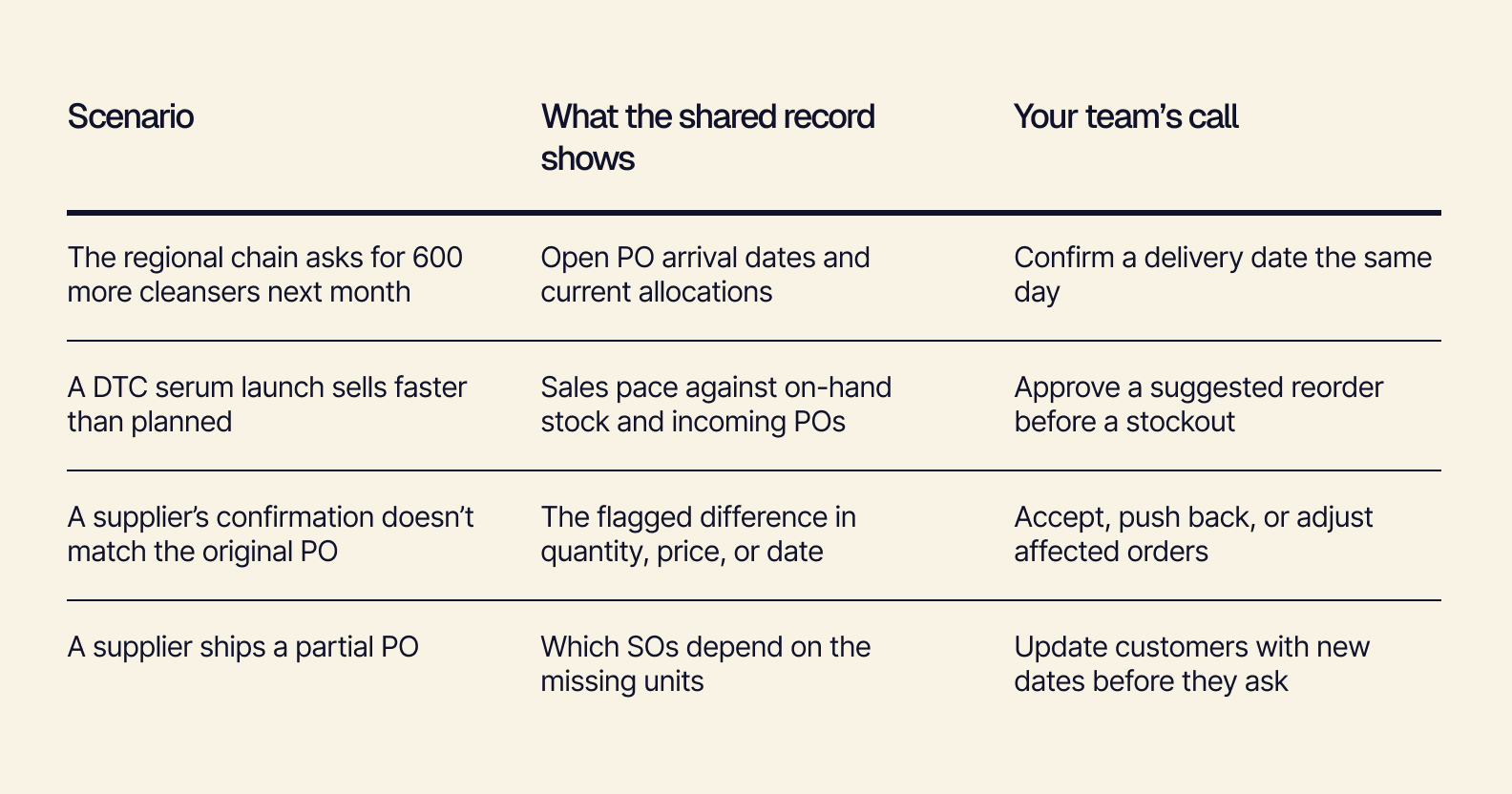
After POs are matched to receipts and invoices, Tailor connects clean records to QuickBooks, Xero, or your preferred accounting software.
But all of this depends on what’s underneath: one record that every channel, supplier, and system can rely on.
Connecting Sales Orders and Purchase Orders With Headless, Composable ERP
Promise dates, reorders, clean handoffs — all of these connections are dependent on the architecture that’s underneath.
Tailor is a headless, composable, AI-native ERP that operates as a flexible, customizable, intelligent retail ops system for ecommerce and omnichannel brands. Tailor’s architecture enables sales orders and purchase orders to work together.
Single Source of Truth
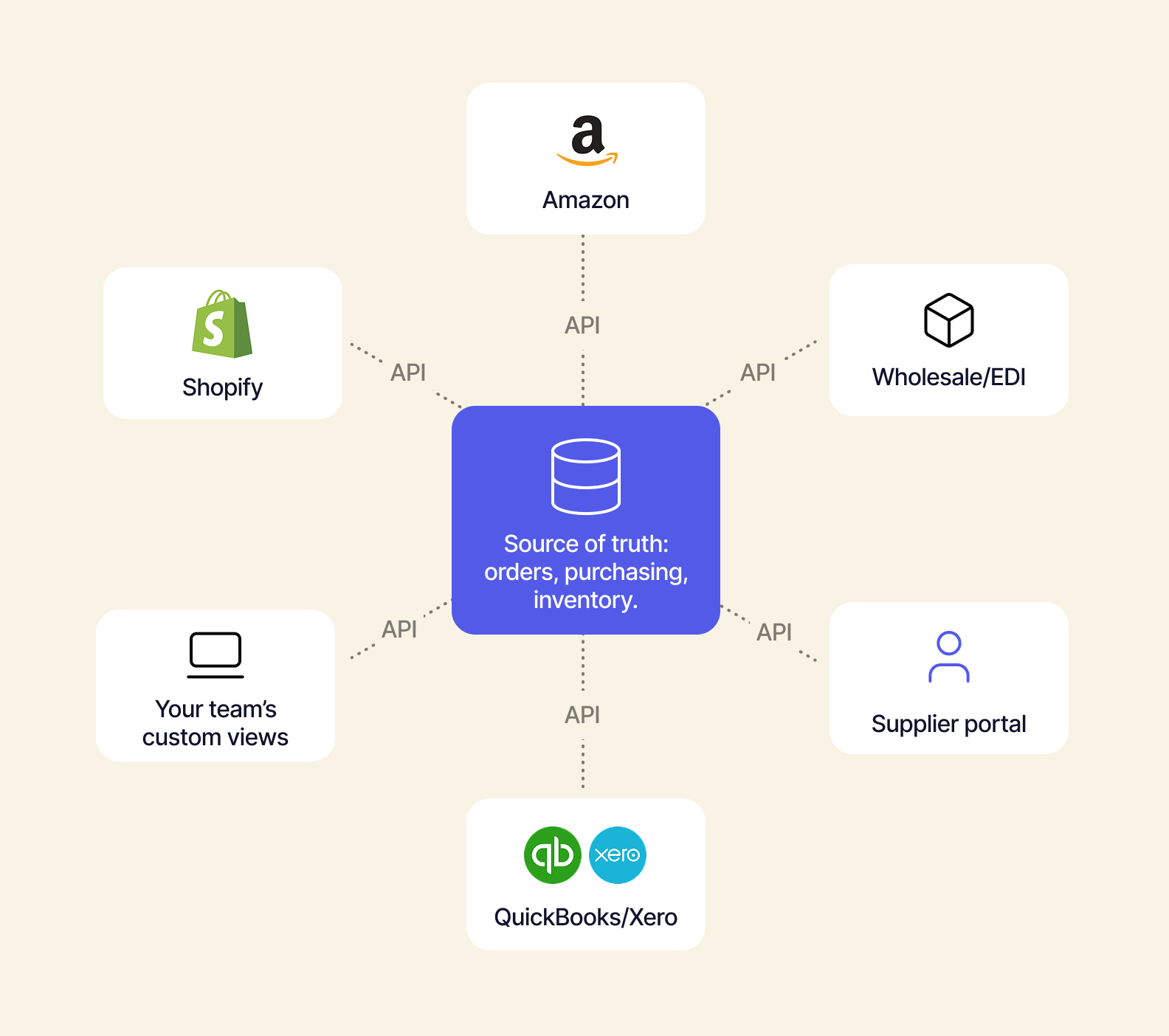
When you have one source of truth upstream of everything, sales orders and purchase orders always read from the same data:
-
Orders, purchasing, and inventory in one shared record
-
A data model designed for retail variants and personalization
-
Sizes, shades, and custom options flowing cleanly from SO line to PO line
Headless
The screen is one manifestation of the API. As a result, every team can work its own way without splitting the data:
-
Wholesale portals, the Shopify admin, and EDI feeds are views of the same orders
-
Interfaces shaped around how reps, buyers, and warehouse teams actually work
-
Add new views without rebuilding the system underneath
Composable
Tailor’s modular system design lets you keep what works and add new tools without lengthy integration processes:
-
Shopify and your other favorite tools connect through documented APIs
-
Spreadsheets and email threads are swapped out, not the systems your team relies on
-
Phased go-lives happen in roughly six-week increments, with your team leading and hands-on support from ours
Every Sale Shapes the Next Purchase
Rather than thinking of your orders as “sales orders vs. purchase orders,” you can build a system that helps them work together — properly serving as two different ends of one transaction. Each sale informs the next purchase, and each open PO backs up the next promise; a connection that makes growth across every channel easier to plan for and execute.
Book a demo to see how Tailor brings your sales and purchase orders together.