Supply chain managers often deal with an unfortunate reality: when the supply chain is running smoothly, nobody notices, but when things are going wrong, everyone in the organization hears about it. This dynamic comes from a constant cycle of firefighting, where supply chain managers are forced to scramble from emergency to emergency, while never getting the chance to prevent them from happening.
This shouldn’t have to be the reality. What could a forward-thinking manager do to break this cycle?
The first place to start is to assess the quality of their retail brand’s system architecture. If they could change the core of how the business runs, they could proactively stop many common supply chain management problems from developing.
What you’ll learn:
-
How to pivot from firefighting to proactive optimization
-
Why headless, composable ERP improves supply chain management
-
What managers can expect from AI-native software integrations
-
How composable supply chains help retailers rapidly scale
3 Problems Headless, Composable ERP Solves in Your Retail Supply Chain Management
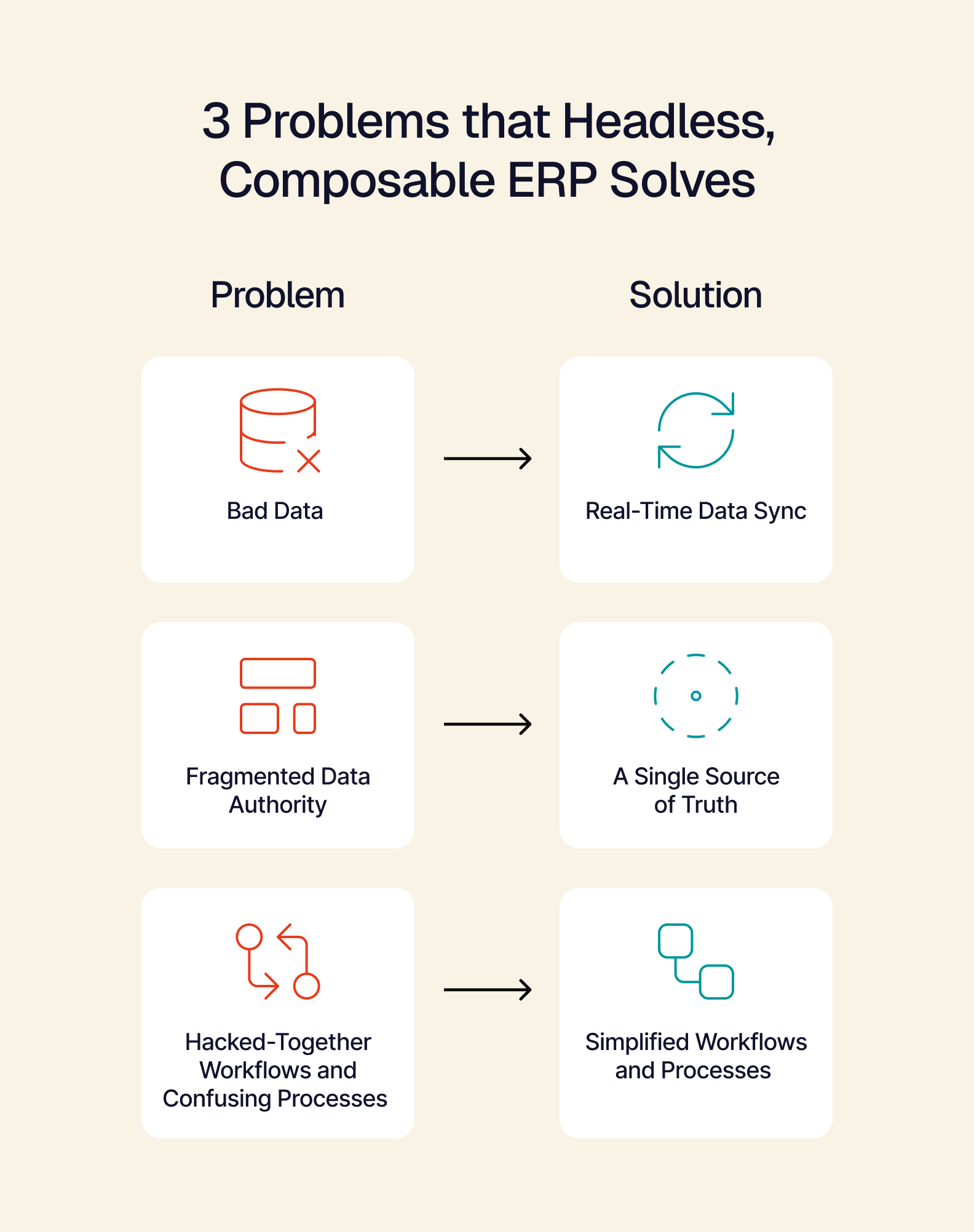
Bad data. Workarounds cause processes to fire incorrectly. Rigid systems force suboptimal software integrations. Each of these has lasting knock-on effects in supply chain management workflows that can become catalysts for new (or recurring) emergencies. However, by addressing your retail brand’s system architecture, you can put an end to these problems.
When you integrate a headless, composable ERP into your tech stack, you unlock three important benefits that can dramatically change your supply chain management workflows:
The reason a headless, composable ERP like Tailor unlocks these benefits comes down to two things:
-
Composable design. Composable software functions like building blocks that neatly fit together. This allows you to add and remove features easily, allowing you to more quickly address (and preempt) problems in your supply chain.
-
Headless architecture. Headless architecture decouples the frontend and backend functioning of your system, so you can develop workflows that work for different teams and create flexible codebases — rather than being forced into unchangeable workflows and functionality.
Now that you understand the why behind headless, composable ERP, let’s unpack why these three benefits matter and how they improve your retail supply chain management.
Bad Data vs. Real-Time Sync
The problem. One of the main reasons that recurring supply chain hiccups happen is that the data underpinning its operation is late or inaccurate — creating bad data.
-
Inaccuracies can stem from migrating data from apps to spreadsheets, then transferring that data into supply chain software.
-
Late data is caused by your inventory and production solutions being unable to talk to each other, resulting in reports that aren’t produced fast enough.
The solution. Headless, composable ERP provides retail brands with real-time data sync. This eliminates the need for spreadsheets and provides a way for your existing software integrations to talk to each other — directly accessing live data from those apps and services.
A Single Source of Truth vs. Fragmented Authority
The problem. Sometimes the source of recurring fires in your supply chain is fragmented data authority. Put another way, it’s the lack of a single source of truth for all the data your brand needs to operate. When you have different systems across your business reporting conflicting stock counts of high-demand SKUs, you might end up in a situation where your automatic reorders won’t trigger — causing stockouts and frequent manual recounts.
The solution. Headless, composable ERP gives you full visibility of your system and eliminates data silos. By bringing your fragmented data into a single source of truth, your automated supply chain triggers will actually work. This resolves many inventory headaches while making sure your supply chain can run smoothly.
Simplified Workflows vs. Complicated Processes
The problem. Supply chains need fairly straightforward workflows and processes to function at peak efficiency. But rigid system architecture complicates the way your business runs in the background, and over time, this complexity comes for your supply chain. Bolted-on software integrations, slow rollouts of system fixes, and tools that aren’t designed to work together can create an environment where your supply chain workflows become a hindrance.
The solution. With a headless, composable solution like Tailor, your supply chain workflows can be refined and reworked. This is possible through its flexible, pre-built user interface, out-of-the-box modules, and decoupled backend system. You can keep the functionality you need to operate your supply chain, while refactoring your systems to plug into a single screen — unifying and untangling the tools you need to use every day.
Pivot From Firefighting to Proactive Optimization with Composable Software Integrations
While many supply chain disruptions come from events outside your business, it’s still likely that many of the problems that cause firefighting cycles are caused by your system architecture. When your systems are siloed, bad data runs rampant, or your workflows are managed by spreadsheets and workarounds, your supply chain is going to experience strain. The fires start once this strain becomes unmanageable.
However, if you can cut off the sources of disruption you can start racking up wins and turn your workflows into the fuel you need to rapidly scale.
How Composability Delivers Supply Chain Wins
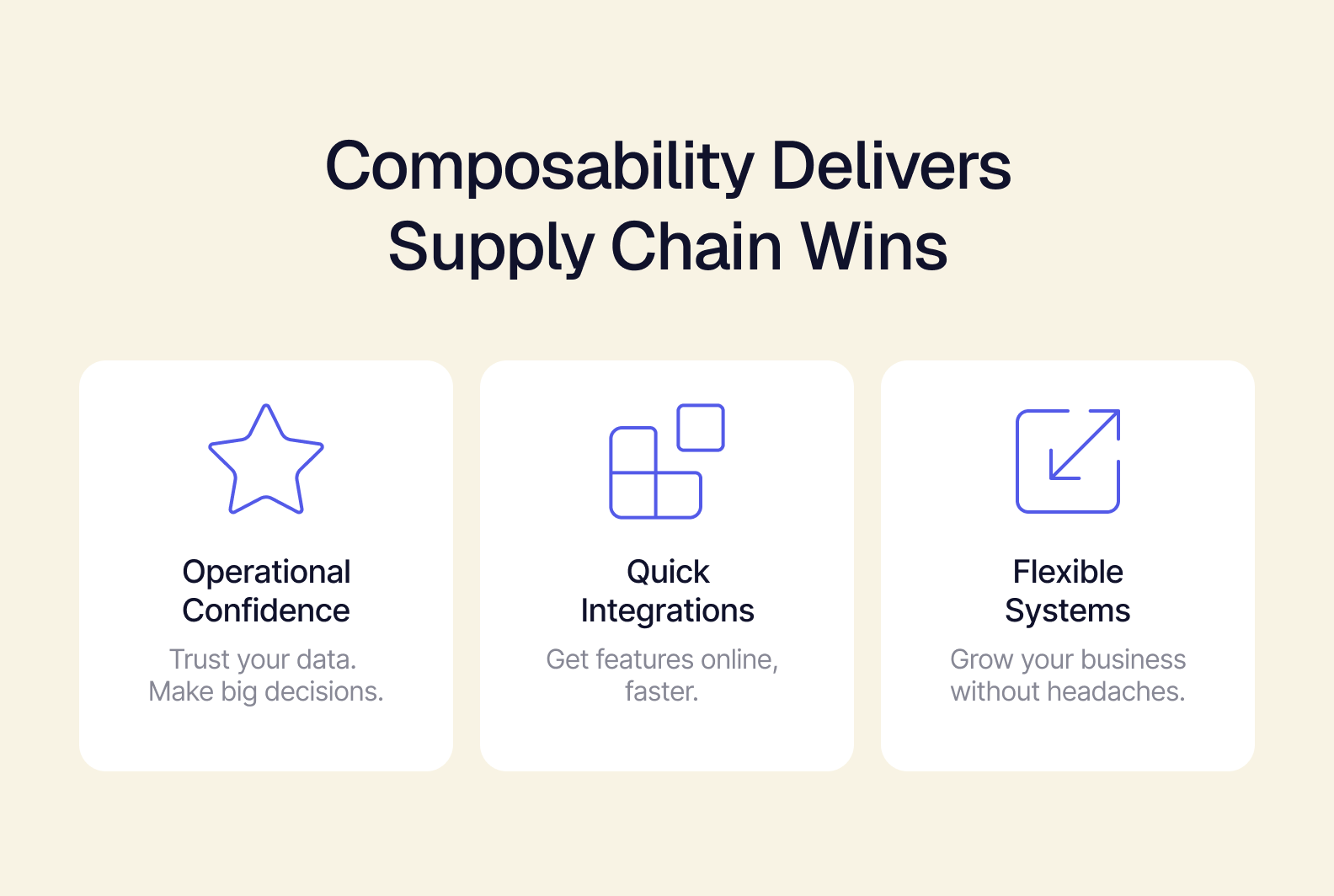
Composable software directly solves many of the issues that cause supply chain fires. But it doesn’t just fix your immediate problems — it can also set up your business to achieve and exceed your projected milestones. Here’s how composable software like Tailor accomplishes this:
-
Operational confidence. When you can trust your data, you can make big decisions without hesitation. The visibility gained from composable software prevents workflow confusion, bad data, and missed triggers.
-
Quick integrations. Rather than spending months getting new software integrations online, you can get full integrations in weeks. Your composable system will also help significantly larger integrations be functional sooner — so you can make sure that everything is working as it should, without threatening your operational stability.
-
Flexible systems. Building your business on a composable foundation means that you can use the tools, modules, and systems you need to, without having to worry about compatibility issues. This allows you to keep pace with market demands.
Turning Your Supply Chain Management into Fuel for Rapid Scaling
Once you’re earning supply chain wins, you can harness them to become the fuel your business needs for rapid scaling. This fuel shows up as two distinct advantages for your retail business:
-
Market resilience. For businesses with a rigid system, market chaos is the one thing they can’t avoid. Their operations are bogged down by inefficiencies, and their supply chain lacks the support it needs to stay afloat. However, when your business has a composable system, you can absorb market chaos without slowing down.
-
Resistance to complexity. As retail brands scale, they hit a threshold where they need to make their operations more complex. Unfortunately, it’s very easy to let that complexity spiral out of control — disrupting familiar workflows and systems. With a composable system, you can add new systems without tacking on unnecessary complexity.
The Future of Supply Chain Management: Preparing for AI-Native Workflows
When you operate your supply chain on headless, composable architecture, you’re giving your business the opportunity to embrace the cutting edge of retail technology. With an ERP like Tailor, you’re building on an AI-native platform that will give you access to the integration of AI supply chain tools that can help you further prevent firefighting cycles — while gaining increased clarity about market conditions, benefitting your broader supply chain management strategy.
While you can use these AI tools without a composable system, this table clarifies why composability and AI-powered workflows go hand-in-hand.
Support Your Supply Chain and Scale Faster
Your retail supply chain management doesn’t have to revolve around fighting fires. Instead, it can be proactive and become the fuel you need to scale your business. With a composable system, you can integrate the tools you need on a timeline that fits your pace — without the headaches and cost.
If you’re ready to support your supply chain and scale faster, book a demo with Tailor. Our headless, composable ERP offers you an out-of-the-box UI that will unify your systems and pre-built modules that will help you reshape your tech stack to meet your needs.