ERP
How Do You Design a Composable ERP Strategy That Actually Scales?
How Do You Design a Composable ERP Strategy That Actually Scales?
Turn a composable ERP strategy from concept into action with these key decisions and rollout steps.
ERP
Turn a composable ERP strategy from concept into action with these key decisions and rollout steps.
Click here to listen to this article
Reduced risk. Improved scalability. Faster implementation. These are just a few of the benefits that elevate a composable ERP above a more traditional system.
But knowing which software is the right choice isn’t quite the same as knowing how to put it into action. And translating the concept of composable ERP into something that will actually help drive business outcomes is where many companies get stuck.
We’re here to help. In this guide, we’re sharing a simple yet effective composable ERP strategy to get you up and running. You’ll learn the three big decisions that define every composable strategy (so you don’t waste time on irrelevant details). We also share a hyper-practical roadmap to composable, with low-lift, high-value actions that you can get approval from leadership to start ASAP.
Take a look and see what your composable ERP strategy can unlock.
If you’ve decided to utilize a composable strategy, you might be spending your office hours (and beyond) researching which tools you want to incorporate.
But this isn’t the best use of your time. Your business operating model is what’s really going to make or break your ERP project.
As you build your strategy, then, think about this stage as setting the foundation for all future tool decisions.
These are the three most important decisions you need to make about how your business will run:
PS: This decision framework will also help you present a strong business case to leadership for composable ERP.
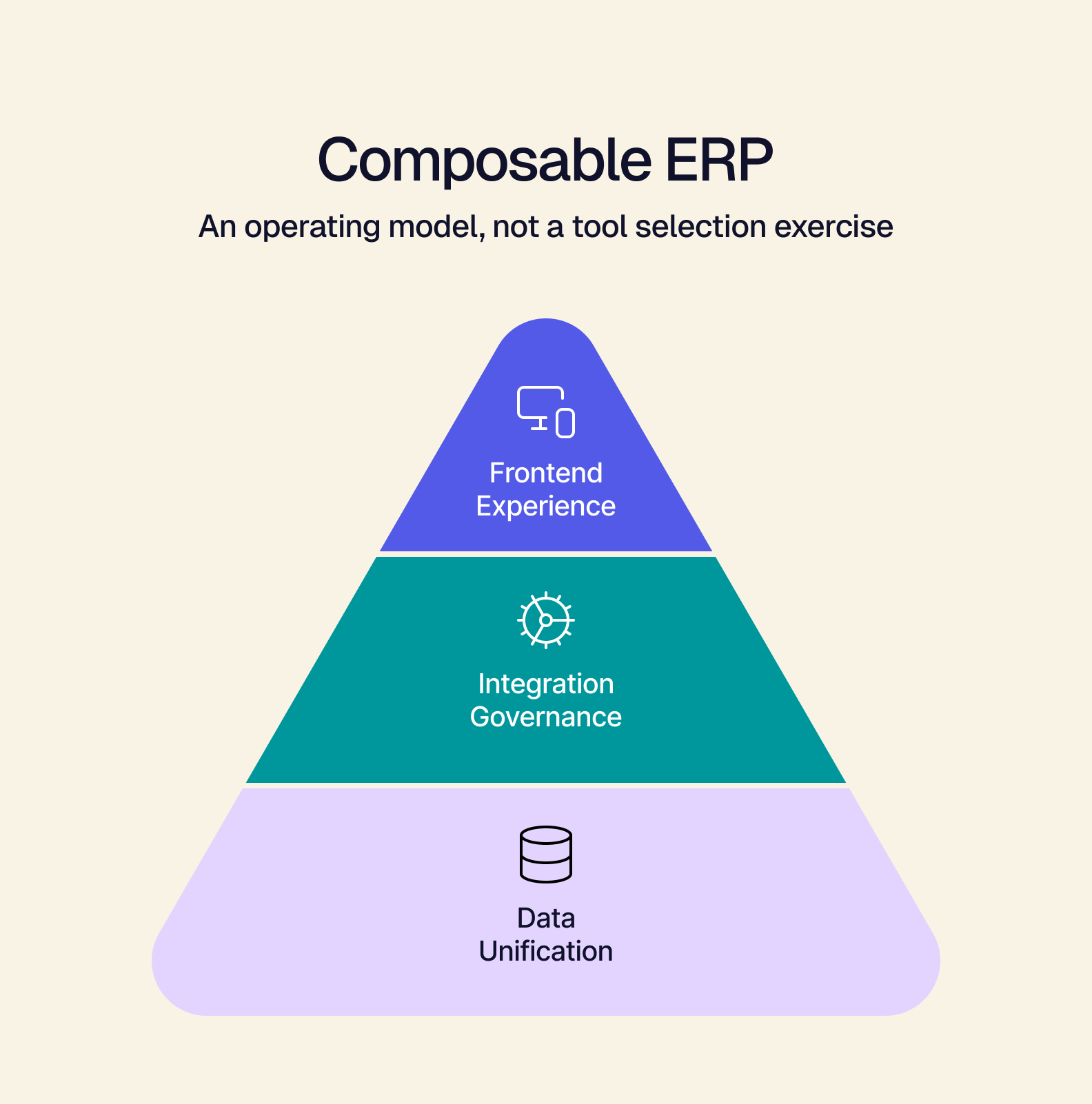
Out of these three decisions, the first is non-negotiable. Without it, you don’t have a composable ERP strategy. You just have expensive tool sprawl.
Your unified data backend is the foundation for everything else.
It’s a single data layer that connects all systems. (And we mean all — not just one tool, but financial, inventory, HR, and everything else.)
Why brands should go all in on composable architectures
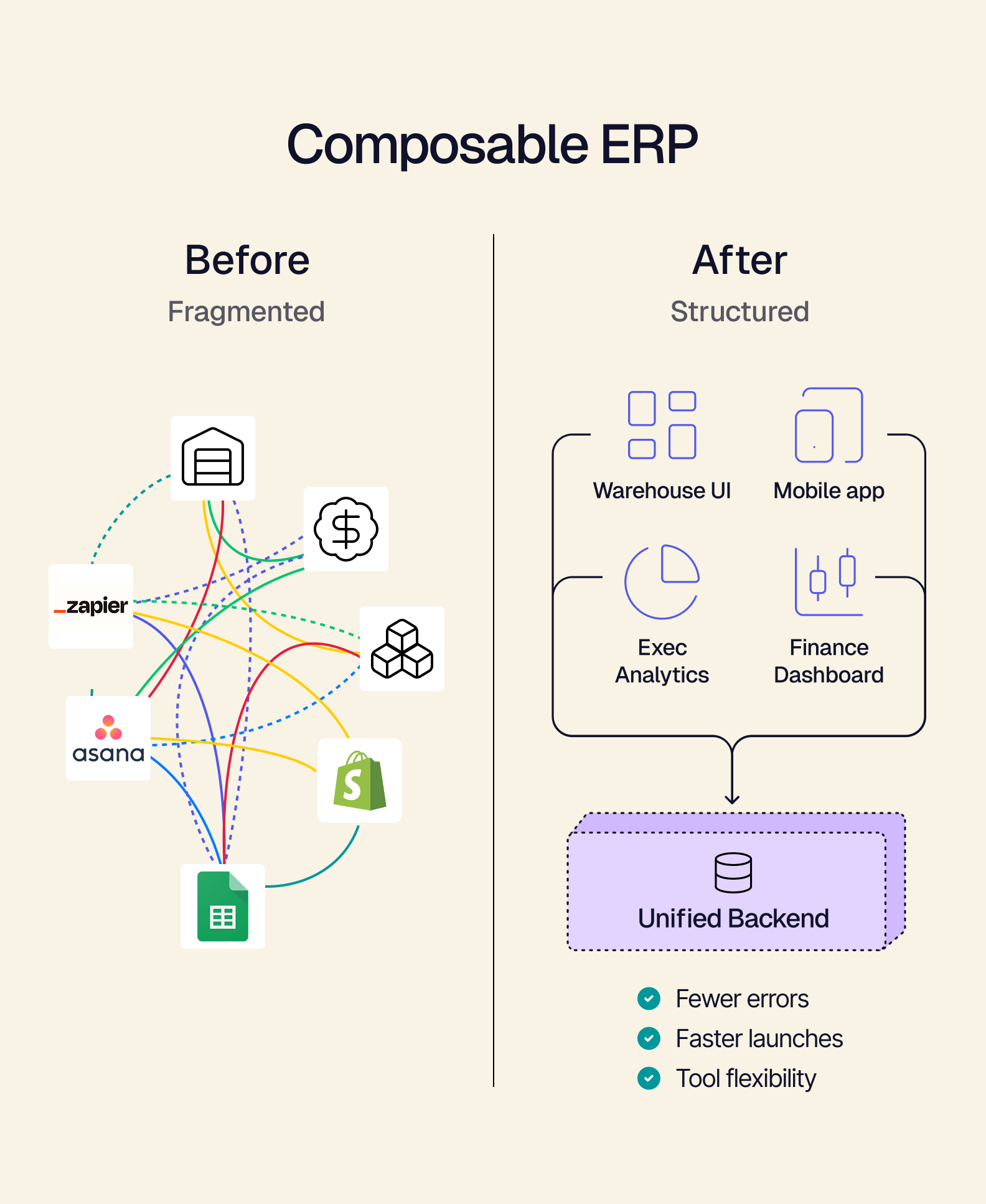
This is the difference in a monolithic architecture vs. composable. With a traditional (monolithic) ERP system, “unification” stems from a single tool. One application “owns” all the modules.
With composable ERP (like Tailor), unification comes from a shared data layer that sits underneath multiple applications.
So the first decision you need to make for a strong composable strategy is: What will be our source of truth?
Every other decision depends on it. Without a defined source of truth, you’ll be stuck relying on point-to-point integrations, which are fragile and unstable.
With a single source of truth, you can swap out tools interchangeably… and you’re scaling and building your business without completely changing operations.
After setting up your unified backend, the next strategic decision is governance.
With composability, you won’t be integrating tools one at a time like you would with a traditional system. So before you start introducing software, you need to set rules around your source of truth (who is allowed to change or alter that “truth”)?
Use this simple framework to evaluate tools:
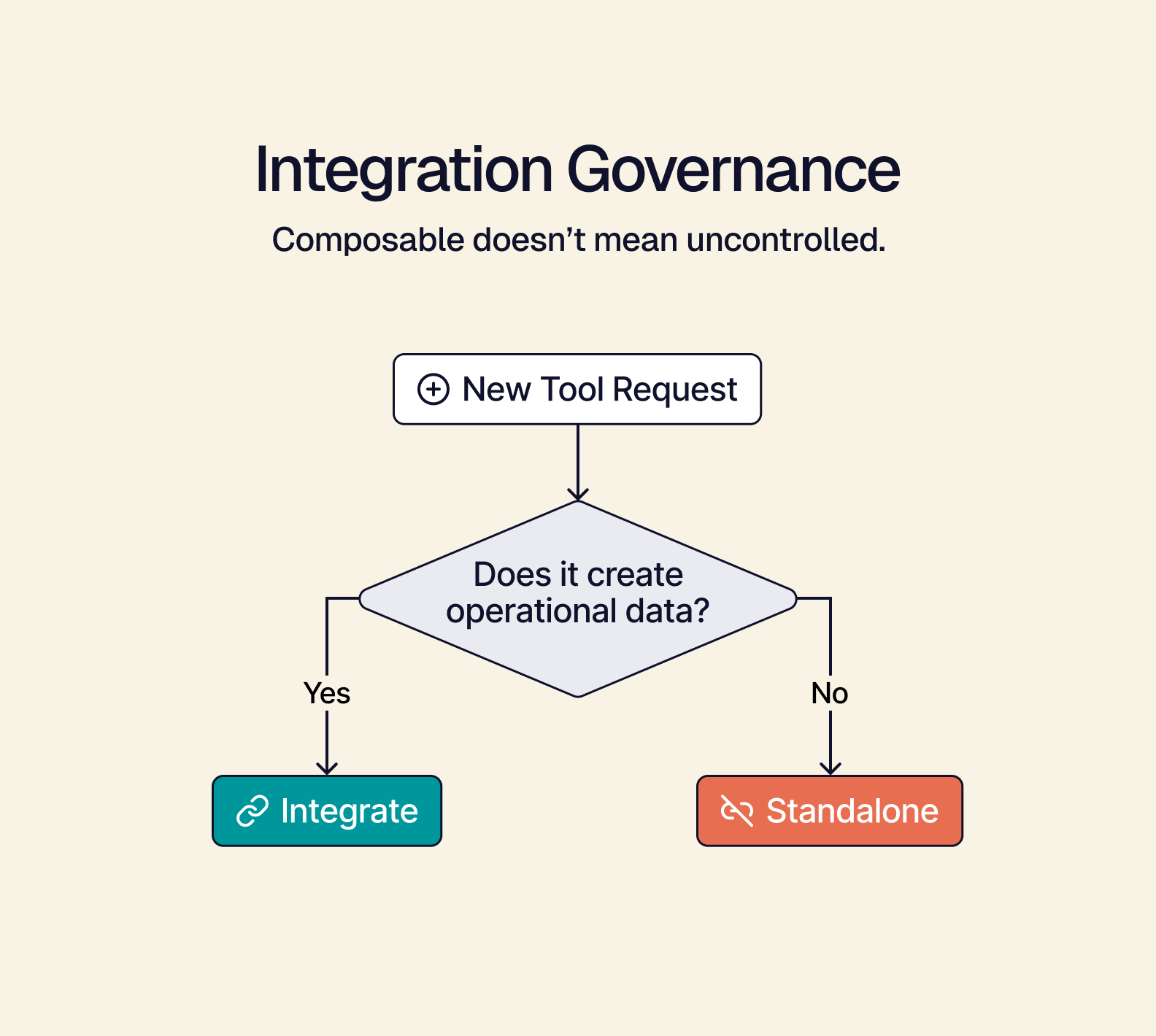
Composable architecture like Tailor’s prevents vendor lock-in because teams can still choose the tools that work best for them. Each application, however, follows your predefined governance framework as Tailor connects software like QuickBooks, ShipStation, Salesforce, and Shopify into one unified backend.
And if you have a legacy ERP, don’t worry: You can keep your existing system as Tailor brings everything together.
Often, companies give their backend strategy all the attention while the frontend strategy is ignored. But your interface is equally crucial for success.
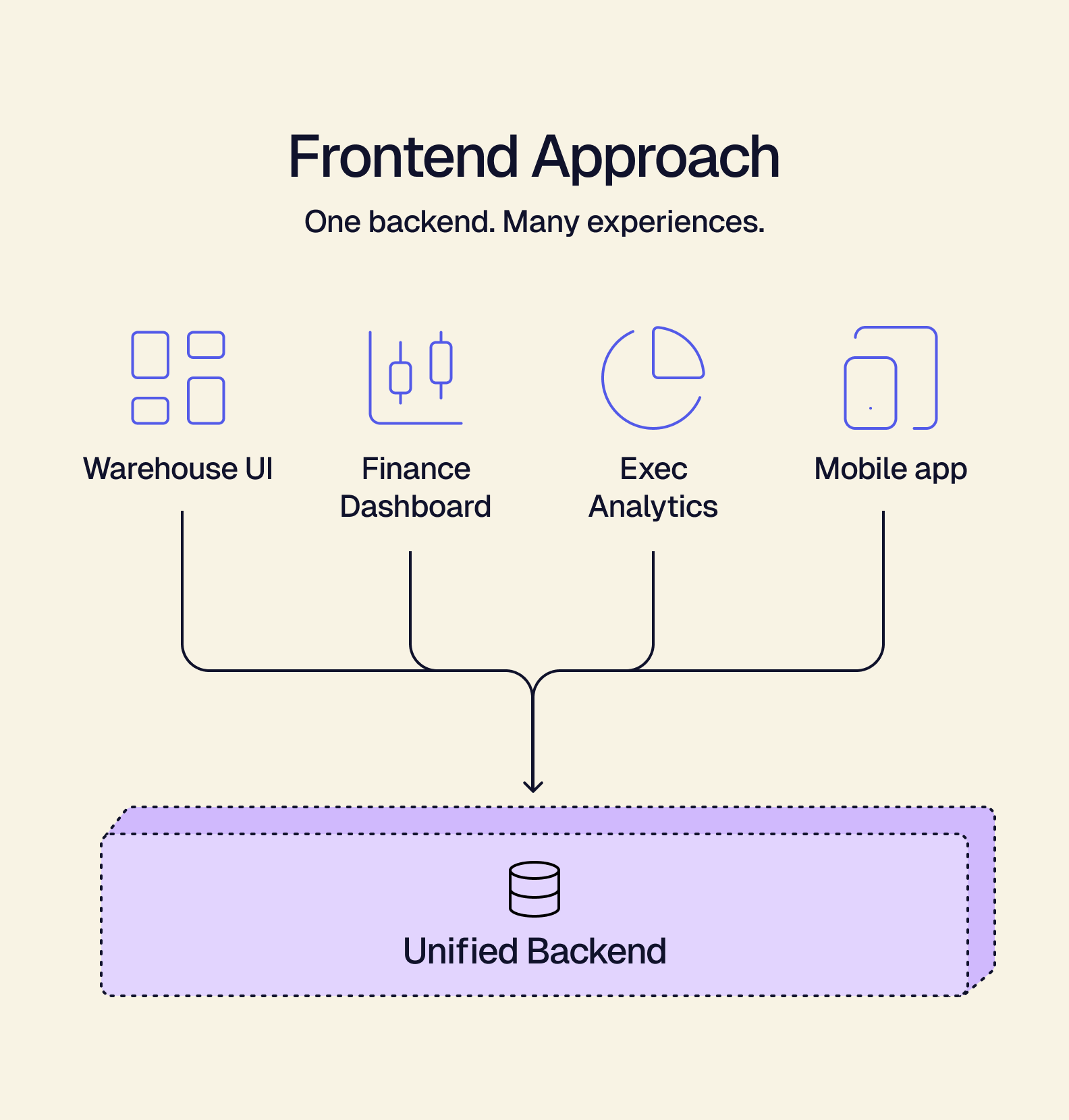
A composable, headless ERP means data storage and user experience are suddenly two separate things. This gives you the freedom to design custom software that employees actually want to use.
Your third and final decision for a composable strategy is between a prebuilt interface and one that’s customized. A prebuilt interface has:
Tailor Omakase has pre-configured modules for procurement, sales, inventory, and manufacturing that can deploy in just weeks. You might choose to start with a prebuilt experience so your teams can start working right away. Then move ahead to more robust customization when you need it.
A custom interface gets you:
This isn’t a lifetime decision — it’s just to get you off the ground. You can always change things up later.
But it is the decision that will get your organization on board with your architecture.
You’ve decided on your data unification, integration governance, and frontend approach.
Now, how do you translate those three decisions into an executable plan that applies to your current tech stack?
Here’s a simple protocol you can follow to get things moving:
The right strategy solves your current problems. But more than that, it opens doors to what’s possible down the road. With a clear governance framework (no more tool chaos), implementation in weeks, and the ability to say yes to teams who need specific tools (without siloing data), your capacity for growth will thrive — add new markets, launch wholesale channels, acquire competitors without a painful 12-month integration.
A composable ERP strategy is the infrastructure that makes it possible for you to reach the next level.
Want to hit the ground running? Explore Tailor Omakase modules to see how they enable a composable strategy.
Or talk to our team and receive a custom composable assessment for your tech stack.

AUTHOR
Hailey Hudson


Connectors
Compare Tailor